
Think PRP costs are the same everywhere? Think again.
A single PRP session usually runs about $400 to $2,500 in the U.S., with hair treatments often on the lower end and joint or high-end facial work at the top.
Prices change by city, device, provider skill, and whether you buy a package.
In this post I’ll break down typical per-session costs for hair, face, and joints, explain the main cost drivers, and give the exact questions to ask so you can compare quotes and protect your results and your wallet.
Clear Pricing Overview for a Single PRP Session

A single PRP session runs anywhere from $500 to $2,500 across the U.S., and most people end up somewhere in the middle. You’ll see wild swings even in the same city. One New York clinic advertises hair PRP at $399 per session as a limited promo, while premium Manhattan or Beverly Hills spots charge $1,200 to $1,500 for the exact same thing. Package deals shift the per-session math. A four-treatment hair series priced at $2,400 breaks down to $600 each, with maintenance visits billed the same way.
Where you’re treating matters. Orthopedic PRP for knees or shoulders usually sits between $500 and $2,500+, cosmetic face work lands in the $600 to $1,800 range, and hair restoration runs $400 to $1,500 per visit. Big metro markets push the high end, smaller cities stick closer to the floor.
- Hair (scalp): $400–$1,500 per session, metro markets $1,200–$1,500
- Knee or shoulder (orthopedic): $500–$2,500+ per session
- Face (vampire facial, anti-aging): $600–$1,800 per session
- Acne scars or skin rejuvenation: $500–$1,200 per session
- Arthritis or joint pain management: $700–$2,500+ per session
Prices jump around from one clinic to the next, even within blocks. Same treatment area, totally different numbers depending on what’s bundled in, how they prep the PRP, and whether you’re buying one session or a series.
Factors That Influence PRP Treatment Cost Per Session
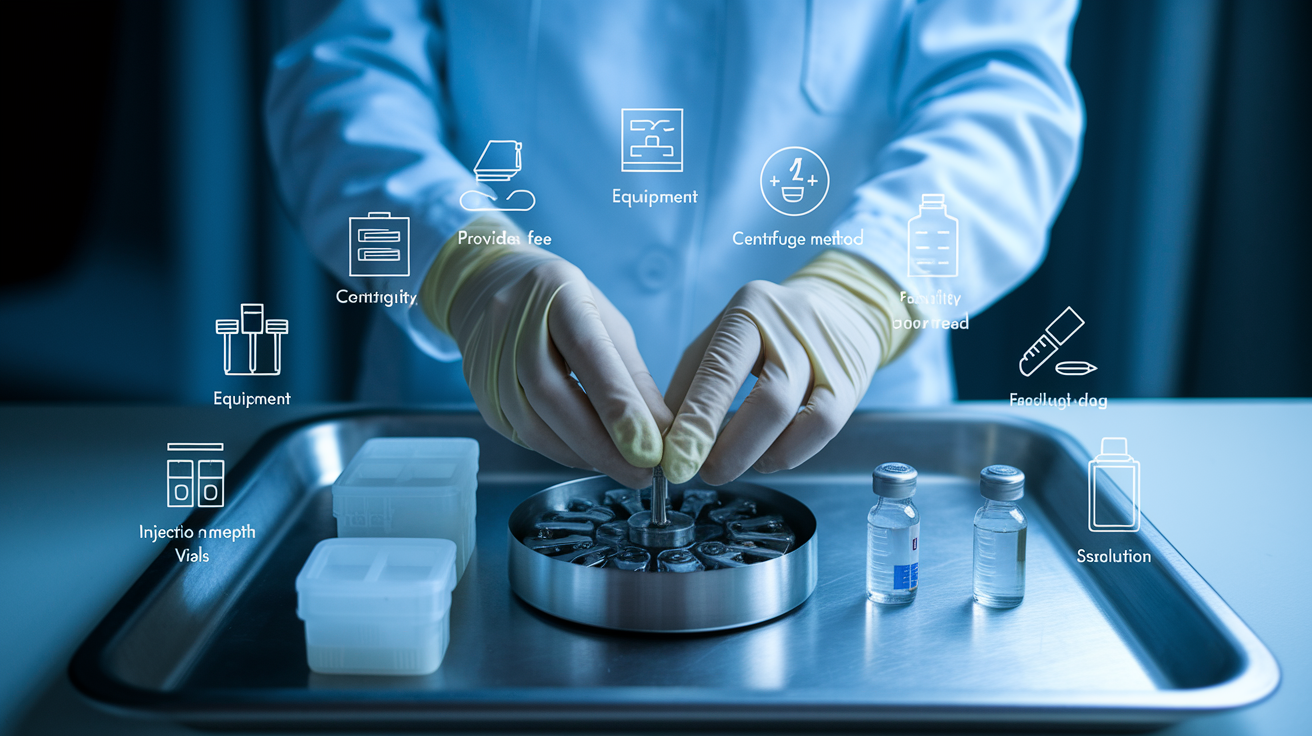
Every PRP price splits into a few separate buckets. The provider’s fee covers their time, skill, liability. Board-certified doctors with regenerative medicine or dermatology training charge more than general practitioners or med spa techs. Equipment and processing costs swing based on centrifuge quality. Some clinics run basic single-spin systems that produce weaker platelet concentrations, others invest in double-spin or proprietary closed-loop devices like Selphyl that hit higher yields and tighter sterility. Those upgrades show up on your bill.
Facility overhead, injection complexity, number of vials or injection sites all layer on top. A high-end urban clinic with premium real estate and dedicated lab space prices higher than a suburban office sharing a strip mall. Treating one knee takes fewer injections and less prep than covering a full scalp or multiple joints, so cost scales with area and precision required.
- Provider fee — expertise, credentials, time.
- Equipment and device — centrifuge type, proprietary systems, sterility protocols.
- Centrifuge method — basic vs. advanced separation affects platelet concentration and quality.
- Facility overhead — rent, licensing, staff, location.
- Injection complexity — number of sites, depth, precision.
- Vials and volume — blood draw volume, number of vials, final platelet concentration.
PRP Injection Price Comparison by Treatment Area
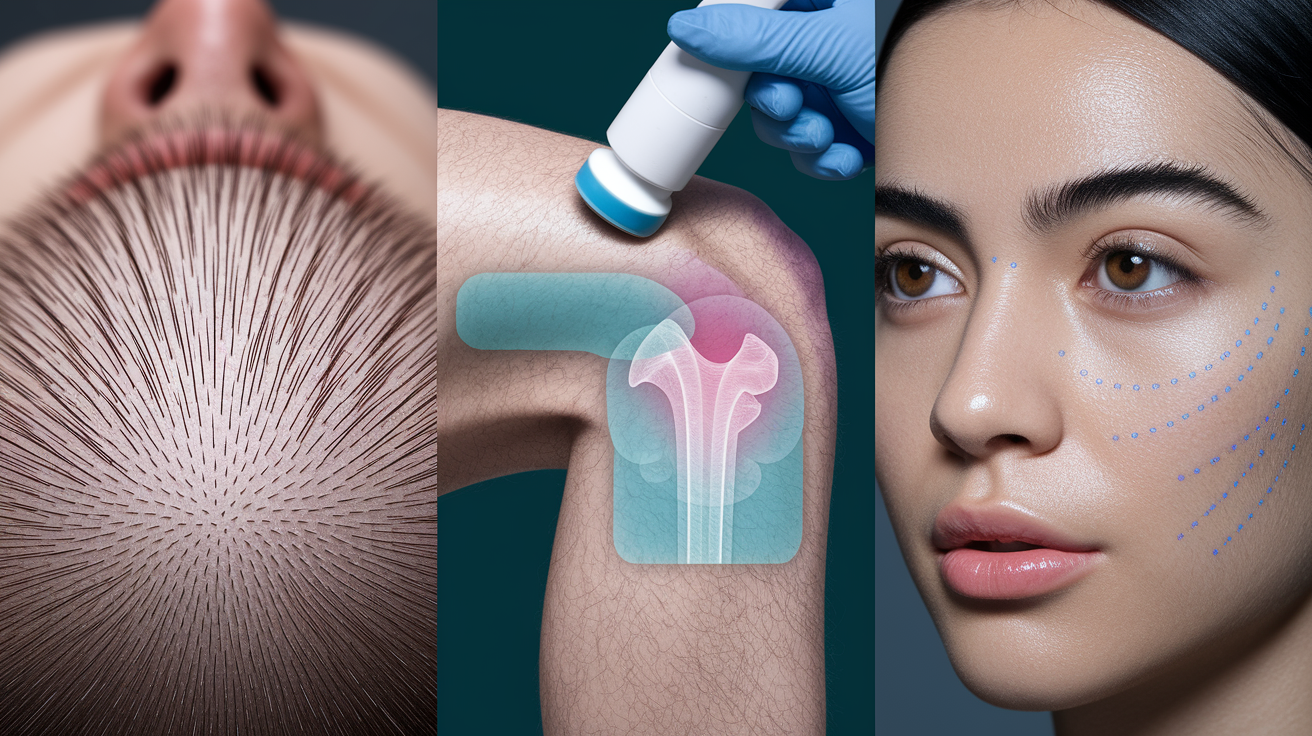
Hair restoration and joint injections sit at opposite ends of the complexity spectrum, which explains why their ranges only partly overlap. Hair treatments need lots of small-volume injections scattered across thinning zones. It’s delicate, time-intensive work, but total PRP volume per session is modest. Joint injections for knees or shoulders use larger volumes and deeper, more technically demanding placements, especially with ultrasound guidance. Same core tech, different labor and material demands.
Facial PRP spans a huge range because providers bundle it with microneedling, laser resurfacing, or other skin treatments. The add-ons drive the total higher. Scar treatment and arthritis management fall into niche buckets where cost depends heavily on number of sites and whether you’re treating one spot or managing chronic, multi-joint issues.
| Treatment Area | Typical Per-Session Cost | Notes |
|---|---|---|
| Hair (scalp restoration) | $400–$1,500 | Metro markets often $1,200–$1,500; promotional offers as low as $399 |
| Knee (orthopedic) | $700–$2,500+ | Ultrasound guidance and higher PRP volume increase cost |
| Shoulder or other joints | $700–$2,500+ | Similar to knee; multiple joints in one session may add $300–$500 each |
| Face (vampire facial, anti-aging) | $600–$1,800 | Often bundled with microneedling or laser; stand-alone PRP lower end of range |
| Acne scars or skin rejuvenation | $500–$1,200 | Price depends on scar severity and whether combined with other modalities |
| Arthritis or chronic joint pain | $700–$2,500+ | Long-term management may require quarterly sessions; volume and frequency drive annual spend |
Geographic Differences in PRP Session Pricing

Big U.S. cities with high demand for aesthetic and regenerative services consistently price PRP at the top of the national range. New York City, Beverly Hills, Miami, San Francisco clinics routinely charge $1,200 to $1,500 per hair session and $1,500 to $2,500+ for orthopedic work. That reflects expensive real estate, premium branding, patients willing to pay for perceived expertise. Mid-market cities like Austin, Denver, Charlotte often price hair PRP closer to $600 to $900 per session. Smaller regional centers or suburban practices sometimes offer sessions around $500, especially when competing for volume or running limited-time promos.
International pricing creates sharp contrasts that fuel medical tourism. In the UK, private PRP sessions range from £300 to £800 (roughly $380 to $1,020 USD), depending on location and clinic reputation. Canadian clinics price similarly to mid-tier U.S. markets, typically CAD $500 to CAD $1,200 per session. Australia sees prices from AUD $600 to AUD $1,500. India and other South Asian destinations advertise PRP for as little as $100 to $300 per session, though equipment quality, sterility standards, provider training vary widely. If you’re thinking about cross-border treatment, weigh savings against travel costs, follow-up logistics, difficulty addressing complications remotely.
How Many PRP Sessions Are Needed and Total Expected Spend

Most hair restoration protocols call for three to six sessions spaced about a month apart, followed by maintenance treatments every four to six months to keep results going. A typical initial series of four sessions at $600 each totals $2,400. Add two maintenance visits per year at $600 each, your annual spend after the first year sits around $1,200. Orthopedic PRP for knee or shoulder pain usually starts with one to three sessions spaced two to four weeks apart, depending on injury severity. Some people return for a single booster every six to twelve months. Annual costs for joint maintenance commonly range from $700 to $1,500.
Cosmetic facial PRP often follows a similar rhythm. Providers recommend an initial series of two to four sessions one month apart, then quarterly or semi-annual touch-ups. If each facial session costs $900 and you complete three initial treatments plus two maintenance visits in the following year, you’re looking at $4,500 in year one and $1,800 annually after.
Additional expenses sneak in through consultation fees, follow-up visits, post-procedure care. Some clinics include the initial consultation in the first session price, others charge $100 to $250 separately. Follow-up visits for progress checks might be bundled into package pricing or billed at $50 to $150 per visit. Post-care usually involves minimal cost, maybe a special shampoo for hair patients or a topical gel for facial treatments, but those extras rarely add more than $50 to $100 total.
Packages vs. Single PRP Sessions: Which Saves More?
Buying a multi-session package almost always lowers your per-session cost compared to paying one session at a time. That example clinic charging $2,400 for four hair sessions works out to $600 per treatment, while their single-session walk-in price might sit at $750 or higher. That’s a 20% savings just for committing upfront. Packages also tend to include extras that get billed separately when you book solo: initial consultation, baseline scalp or joint exam, complimentary follow-up visit to check progress.
Some providers throw in booster treatments or discounted maintenance sessions as part of a package, extending the value beyond the initial series. If you know you’ll need ongoing care, a package that bundles your first year of maintenance at a reduced rate can save hundreds of dollars over time. Just make sure you understand the expiration terms and whether unused sessions roll over or disappear if you don’t use them within a set window.
- Per-session savings: Packages commonly reduce cost by 15% to 25% compared to single-session pricing.
- Common package inclusions: Initial consultation, baseline exam, follow-up progress visit, sometimes post-care products or topicals.
- Bundled maintenance: Some packages include one or two maintenance sessions at a locked-in rate, protecting you from future price increases.
- Exam and documentation benefits: Packaged treatment often includes pre and post photos, measurement tracking, detailed progress notes that help assess results and plan next steps.
Insurance, Coverage Limits, and Out-of-Pocket PRP Costs
Most private health insurance plans classify PRP as cosmetic or experimental and deny coverage outright, whether you’re treating hair loss, facial aging, or joint pain. Insurers argue that PRP lacks enough long-term randomized controlled trial data to be considered standard care, even when the treatment addresses a real medical condition like osteoarthritis. Rare exceptions exist when a provider can document that PRP is being used as a last-resort intervention for a severe, documented injury and all conventional treatments have failed. But even then, approval is inconsistent and often requires appeals and tons of paperwork.
Medicare generally doesn’t cover PRP outside of narrow research contexts or FDA-approved indications. As of now, PRP for hair, face, or routine joint pain doesn’t qualify. If you’re on Medicare and considering PRP, expect to pay entirely out of pocket. Medicaid policies mirror Medicare’s stance in most states, though a handful of state programs have approved reimbursement for specific orthopedic applications under tightly controlled conditions. Check with your state Medicaid office and ask for written confirmation before assuming coverage.
If you want to submit a claim anyway, ask your provider for the correct CPT code. Common codes include 0232T for platelet-rich plasma injection and others depending on the procedure. You’ll need an itemized superbill showing date of service, procedure codes, diagnosis codes (ICD-10), provider’s NPI and tax ID. Submit it to your insurer with a letter of medical necessity written by your physician, and be prepared for denial. Some patients successfully appeal by providing peer-reviewed studies and detailed treatment logs, but success is uncommon. Plan your budget assuming you’ll carry the full cost.
Financing Options to Manage PRP Session Costs

Many clinics offer in-house payment plans that let you split the total package cost into monthly installments, often with zero interest if you pay within six to twelve months. These plans usually require a credit check and a down payment of 10% to 25%, but they keep the process simple and let you start treatment without waiting to save the full amount. Medical credit cards like CareCredit or Alphaeon work similarly, offering promotional zero-interest periods (typically six to twenty-four months) as long as you pay the balance in full before the promo expires. If you carry a balance past the deadline, deferred interest kicks in retroactively at rates that can exceed 20%. Read the terms carefully.
Some employers include health savings accounts (HSAs) or flexible spending accounts (FSAs) that can be used for PRP if your provider documents a medical reason, such as treating a diagnosed musculoskeletal injury. The IRS allows HSA and FSA funds to cover qualified medical expenses. Cosmetic procedures are excluded, but orthopedic PRP prescribed by a physician for injury recovery often qualifies. Hair and facial PRP usually won’t pass IRS scrutiny unless tied to a documented medical condition like alopecia areata with a formal diagnosis. Ask your HR department and your provider’s billing staff before assuming eligibility.
- In-house payment plans: Many clinics offer zero-interest monthly payments for six to twelve months with a small down payment.
- Medical credit cards: CareCredit and similar lenders provide promotional zero-interest periods; watch for deferred interest penalties.
- HSA/FSA eligibility: Orthopedic PRP for documented injury may qualify; cosmetic PRP for hair or face typically doesn’t unless medically necessary.
Risks of Low-Cost PRP Sessions and How to Choose a Trusted Clinic

Bargain-basement PRP pricing, sessions advertised at $200 or $300, often signals corner-cutting that compromises safety and results. Clinics charging well below market rates might use outdated single-spin centrifuges that produce low platelet concentrations, hire undertrained staff to perform injections, or skip sterility protocols that protect against contamination. Some providers dilute PRP with saline to stretch the volume, effectively delivering weaker growth-factor doses than you’re paying for. DIY PRP kits sold online pose even greater risks. Without proper training, equipment, or sterile technique, you’re gambling with infection, nerve damage, zero meaningful results.
Premium pricing, when justified, reflects board-certified physicians, advanced double-spin or closed-loop centrifuge systems, rigorous safety standards. A dermatologist or orthopedic specialist with regenerative medicine fellowship training brings diagnostic precision and injection skill that a general aesthetician or unlicensed technician can’t match. Proprietary devices like Selphyl or Angel systems cost tens of thousands of dollars and require ongoing maintenance. Clinics that invest in this technology and pass inspection by state medical boards are less likely to cut corners on patient care.
Before committing, ask the clinic: Who will be performing the injection, and what are their credentials? What centrifuge system do you use, and what platelet concentration do you get? Can I see before and after photos from real patients you’ve treated? Is your facility licensed and inspected by the state medical board? Do you provide an itemized quote that breaks down every fee, including consultation, processing, injection, follow-up? If the answers are vague or the staff seems annoyed by the questions, walk away. A credible provider will welcome transparency and documentation. Cheap PRP is expensive when it doesn’t work or causes complications you’ll pay to fix.
PRP Session Duration, Downtime, and What You’re Paying For
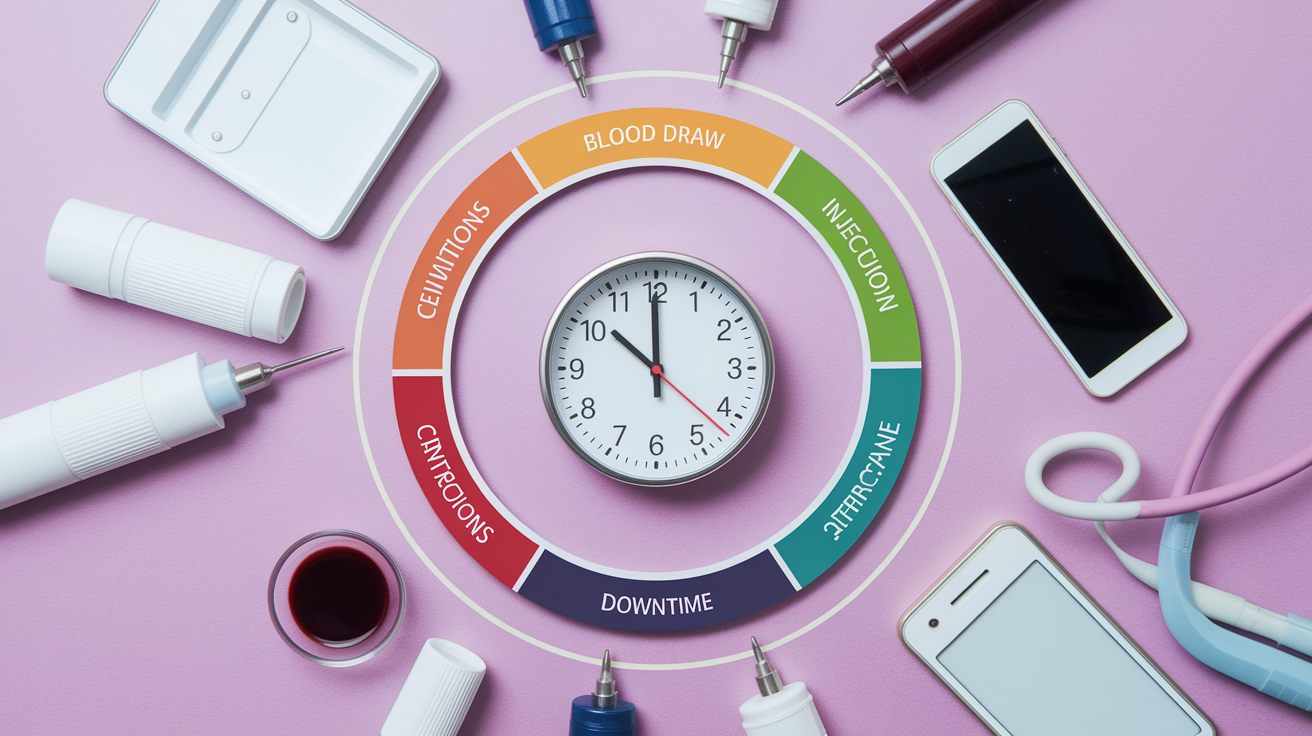
A complete PRP session typically takes 45 to 90 minutes from check-in to walking out the door. The process starts with a standard blood draw, usually one to four tubes depending on how much PRP the provider needs to prepare. Those tubes go into a centrifuge for 10 to 20 minutes while the machine separates red blood cells from the platelet-rich plasma layer. Some systems require a second spin to concentrate platelets further. Once the PRP is ready, the injector numbs the treatment area if needed (scalp injections often use topical anesthetic, joint injections may use local lidocaine), then performs the injections across multiple sites. This step takes 15 to 30 minutes depending on the area.
Downtime is minimal for most patients. Hair PRP might leave your scalp tender and slightly red for a day or two, and you’ll be told to avoid washing your hair for 24 to 48 hours. Facial PRP can cause temporary swelling, redness, minor bruising that fades within a few days. Plan to skip heavy makeup and intense sun exposure for about a week. Joint injections sometimes cause stiffness and soreness for one to three days, but most people return to light activity the next day and resume normal movement within a week. Serious side effects are rare because the treatment uses your own blood, but infection, nerve irritation, or allergic reaction to topical numbing agents can happen if sterility or technique is compromised.
- Blood draw and processing: One to four tubes collected, centrifuged for 10 to 20 minutes to isolate platelet-rich layer.
- Injection phase: Numbing applied if needed, followed by 15 to 30 minutes of precise injections across treatment area.
- Immediate aftercare: Mild redness, swelling, or tenderness for one to three days; specific activity restrictions (no hair washing, no heavy exercise) last 24 to 48 hours.
- Volume and vials: Typical session uses one to three vials of PRP; larger treatment areas or higher-concentration protocols increase both volume and cost per session.
Final Words
We started with clear single‑session price ranges and gave straight numbers for hair, knee, facial, and joint PRP, plus quick examples.
Then we broke down cost components, compared cities, explained total course costs, packages vs single sessions, insurance realities, financing, safety red flags, and what a session includes.
Use the short checklists to ask for itemized quotes, confirm credentials, and compare package savings.
Take your time, factor the prp treatment cost per session into your recovery budget, and you’ll feel confident moving forward.
FAQ
Q: How much do 3 sessions of PRP cost?
A: The cost for 3 PRP sessions typically ranges from $1,500 to $7,500+ depending on treatment area and clinic; many hair packages fall nearer $1,200–$4,500 (discounts often apply).
Q: How much is PRP out of pocket?
A: PRP out-of-pocket costs are usually fully paid by the patient, with single-session prices commonly between $500 and $2,500+; hair sessions often $400–$1,500.
Q: Are 3 PRP sessions enough?
A: Three PRP sessions are often considered a starter course for hair but may be insufficient for joints; many plans recommend 3–6 initial treatments, then periodic maintenance.
Q: Is PRP worth the cost?
A: Whether PRP is worth the cost depends on your diagnosis, expected benefit, and provider quality; some people report symptom relief, but results vary and aren’t guaranteed.