
Want a single number for PRP knee injections? Here’s the straight answer:
Most people pay $500 to $2,500 per injection, with a common U.S. average around $1,000 to $1,500; a full course of two to three injections often totals $1,500 to $7,500.
Costs vary a lot depending on where you live, who injects you, what PRP system they use, and whether they charge for imaging or special processing.
This post breaks down the pricing, explains what adds fees, and gives the exact questions to ask before you book.
Quick Cost Summary
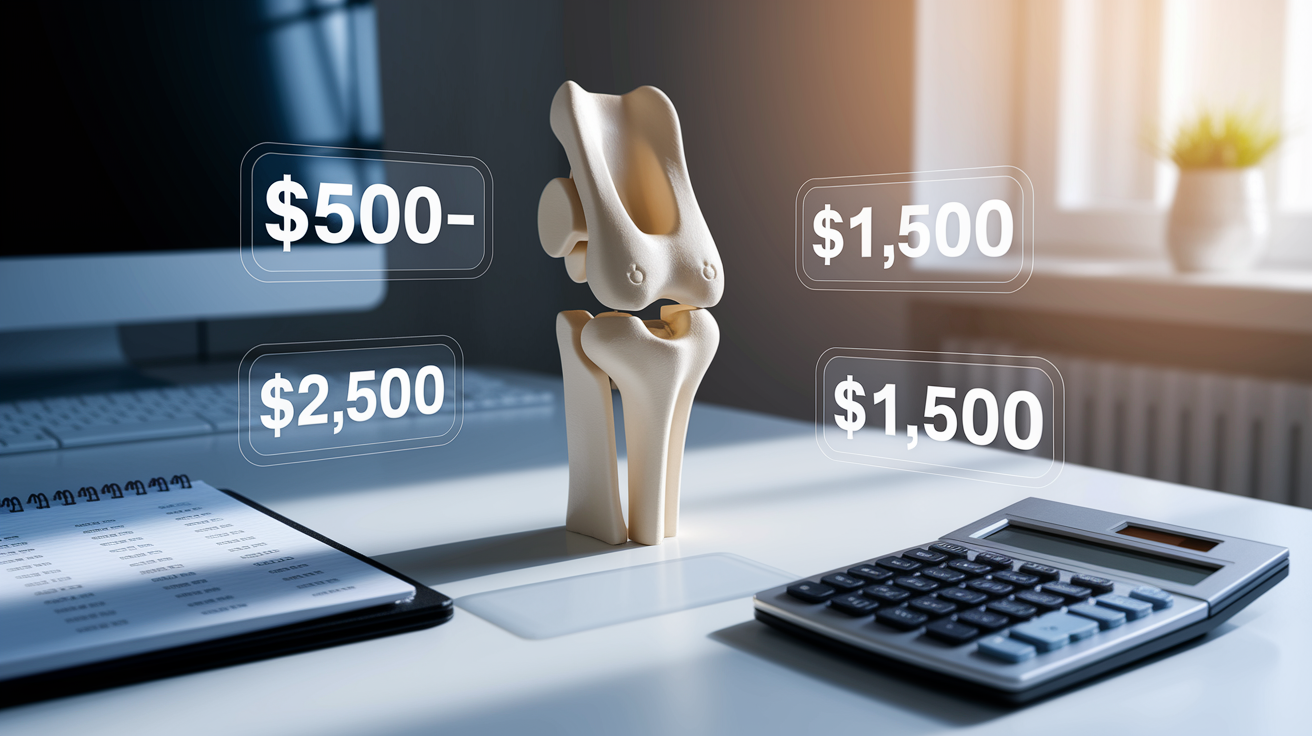
Most people looking at PRP for knee pain want one number fast. Here it is: expect to pay anywhere from $500 to $2,500 per injection in the United States, with a typical mid-range price landing around $1,000 to $1,500 for a single session.
That’s just one shot. Many treatment plans call for two or three injections spaced weeks apart, so a full course can run $1,500 to $7,500 depending on your location, provider, and how many sessions your knee needs.
Here’s the snapshot:
- Single injection range: $500–$2,500
- Common U.S. average: $1,000–$1,500 per session
- Low-cost example: Some clinics advertise around $500 per injection
- High-end metro clinics: $1,500–$2,500 per injection
- Typical full course (2–3 injections): $1,000–$7,500 total
Most insurance plans won’t cover PRP for knee osteoarthritis. It’s usually billed as experimental or elective. Plan on paying out of pocket, though some clinics offer package discounts if you commit to multiple sessions up front.
Typical Price Ranges and National Averages

National Per-Session Range: $500 to $2,500
PRP pricing swings wide. A small clinic in a mid-sized city might charge $500 to $800 for a straightforward knee injection with basic processing. A high-volume orthopedic practice in Los Angeles or New York can easily bill $1,800 to $2,500 for the same procedure, especially if they use ultrasound guidance and a premium centrifuge system.
Geography drives a lot of this. Urban metro markets cost more. Higher rent, higher wages, higher everything. Rural or smaller-market clinics tend to land closer to the $500–$900 end.
Provider type matters too. A sports medicine MD or orthopedic surgeon running a boutique regenerative clinic will price higher than a general wellness center offering PRP as one service among many.
Common U.S. Average: $1,000 to $1,500 per Injection
When you average things out across the country, most people pay somewhere between $1,000 and $1,500 for one PRP knee injection. That bracket includes the blood draw, centrifuge processing, and the injection itself. Sometimes with ultrasound, sometimes without.
This middle band is what you’ll see quoted at mid-tier orthopedic offices, sports medicine clinics, and standalone regenerative practices in medium-cost-of-living areas. It’s not bargain-basement, but it’s not boutique pricing either.
If a clinic quotes you $1,200 for one session and you’re in a typical suburban market, you’re looking at a fair middle-of-the-road number.
Example Low-Cost Provider: Around $500 per Injection
Some clinics advertise PRP knee injections starting around $500. That price point usually shows up at volume-focused wellness centers or practices that bundle regenerative services and keep overhead lean.
At $500, you’re typically getting:
- Standard single-spin PRP processing
- No ultrasound guidance (anatomic landmark injection)
- Minimal initial consultation or imaging
- A straightforward, no-frills approach
These lower-cost providers often make it work by offering package deals. Buy three sessions, get a discount. Or by running high patient volume. The treatment itself isn’t necessarily worse. You’re just paying for efficiency, not concierge service.
If you’re quoted $500, ask what’s included. Make sure the price covers the draw, the processing, and the injection. Sometimes that number is just the injection fee, and the consult or guidance gets billed separately.
Cost Per Session vs. Full Treatment Course

Single-Session Outcomes: Some Patients Improve After One Injection
Not everyone needs a series. Some people, especially those with mild osteoarthritis or a single tendon issue, see meaningful improvement after one PRP injection.
If you’re in that group, your total cost is just one session: $500 to $2,500 depending on your clinic and location. One and done.
That’s the best-case budget scenario. You pay once, you improve, you move on.
But it’s not the most common outcome. Most people with moderate knee OA or chronic tendon pain end up needing at least two injections to get durable relief.
Multi-Session Packages and Typical Full-Course Totals
Here’s where the math starts to add up. A standard PRP protocol for knee osteoarthritis often calls for two to three injections spaced two to six weeks apart.
Let’s look at real-world totals:
| Number of Injections | Per-Session Cost | Total Course Cost |
|---|---|---|
| 2 sessions | $1,000 | $2,000 |
| 3 sessions | $1,000 | $3,000 |
| 2 sessions | $1,500 | $3,000 |
| 3 sessions | $1,500 | $4,500 |
| 3 sessions | $500 | $1,500 |
Many clinics offer package pricing if you commit to a full course up front. Instead of paying $1,200 per session for three injections ($3,600 total), a package might bring that down to $3,000 or $2,700 for all three.
Ask if there’s a multi-session discount. It won’t always be advertised, but it’s common.
And remember, if you need a repeat course a year later because symptoms return, you’re looking at roughly the same total again. Some people budget for annual or biannual PRP as an ongoing maintenance cost.
What Drives PRP Price Variation

Geographic Location: Metro vs. Rural Markets
A PRP injection in Manhattan or San Francisco costs more than the same procedure in Omaha or Boise. That’s just how healthcare pricing works in the U.S. Higher cost of living, higher wages, higher overhead.
In a major metro area, expect the upper end of the range: $1,500 to $2,500 per session. In smaller cities or rural markets, you’re more likely to find $600 to $1,200 pricing.
If you live near a state border or can travel an hour, it might be worth comparing quotes in a neighboring market. A $700 difference per injection adds up fast over a multi-session course.
Provider Type and Expertise
A board-certified orthopedic surgeon with a regenerative medicine fellowship will charge more than a general wellness clinic offering PRP as one menu item.
Higher credentials and specialized training often mean:
- Better injection technique and anatomic precision
- More experience tailoring PRP concentration to your specific condition
- Access to advanced imaging and processing equipment
- Higher billing rates
Is the extra cost worth it? Depends. If your knee pain is complicated (post-surgical, multi-ligament, or severe OA), a specialist might deliver better results. If you have straightforward mild-to-moderate OA and you’re just exploring options, a mid-tier sports medicine clinic might be fine.
Don’t pay for a name alone. Ask about the provider’s PRP volume. How many knee injections they do per month. What imaging or guidance they use.
PRP System, Processing, and Kit Quality
Not all PRP is the same. The way your blood gets processed (single-spin vs. double-spin, leukocyte-rich vs. leukocyte-poor, platelet concentration level) affects both the product quality and the price.
Clinics using branded PRP kits (like Arthrex ACP, Harvest SmartPReP, or EmCyte PurePRP) often charge more because those systems cost the clinic more per use. You might pay an extra $200 to $500 per session for a premium kit.
Does it matter? The research is mixed. Some studies show better outcomes with higher platelet concentrations or specific leukocyte profiles, but there’s no universal “best” PRP formula yet. If a clinic is charging a premium for a specific system, ask them why. And what evidence supports it for knee OA.
Ultrasound or Fluoroscopy Guidance
Injecting PRP into your knee without imaging is cheaper. And less precise. Many clinics charge an extra $100 to $300 if they use ultrasound guidance to confirm needle placement in the joint space or around a tendon.
Fluoroscopy (live X-ray) is less common for knees but adds similar costs when used.
Guidance improves accuracy, especially if you have a complex anatomy or prior surgery. It’s not always necessary for a straightforward intra-articular knee injection, but it reduces the chance of a missed target.
If ultrasound is optional and billed separately, ask the provider if they recommend it for your case. Don’t pay for it if it’s not adding value.
Platelet Concentration and Leukocyte Profile
Some clinics customize PRP formulations, adjusting platelet concentration or filtering out white blood cells (leukocytes) based on your condition.
Leukocyte-rich PRP may be better for tendon injuries. Leukocyte-poor PRP might cause less inflammation in arthritic joints. Processing to hit a specific concentration or profile takes extra lab time and sometimes different equipment, and that can bump the per-session price up by $100 to $400.
Again, the science here is still being sorted out. If a clinic is charging extra for a “customized” PRP formulation, ask what the customization is and why it matters for your knee.
Insurance, Financing, and Payment Realities

Typical Insurance Coverage: Plan on Paying Out of Pocket
Most commercial health insurance plans and Medicare do not cover PRP injections for knee osteoarthritis. Insurers classify PRP as experimental, investigational, or not medically necessary for most musculoskeletal conditions.
There are rare exceptions. Some plans cover PRP if you’re enrolled in a clinical trial, or if your state or employer plan has specific regenerative medicine benefits. But those are outliers.
Call your insurer before you book. Ask explicitly: “Does my plan cover PRP injections for knee osteoarthritis?” Get the answer in writing if possible.
If the answer is no, budget for the full cost yourself.
Payment Options: Packages, Financing, and Flexible Plans
Since insurance usually won’t help, clinics have adapted. Many offer:
- Package discounts: Pay up front for two or three sessions and get 10–20% off the total.
- In-house financing: Monthly payment plans, sometimes interest-free for six or twelve months.
- Healthcare credit cards: Options like CareCredit that let you spread the cost over time (watch the interest rates after promotional periods).
- Seasonal promotions: Some clinics run discounts during slower months or for first-time patients.
Ask about all of these when you’re getting your quote. A $3,000 course might feel more manageable at $250/month for a year than as one lump sum.
And if cost is a major barrier, ask if the clinic participates in any clinical trials. Trial participants sometimes receive PRP at no cost in exchange for follow-up data collection.
How PRP Is Performed: What You’re Paying For
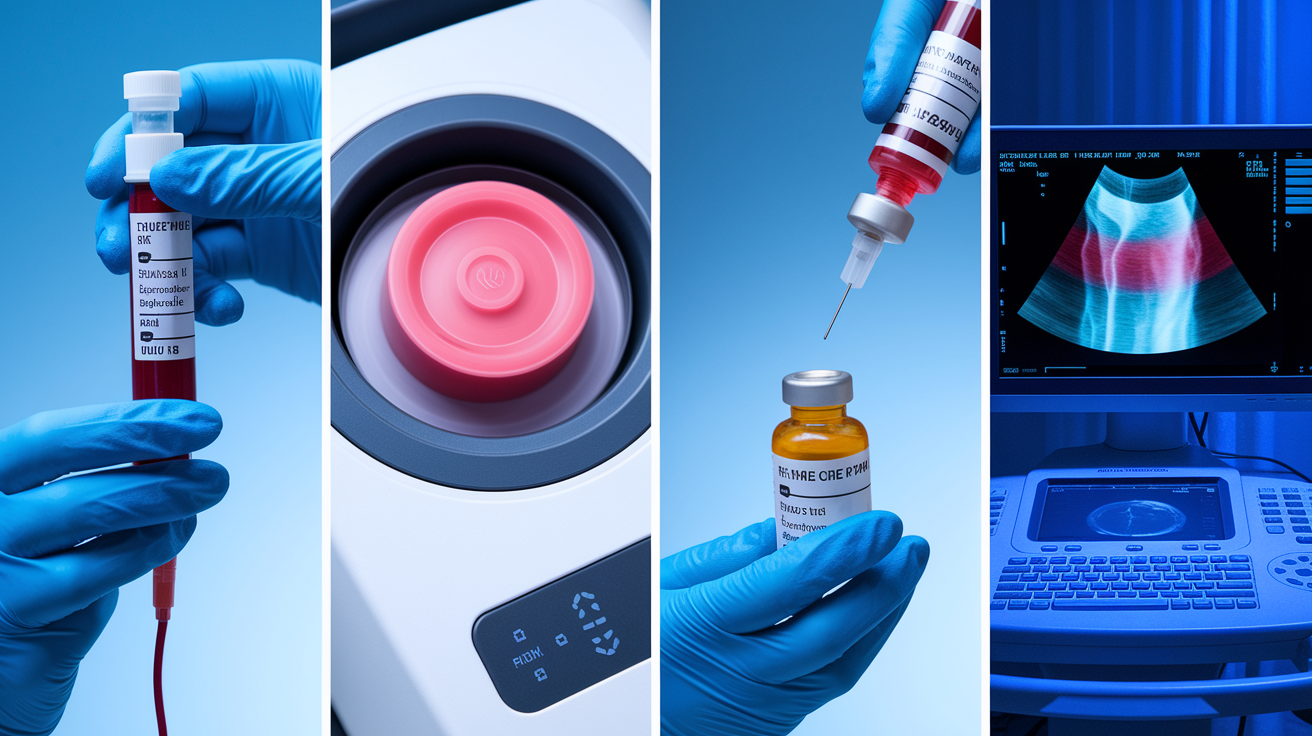
Understanding the steps helps you see where the cost comes from. A PRP knee injection isn’t just a quick shot. It’s a mini lab procedure plus a medical injection.
Step 1: Blood Draw
The provider takes 30 to 60 mL of your blood from your arm, just like a standard blood test. That’s about two to four tablespoons. The draw itself is quick and uses sterile tubes with anticoagulant.
Step 2: Centrifuge Processing
Your blood goes into a centrifuge, a machine that spins it at high speed to separate red blood cells, white blood cells, platelets, and plasma. This step takes 10 to 15 minutes depending on the system.
Single-spin systems are faster and cheaper. Double-spin systems take longer but can produce higher platelet concentrations. The clinic’s choice here affects both the price and the final product.
Step 3: PRP Extraction
After spinning, the provider draws off the platelet-rich plasma layer. A small volume, usually 3 to 6 mL of concentrated platelets. This is the “product” that gets injected.
Step 4: Injection (Often with Ultrasound Guidance)
The provider injects the PRP directly into your knee joint, or around a damaged tendon or ligament, depending on your diagnosis. If they use ultrasound, you’ll see the needle on a screen as it enters the target area.
The injection itself takes a few minutes. You might feel pressure or a brief sting, but it’s usually well tolerated.
The whole process (draw to injection) takes 30 to 45 minutes in most clinics. You’re paying for the blood draw, the centrifuge time and equipment, the sterile processing, the provider’s skill, and the facility overhead. That’s why a single session can run $500 to $2,500 even though the “shot” itself is just a few minutes.
Safety, Contraindications, and Typical Outcomes

Side Effects: What to Expect
PRP uses your own blood, so the risk of allergic reaction or rejection is extremely low. Most side effects are mild and temporary:
- Soreness or stiffness at the injection site for a day or two
- Bruising where the needle entered
- Swelling in the knee, especially in the first 24–48 hours
These are normal. Ice, rest, and over-the-counter pain relief usually handle them.
Serious complications are rare but possible:
- Infection (risk is small, under 1%, if sterile technique is used)
- Nerve or tissue damage (also rare, more likely if guidance isn’t used)
- Increased pain or inflammation (some people react poorly; it usually resolves)
Your provider should review all of this before the procedure and give you post-injection care instructions.
Contraindications: Who Shouldn’t Get PRP
PRP isn’t safe for everyone. You’re typically not a candidate if you have:
- Active cancer or a history of certain cancers (platelets contain growth factors that could theoretically stimulate cancer cells)
- Blood disorders like thrombocytopenia or clotting disorders
- Active infection anywhere in your body
- Severe anemia (not enough healthy blood to process)
If you’re on blood thinners, your provider may ask you to pause them before the blood draw, depending on the medication and your overall health.
Always disclose your full medical history and current medications during your consult. Missing a contraindication can turn a low-risk procedure into a dangerous one.
Typical Durability: How Long Does PRP Last?
This is the part everyone wants to know: how long will it work, and is it worth the money?
For knee osteoarthritis, many people start noticing improvement around 4 to 12 weeks after their first or second injection. It’s not instant. PRP works by triggering your body’s healing response, and that takes time.
When it does work, relief often lasts 6 to 12 months or longer, depending on how severe your OA is and how much you stress the joint.
Some people get a full year of solid function and repeat the treatment annually. Others see shorter benefit (three to six months) and decide it’s not cost-effective compared to alternatives.
There’s no way to predict exactly how you’ll respond. Age, activity level, cartilage condition, and overall health all play a role.
Add-On Costs and Itemized Fees

The per-injection price you see advertised doesn’t always include everything. Here’s what can show up as separate line items on your bill.
Initial Consultation Fee
Many clinics charge $50 to $300 for the first visit, where the provider reviews your imaging, examines your knee, and decides if PRP is appropriate.
Some practices roll this into the treatment cost if you move forward. Others bill it separately whether you proceed or not.
Ask up front: “Is the consultation fee separate, and is it applied toward treatment if I book?”
Ultrasound Guidance Fee
If imaging guidance isn’t included in the base injection price, expect an additional $100 to $300 for ultrasound.
This fee covers the machine time, the sonographer or provider’s imaging skill, and the documentation. It’s usually worth it for accuracy, but make sure you know whether it’s optional or standard.
MRI or X-Ray Costs (If Ordered)
Before offering PRP, some providers want current imaging to confirm your diagnosis and rule out severe cartilage loss or other issues.
An MRI of the knee can run $400 to $3,500 depending on where you get it done. Hospital imaging centers cost more than independent radiology clinics.
X-rays are cheaper, usually $50 to $200, and sufficient for diagnosing moderate OA.
If you already have recent imaging, bring it. Don’t pay for duplicate scans.
Processing, Kit, and Lab Fees
Some clinics itemize the centrifuge processing or PRP kit cost separately, adding $100 to $400 to the base injection fee.
Others roll it all into one price. Ask for an itemized quote so you can see exactly what you’re paying for and compare apples to apples across providers.
Cost Comparison: PRP vs. Alternative Treatments
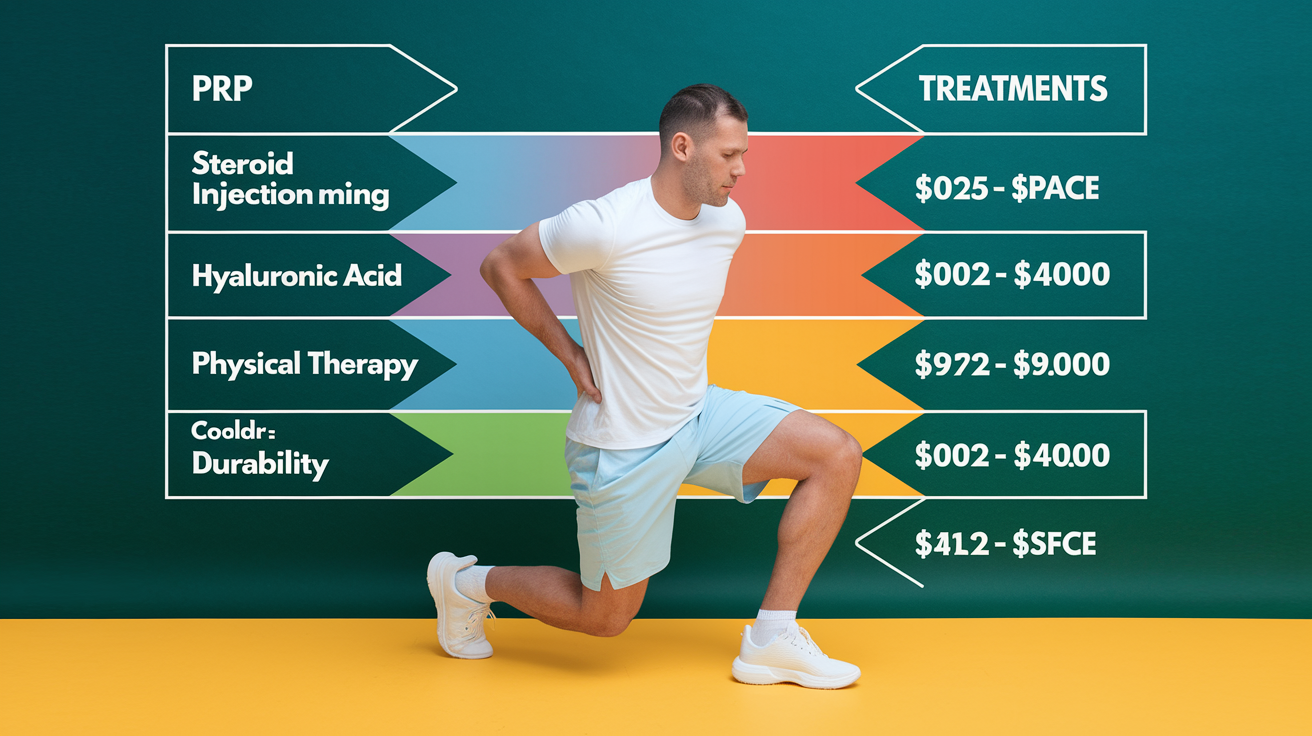
How does PRP stack up financially against other options for knee pain?
| Treatment | Cost Per Session or Course | Typical Durability |
|---|---|---|
| Corticosteroid Injection | $50–$200 per injection | Weeks to a few months |
| Hyaluronic Acid (Viscosupplementation) | $300–$1,200 per series (often 3–5 injections) | Variable; often several months |
| PRP Injection | $500–$2,500 per injection; $1,500–$7,500 per full course | 6–12+ months when effective |
| Physical Therapy | $50–$300 per session; multi-week courses common | Ongoing benefit with continued exercise; no fixed “durability” |
| Total Knee Replacement | $20,000–$50,000+ (surgical, often insurance-covered) | 10–20+ years; definitive solution for severe OA |
Steroid Injections: Cheaper, Shorter Relief
A corticosteroid injection costs a fraction of PRP. Usually under $200. And can knock down knee pain fast.
But the relief is often short-term: a few weeks to a few months. Repeated steroid shots can weaken cartilage and tendons over time, so most providers limit you to three or four per year.
If you need quick relief for an event or a flare-up, steroids are a solid budget pick. For longer-term management, PRP or other options make more sense.
Hyaluronic Acid: Comparable Cost, Mixed Results
Viscosupplementation (HA injections) typically involves three to five injections over several weeks, with a total series cost of $300 to $1,200.
Some insurers cover HA for knee OA, which makes it cheaper out of pocket than PRP. Durability is hit-or-miss. Some people get months of relief, others see minimal benefit.
PRP and HA are in a similar cost zone if you’re paying cash, but PRP may last longer when it works.
Physical Therapy: Lower Per-Session Cost, Long-Term Commitment
PT sessions run $50 to $300 each, and a typical course might be 6 to 12 weeks of twice-weekly visits.
Total cost for a PT program: $600 to $7,200 depending on frequency, duration, and insurance coverage.
PT doesn’t “fix” osteoarthritis, but it can reduce pain, improve function, and delay or avoid surgery. It’s often the most cost-effective first step, especially if insurance covers it.
Combining PT with PRP is common. Strengthen the muscles around your knee while the PRP works on the joint itself.
Knee Replacement: The High-Cost, Long-Term Solution
If your knee is bone-on-bone and non-surgical options aren’t working, total knee replacement is the definitive answer.
Surgery costs $20,000 to $50,000+, but insurance usually covers most of it (after deductibles and co-pays). A successful replacement can last 10 to 20 years or more.
PRP and other regenerative treatments are for people trying to delay or avoid surgery. If you’re already a surgical candidate, weigh the one-time high cost of replacement against years of recurring PRP treatments.
Treatment Protocol: How Many Sessions and When

Common Injection Schedules: 1 to 3 Sessions
There’s no universal PRP protocol, but most knee OA treatment plans follow one of these patterns:
- Single injection: Trial dose to see if you respond; some people improve enough to stop there.
- Two injections, 4–6 weeks apart: Common for mild-to-moderate OA.
- Three injections, 2–4 weeks apart: Standard course for moderate OA or tendon injuries.
Your provider will recommend a schedule based on your imaging, symptoms, and how you respond to the first shot.
If you see meaningful improvement after one or two injections, you might not need the third. If there’s no change after two, adding a third may not help. And it’s worth reconsidering whether PRP is the right option for you.
Expected Timeline for Benefit
PRP isn’t a quick fix. Most people start feeling improvement 4 to 12 weeks after treatment begins.
You might feel worse initially. Soreness, swelling, or stiffness in the first few days as your body ramps up its healing response. That’s normal.
By week 6 to 8, many patients notice less pain, better range of motion, or easier movement during daily activities. Full benefit can take three months or more.
If you’re planning a specific event (a race, a trip, a return to sport), budget at least three months of lead time after your final injection.
When to Repeat Treatment
If PRP works well and your symptoms return after 9 to 12 months, many people opt for a repeat course. Either a single booster injection or another full series.
Annual PRP is a real budget consideration. If one session costs $1,500 and you repeat it yearly, that’s an ongoing $1,500/year expense with no insurance help.
Some people find that worth it to stay active and avoid surgery. Others decide that the cost-to-benefit ratio doesn’t pencil out and shift to other options like PT, weight management, or eventually surgery.
Who Is a Typical PRP Candidate?
Best Evidence: Mild-to-Moderate Knee Osteoarthritis
PRP tends to work best for people with early-stage or moderate knee OA. Some cartilage thinning, joint space narrowing, maybe early bone-on-bone contact, but not end-stage destruction.
If your X-ray or MRI shows severe OA with complete cartilage loss and significant bone changes, PRP is less likely to help. You can’t regrow cartilage that’s gone, and PRP’s benefits come from supporting what’s left.
Tendon injuries (patellar tendinitis, quad tendon issues) are also common PRP targets, often with good results.
Age, Activity Level, and Health Factors
PRP tends to work better in people who are:
- Under 60–65 (younger patients often have better healing capacity)
- Active but not overloading the joint (moderate activity level)
- Non-smokers (smoking impairs healing)
- Healthy weight or working toward it (less joint stress)
If you’re 70, sedentary, significantly overweight, and dealing with bone-on-bone knee OA, PRP is a long shot. If you’re 45, active, with mild OA and a willingness to pair PRP with PT and lifestyle changes, your odds improve.
Your provider should be honest about your candidacy. If they’re recommending PRP but your imaging looks terrible, ask why. And consider a second opinion.
Cost-Saving Strategies and Practical Planning
Package Pricing and Multi-Session Discounts
If you’re committing to two or three injections, ask about a package deal. Many clinics offer 10–20% off the total if you pay up front.
Example: Three sessions at $1,200 each = $3,600. A package might bring that down to $3,000 or $2,900.
That’s real money. Just make sure the package terms are clear. What happens if you don’t respond and want to stop after one injection? Is there a refund or credit policy?
In-House Financing and Payment Plans
Clinics that specialize in cash-pay regenerative medicine often offer financing through third-party lenders like CareCredit, or in-house payment plans.
You might pay $200–$300/month for six or twelve months instead of a lump sum. Watch the interest rates. Some plans are 0% for a promotional period, then jump to 20%+ if you don’t pay off the balance in time.
Read the fine print before you sign.
Clinical Trials and Research Programs
Some academic medical centers and research hospitals run PRP clinical trials for knee OA. Participants often receive treatment at no cost in exchange for follow-up visits and data collection.
Search ClinicalTrials.gov for “PRP knee osteoarthritis” and filter by location. If there’s a trial near you and you qualify, it’s a legitimate way to access PRP without the price tag.
Seasonal Promotions and First-Time Patient Discounts
Regenerative clinics sometimes run promotions. Discounted first sessions, holiday specials, or bundled deals during slower months.
If cost is tight, ask if there are any current offers or if the clinic has a “new patient” rate. It’s worth a phone call.
Final Words
You now know the process, who to vet, and which add-ons drive price. We walked through treatment steps, what a clear quote should show, plus red flags to avoid.
Next, use the checklist: ask for itemized pricing, product details, follow-up plans, and refund policies. Compare at least two providers. Keep movement, strength, and sleep in the plan.
If cost is the big question, remember the average cost of prp for knee pain varies by clinic and extras, so don’t anchor on one number. Take your time, ask smart questions, and choose the path that helps you stay active and confident.
FAQ
Q: Is PRP worth it for knee pain?
A: PRP can be worth it for knee pain when physical therapy and injections haven’t helped and the problem is mild-to-moderate arthritis or a tendon injury. Results vary. Ask a qualified provider about likely benefit and cost.
Q: Is 2 PRP sessions enough?
A: Two PRP sessions may be enough for some people, but need varies by diagnosis, tissue damage, and how you respond. Confirm the clinic’s protocol, expected timeline, and follow-up plan before committing.
Q: Can I walk after a knee PRP injection?
A: You can usually walk after a knee PRP injection, but plan light walking only. Avoid high-impact activity or heavy loading for 48 to 72 hours, or as your provider advises, to protect tissues and results.
Q: What knee injection lasts 3 years?
A: A knee injection that may last about three years is certain hyaluronic acid (viscosupplement) single-shot products. Duration varies by product, diagnosis, and person. Ask the clinic which brand and expected effect length.