
Think stem cell shots will rebuild your knee? Think again.
High-quality trials and major reviews show the effects are usually small, short-lived, and do not rebuild cartilage.
Some people get modest pain relief for a few weeks to months, but most gains fade by a year.
Results depend on cell source, processing, and who you are, like age, BMI, and how damaged the joint is.
In plain terms, these injections are one tool that may ease symptoms briefly, not a fix that restores a worn-out joint.
Here’s what the science shows and what to ask before you pay.
Evidence-Based Findings on Outcomes from Stem Cell Therapy for Osteoarthritis

Marketing materials love showing before-and-after photos with talk of “regeneration.” But the clinical trial data? Much less impressive. There’s a big gap between promotional language and what’s actually published. When you look at the highest-quality randomized controlled trials, the benefit from stem cell injections is usually small, temporary, and doesn’t rebuild cartilage.
The 2023 MILES Trial, published in Nature Medicine, compared bone marrow concentrate, adipose-derived cells, and umbilical cord tissue cells to corticosteroid injections in patients with knee OA. After one year? None of the stem cell groups showed a significant advantage in pain reduction, function improvement, or MRI measures of cartilage progression versus a steroid shot.
The 2023 Cochrane Review pooled 25 randomized trials covering 1,341 patients. Stem cell injections showed a small mean benefit versus placebo up to six months, roughly 1.2 points better on a 0–10 pain scale and 14.2 points better on a 0–100 function scale. Evidence quality was rated low certainty, meaning the true benefit may be even smaller or nonexistent. No data showed slowed radiographic progression. Most benefits faded within the first year. Even the case series that do report longer relief rarely show durable improvements lasting beyond 12 to 24 months in controlled settings.
What this evidence actually shows when you strip away the hype:
Pain reduction is modest, commonly less than 2 points on a 0–10 scale. Often not meeting “clinically meaningful” thresholds for many patients. Functional score improvements on measures like WOMAC or KOOS are small and sometimes fall short of minimum clinically important differences. Duration of relief is measured in weeks to months, rarely exceeding 12 months in high-quality trials. Structural outcomes show no proven cartilage regrowth, no reliable slowing of joint space narrowing, and no evidence the injections “rebuild” the joint.
Understanding the Biological Mechanisms and Limits of Stem Cell Therapy for OA

Mesenchymal stem cells are thought to work by releasing signaling molecules (paracrine factors) that reduce inflammation and modulate immune responses around the damaged joint. In theory, this anti-inflammatory and supportive effect could create a better environment for healing. In practice? Trials show improvements are driven more by symptom relief than any measurable structural repair. Patients report less pain and slightly better function, but MRI scans and X-rays generally don’t show meaningful cartilage regrowth or reversal of joint damage.
The biological actions observed in labs and animal models don’t translate reliably into human cartilage regeneration. Studies have documented reductions in pro-inflammatory cytokines like IL-17 and improvements in animal arthritis models, but these findings don’t carry over in human OA trials. The cells may help calm down inflammation temporarily, giving patients some relief. But they haven’t been shown to rebuild worn-out cartilage or restore normal joint architecture. The mismatch between what the cells theoretically can do and what actually happens in human knees and hips is the core issue here.
Biological Actions Versus Regenerative Claims
Anti-inflammatory effects and supportive signaling are real. But they’re not the same as regeneration. The cells release growth factors and cytokines that may ease swelling and pain for a period of time. However, convincing evidence of cartilage regrowth in human osteoarthritis trials is absent. High-quality imaging studies have not documented significant increases in cartilage volume or quality. Histologic analysis from human biopsies does not show new, healthy cartilage tissue forming after MSC injections.
The gap between biological plausibility and clinical reality is large. It’s important to understand that “supports healing” does not equal “rebuilds cartilage.”
Differences in Outcomes Based on Cell Source and Processing for OA Treatment
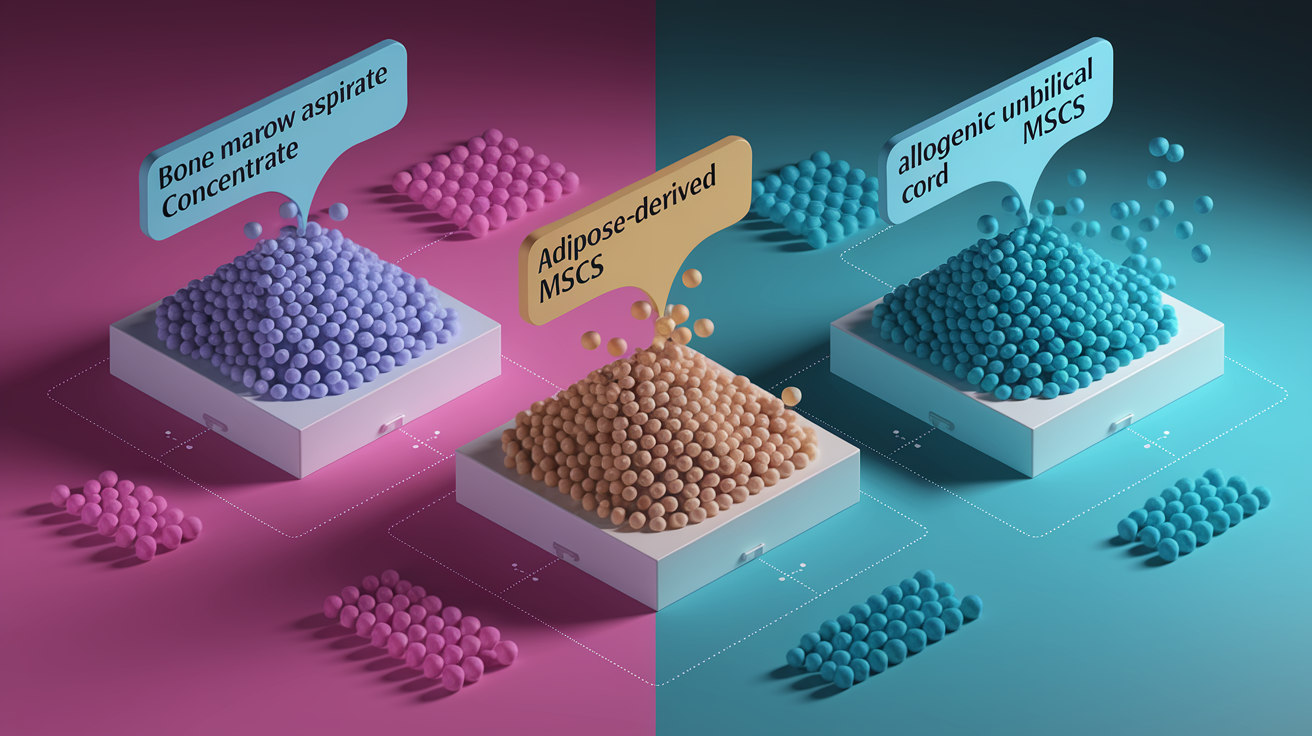
Outcomes vary widely depending on where the cells come from and how they’re prepared. Bone marrow aspirate concentrate showed no advantage over saline or PRP in multiple randomized controlled trials, including the MILES study and smaller RCTs published in 2017 and 2020. Adipose-derived MSC studies, including a systematic review covering 339 knees in elderly patients, showed some improvement in pain and function. But the evidence quality was low and protocols were inconsistent. Allogeneic umbilical cord MSCs have been tested in clinical trials, but again, the MILES Trial found no 12-month benefit over a steroid injection.
Processing quality, cell dose, and injection technique differ dramatically across clinics and studies. Some providers use minimally manipulated same-day preparations. Others culture and expand cells in a lab over weeks. Cell viability and potency testing aren’t standardized, and there’s no agreement on optimal dosing. One clinic might inject 5 million cells, another 300 million. This heterogeneity makes it nearly impossible to generalize results from one study to another, or from one clinic to the patient sitting in front of you.
The lack of standardization is a major reason why evidence remains weak and inconsistent. Dose and viability inconsistencies mean that two patients receiving “stem cell therapy” may be getting entirely different products with entirely different odds of any benefit. Without rigorous quality control and dose standardization, comparing outcomes or predicting responses is guesswork.
| Cell Source | Evidence Summary |
|---|---|
| Bone Marrow Aspirate Concentrate (BMAC) | No statistically significant advantage vs saline or PRP at 12–24 months in multiple RCTs. MILES Trial (2023) showed no benefit over steroid at 1 year. |
| Adipose-Derived MSCs | Systematic review (339 knees, elderly cohort) showed pain/function improvement. Evidence quality low. 44 reported adverse events. No proven cartilage regeneration. |
| Allogeneic Umbilical Cord MSCs | MILES Trial found no 12-month advantage vs corticosteroid. Other trials small and heterogeneous. Acceptable short-term safety but limited long-term data. |
Timeline of Response: When Improvements Begin, Peak, and Decline
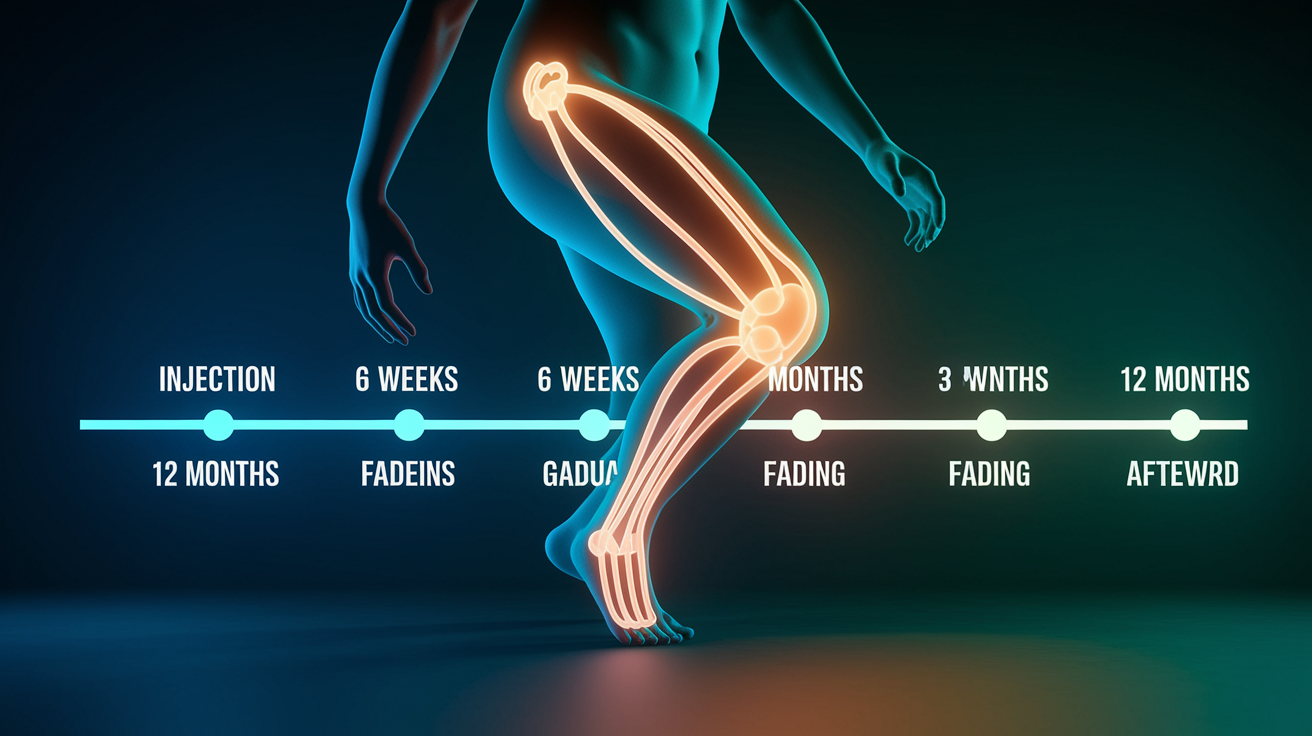
Most patients who do notice a change begin to feel it within the first few weeks. Gradual improvement is typical, with maximal benefit commonly appearing between 6 weeks and 3 months post-injection. That’s the window where pain and function scores tend to peak in clinical trials.
After that, the effect often begins to fade. The Cochrane review found short-term small improvements only. The MILES Trial showed no sustained benefit at 12 months compared to a steroid injection. Some case series report patients maintaining relief for 6 to 24 months, but high-quality randomized trials generally show little or no durable advantage at the one-year mark.
Patient-reported outcome measures like WOMAC and KOOS are used to track changes over time. These scores capture pain, stiffness, and function at specific intervals (baseline, 6 weeks, 3 months, 6 months, 12 months, and beyond). In many studies, the improvement seen at 3 months is gone or greatly diminished by 12 months. Whether the change meets the threshold for a minimum clinically important difference depends on the measure and the patient, but timelines often don’t align well with those thresholds after the first few months.
Timing patterns to expect:
First noticeable improvement typically appears within 2 to 6 weeks, though some patients report no early change at all. Typical peak improvement window is around 6 weeks to 3 months, matching the period when inflammation may be most suppressed. Duration until effects generally begin to fade is variable, but many studies show decline starting around 6 months, with little to no benefit remaining at 12 months. WOMAC and KOOS timing patterns show early gains followed by regression toward baseline in many controlled trials. Timelines rarely align with sustained minimum clinically important difference thresholds beyond the short term.
Factors Affecting Who Responds to Stem Cell Therapy for Osteoarthritis

The best responders in published studies tend to have mild to moderate osteoarthritis, typically Kellgren-Lawrence Grades 1 through 3. Patients with advanced “bone-on-bone” Grade 4 disease rarely benefit. Major surgical societies caution against using stem cell injections for advanced OA.
Younger patients (usually under 65) and those with lower BMI show better responses in several trials. Comorbidities like diabetes, obesity, and inflammatory conditions reduce expected improvement and increase the odds of being a non-responder.
Even when cells are biologically active and properly delivered, many patients don’t respond. The reasons include the extent of existing joint damage, the level of ongoing inflammation, and individual variation in how the body reacts to the injected cells. If the cartilage is nearly gone and the bone is exposed, no amount of anti-inflammatory signaling will rebuild a functional joint surface. If the patient’s immune environment is hostile or the cells don’t survive long enough to exert their effects, the injection may do little or nothing.
Variability and non-responder rates are high across trials. Some studies report success in 60 to 70 percent of patients using broad definitions of “success.” But when success is defined more rigorously (sustained pain reduction meeting MCID thresholds, no progression on imaging, avoiding surgery for a defined period), the numbers drop. Patient selection criteria matter enormously. Realistic counseling means acknowledging that a substantial fraction of patients will spend thousands of dollars and see little to no benefit.
Safety Profile, Adverse Events, and Regulatory Oversight of OA Cell Therapies

Autologous procedures, where cells are taken from and returned to the same patient, show minimal adverse events in published trials. Infection risk is generally low, often quoted below 1 percent for PRP and similar for same-day autologous stem cell injections. Common side effects are limited to transient local pain, swelling, and stiffness.
However, the FDA has issued warnings to clinics marketing unapproved “stem cell cures” for osteoarthritis, emphasizing that no stem cell product is FDA-approved specifically for knee or hip OA as of May 2025. Only limited use of autologous, minimally manipulated cell procedures is permissible under current regulations.
Allogeneic MSCs (cells from a donor) show acceptable short-term safety in trials, but long-term evidence is limited. A systematic review for rheumatoid arthritis found no significant difference in incidence of adverse events between MSC and control groups, but the data are heterogeneous and follow-up is short. Safety concerns increase when procedures are non-standardized, when cells are cultured or manipulated beyond minimal processing, or when treatments are performed in unregulated clinics or medical tourism settings. Immunologic reactions and rejection risk are lower with MSCs than with other cell types, but they’re not zero, especially with allogeneic products.
Key risks to be aware of:
Infection at the injection site, though uncommon in sterile clinical settings. Transient pain and swelling lasting days to weeks, common with both PRP and stem cell injections. Uncertain long-term safety, particularly with allogeneic or extensively manipulated cell products. Regulatory variability and the risk of receiving unapproved or poorly characterized treatments from off-label clinics.
Urgent evaluation is needed if you develop fever, worsening pain, increasing redness or swelling, new neurologic symptoms, or inability to bear weight after an injection. The FDA’s stance, echoed by major surgical societies, is clear: stem cell therapy for OA is investigational, not a proven standard of care. Patients should approach with caution and informed consent. Including external guidance, resources like this article on current evidence provide additional regulatory and clinical context.
Comparing Realistic Outcomes from Stem Cell Therapy to PRP, HA, and Conventional OA Treatments
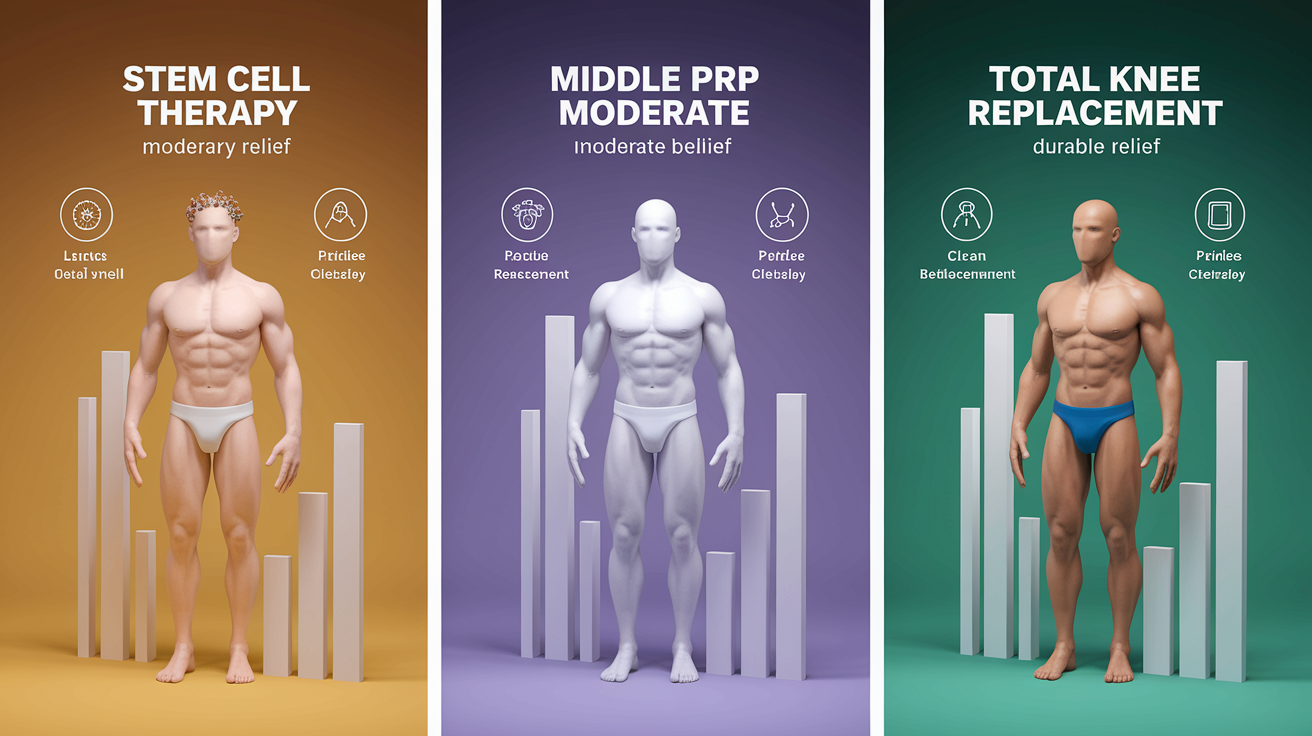
Head-to-head clinical trials published between 2017 and 2022 show no statistically significant advantage of stem cell therapies over PRP at 12 to 24 months for knee osteoarthritis. Both improve pain and function modestly in many patients, but neither is clearly superior.
Hyaluronic acid injections and corticosteroid injections remain useful comparators. A 2022 double-blind study of 58 knees found cortisone often gives better relief in the first 4 to 6 weeks, while PRP may outperform steroids at 3 to 6 months. Stem cell injections, when compared to steroids in the MILES Trial, showed no advantage at 12 months.
Joint replacement provides 90 to 95 percent pain relief and durable outcomes, with modern implants lasting 15 to 20 years and 10-year survival rates exceeding 96 percent. Stem cell therapy costs $3,000 to $10,000 per joint and is rarely covered by insurance, while total knee replacement typically costs $30,000 to $50,000 but is often covered. Conventional first-line measures (exercise, weight loss, NSAIDs, physical therapy) remain the standard of care and are supported by strong evidence. Stem cell injections have not been shown to reliably replace or delay arthroplasty in high-quality trials.
Cost-effectiveness is poor when you weigh the expense against the modest, temporary benefit and lack of insurance coverage. For many patients, spending several thousand dollars for a few months of relief that may or may not occur is a difficult value proposition, especially when proven alternatives exist. For additional comparison detail, this resource on PRP vs stem cell therapy offers a side-by-side look at outcomes, costs, and recovery timelines.
| Treatment | Typical Outcome | Evidence Strength |
|---|---|---|
| Stem Cell Injection (autologous MSCs) | Small, temporary pain/function improvement. No proven cartilage regrowth. Benefit often fades by 12 months. | Low to moderate (small RCTs, heterogeneous protocols, short follow-up). |
| PRP Injection | Modest pain/function improvement. 60–70% “success” in some series. Benefits typically 6–12 months. No cartilage regeneration. | Moderate (multiple RCTs, no clear superiority over stem cells at 12–24 months). |
| Total Knee Replacement | 90–95% pain relief. Durable outcomes (15–20 year implant lifespan). High patient satisfaction (~90%). | High (large registries, long-term follow-up, consistent reproducible results). |
Cost Transparency: What Patients Can Expect to Pay and What Is (Not) Covered

Stem cell treatment for a single joint typically costs between $3,000 and $10,000. Some U.S. clinics charge $4,000 for one joint, with additional joints during the same session costing as little as $800 each. Intravenous infusions, when used for systemic or whole-body treatment, can range from $10,000 to $50,000 or more, depending on cell dose and processing.
Insurance coverage is rare. Most patients pay out of pocket. Total cost increases if you need multiple joints treated, repeat treatments, or additional services like imaging, follow-up visits, and physical therapy.
Joint replacement is typically covered by insurance and provides more predictable, durable results, making the cost-benefit calculation for stem cell therapy unfavorable for many. The price tag for an investigational treatment with modest, temporary benefits and no proven structural repair is hard to justify when proven alternatives exist. For detailed cost ranges and what’s included, this guide to stem cell therapy costs in 2025 breaks down pricing by procedure type and provider.
Key cost factors to budget for:
Cell processing and lab fees, which vary widely depending on whether cells are same-day, minimally manipulated, or cultured and expanded. Imaging guidance fees, often $200 to $800 per session, used to ensure accurate injection placement. Follow-up visits and additional consultations, typically $100 to $500 per visit, which may or may not be included in the initial quote.
Remaining Evidence Gaps and Research Priorities for OA Stem Cell Treatments

Major gaps in the evidence base include short follow-up periods. Many studies stop at 6 or 12 months, leaving long-term durability unknown. Sample sizes are small, often fewer than 100 patients per arm, limiting statistical power and generalizability. Cell dosing is inconsistent, with no agreement on optimal dose, preparation method, or injection protocol.
There’s no standardized cell product, no consensus on autologous versus allogeneic sources, and no proven cartilage regeneration in human trials. Regulators and major surgical societies recommend larger, longer randomized controlled trials with standardized protocols to address these gaps.
Publication bias is a concern, as negative or neutral results may be underreported. Study quality is often low, with many trials unblinded, poorly controlled, or conducted in single centers with small patient pools. Without rigorous, independent, adequately powered trials with long-term follow-up and objective structural endpoints, the evidence will remain weak.
Future research must address these limitations if stem cell therapy is ever to move from investigational to standard care. Until then, expectations should be cautious, and patients should be informed that the evidence base is incomplete and the benefits uncertain.
Final Words
We dug into trial results, how cells probably work, differences by source and technique, timelines, who tends to respond, safety, and cost. Yep, marketing often oversells. High-quality RCTs and reviews show only modest, short-term symptom gains and no proven cartilage regrowth.
The practical takeaway: expect small pain and function changes for months, not guaranteed fixes. Ask for itemized quotes, protocol details, and clear follow-up plans before paying.
Bottom line: understanding realistic outcomes of stem cell treatments for osteoarthritis helps you weigh costs, risks, and sensible next steps. Stay focused on movement, strength, and smart choices.
FAQ
Q: What are realistic outcomes from stem cell therapy for osteoarthritis?
A: Realistic outcomes from stem cell therapy for osteoarthritis are modest symptom relief for many people—usually short to medium term—with inconsistent benefit across studies and no consistent evidence of lasting structural repair.
Q: How much pain reduction can I expect after stem cell therapy?
A: Expected pain reduction after stem cell therapy is modest, commonly less than 2 points on a 0–10 scale in trials, with benefits often small and of low certainty in systematic reviews.
Q: Will stem cell therapy improve my joint function?
A: Functional improvement following cell therapy for osteoarthritis is typically small; some studies show minor gains that may not reach clinically meaningful thresholds for many patients.
Q: Does stem cell therapy regenerate cartilage in humans?
A: Evidence for cartilage regeneration in human trials is lacking; current studies do not show convincing MRI or biopsy-proven cartilage regrowth after intra‑articular cell treatments.
Q: When do improvements usually start, peak, and fade after treatment?
A: Timeline of response usually shows first noticeable changes within weeks, peak improvement around 6 weeks to 3 months, then gradual decline often by 6–12 months in many randomized trials.
Q: Do outcomes differ by cell source or processing method?
A: Differences in outcomes based on cell source and processing are common; bone marrow, adipose, and allogeneic products show mixed, inconsistent results largely due to variable methods and dosing across studies.
Q: Who is most likely to benefit from stem cell therapy for OA?
A: Best responders tend to have mild to moderate osteoarthritis, are younger (<65), and have lower BMI; advanced bone-on-bone disease and multiple comorbidities predict poorer responses.
Q: How safe is stem cell therapy for osteoarthritis and what are the risks?
A: Safety profile shows mostly minor short‑term events with autologous procedures, but risks include infection, pain flare, immune reactions with some products, and uncertain long‑term effects; regulatory warnings exist too.
Q: How do stem cell outcomes compare to PRP, hyaluronic acid, or surgery?
A: Compared to PRP and HA, stem cell treatments have not shown clear superiority at 12–24 months; joint replacement offers far greater, durable pain relief, while costs for cells are often higher without better outcomes.
Q: What will stem cell therapy cost and will insurance cover it?
A: Costs typically range $3,000–$10,000 per joint, are rarely covered by insurance, and can rise with repeated treatments or multiple joints; expect out‑of‑pocket payments and ask for itemized quotes.
Q: What key evidence gaps should I know before choosing treatment?
A: Remaining evidence gaps include short follow‑up durations, small trial sizes, inconsistent dosing and processing, and lack of standardized protocols; larger, longer randomized trials are still needed.