
Would you let someone work on your body without checking their credentials?
When it comes to stem cell care, a third-party check matters more than glossy promises.
Look for FACT and AABB accreditation, CAP and CLIA lab credentials, FDA compliance under 21 CFR 1271, and current state medical licenses, and each verifies a different safety step, from donor screening to lab testing to physician oversight.
This post explains what those accreditations actually mean, why they matter for your safety, and the key questions to ask before you book a procedure.
Core Accreditation Standards Every Legitimate Stem Cell Clinic Should Meet

Accreditation is how you confirm a stem cell clinic isn’t just making promises, but actually proving it. Without third-party verification, you’re trusting whatever the clinic tells you about their lab, their staff, and their safety protocols. Accreditation means someone from the outside has checked their work.
The credentials you should ask for include FDA compliance under 21 CFR 1271 for human cells and tissues, FACT accreditation for cellular therapy programs, AABB standards for blood and cell therapy processing, CAP accreditation and CLIA certification for laboratory quality, and state medical board licensing for every provider who sees patients or performs procedures. Each one confirms that a different piece of the operation has been verified by an external authority.
- FACT (Foundation for the Accreditation of Cellular Therapy) covers collection, processing, and clinical use of cellular therapies
- AABB handles safety and quality standards for donor screening, cell product handling, and transfusion systems
- CAP (College of American Pathologists) sets pathology and laboratory quality systems
- CLIA (Clinical Laboratory Improvement Amendments) is federal certification for clinical laboratory testing
- FDA compliance (21 CFR 1271) means regulatory oversight of human cells, tissues, and cellular products
- State medical board licensing confirms legal authority to practice medicine and disciplinary oversight
When a clinic can’t provide verification for any of these, it’s a major warning sign. Missing accreditation often means the clinic is operating outside recognized standards or avoiding regulatory scrutiny altogether.
Understanding FDA Oversight And Regulatory Compliance For Cell Therapy Clinics

The FDA regulates human cells, tissues, and cellular and tissue-based products under Title 21 of the Code of Federal Regulations, Part 1271 (21 CFR 1271). This covers everything from donor eligibility and tissue recovery to processing, labeling, and distribution. Clinics must register as tissue establishments and list their products with the FDA. The agency can inspect facilities, issue warning letters, and shut down operations if it finds violations.
Two concepts determine whether a product is eligible for the simpler regulatory pathway or requires pre-market approval as a biologic drug: minimal manipulation and homologous use. Minimal manipulation means the cells are processed in ways that don’t alter their original characteristics. Homologous use means the cells perform the same basic function in the recipient as they did in the donor. If a product fails either test, or if it combines cells with another article like a scaffold, it’s regulated as a biologic drug and must go through the Investigational New Drug (IND) pathway and clinical trials before it can be legally marketed.
| Regulation | What It Means | What Patients Should Check |
|---|---|---|
| 21 CFR 1271 | FDA rules for human cells and tissues, covering donor screening, processing, labeling, and distribution | Ask if the clinic is registered as a tissue establishment and whether their products meet minimal manipulation and homologous use criteria |
| Minimal Manipulation | Processing does not alter the original characteristics of the cells | Request a written description of how cells are processed; expansion or significant culture typically triggers drug regulation |
| Homologous Use | Cells perform the same basic function in the recipient as in the donor | Confirm the cells are being used for a function they naturally perform, not as a systemic cure for everything |
| IND Pathway | Required for products that do not meet minimal manipulation/homologous use, or are being studied for safety and efficacy | Ask if the treatment is part of a registered clinical trial and verify the trial identifier at ClinicalTrials.gov |
Clinics should clearly state whether their procedures are compliant with the simpler 21 CFR 1271 pathway, are part of a formal IND clinical trial, or are being offered outside FDA approval. If a clinic can’t or won’t disclose this information, you’re looking at a significant regulatory red flag.
Laboratory Accreditation Requirements For Processing And Testing Stem Cell Products

Clinical laboratories that process, test, or handle stem cell products should hold CLIA certification from the Centers for Medicare & Medicaid Services and CAP accreditation from the College of American Pathologists. CLIA certification is a federal requirement for any lab performing testing on human specimens. It covers personnel qualifications, quality control, proficiency testing, and inspection protocols. CAP accreditation goes further, setting stricter quality standards for pathology and laboratory medicine, including staff competency, equipment validation, procedure manuals, and traceability systems. ISO 15189 is an international standard for medical laboratory quality and competence, and some advanced centers pursue this additional credential.
Every cell product should undergo sterility testing to confirm absence of bacterial and fungal contamination, endotoxin testing to detect harmful bacterial toxins, and potency assays to measure the biological activity and viability of the cells. Labs must maintain chain of custody documentation that tracks the product from collection through processing, storage, and administration. This documentation ensures traceability if adverse events occur and provides an audit trail for regulatory inspections.
- CLIA certification is the federal requirement for clinical lab testing, covering quality control, personnel standards, and proficiency testing
- CAP accreditation sets pathology and laboratory medicine standards, including equipment validation, staff competency, and procedure documentation
- ISO 15189 is the international standard for medical laboratory quality and competence
- Sterility testing confirms absence of microbial contamination in the final cell product
- Potency assay validation measures cell viability, activity, and therapeutic potential
You can verify lab credentials by requesting the CLIA certificate number and CAP accreditation certificate. CLIA certificates can be checked through CMS public databases, and CAP accreditation can be confirmed directly with the College of American Pathologists. If a clinic processes cells but can’t provide proof of these lab credentials, the product safety and quality are unverifiable.
FACT And AABB Accreditation: Gold Standard Indicators For Cell Therapy Quality Systems
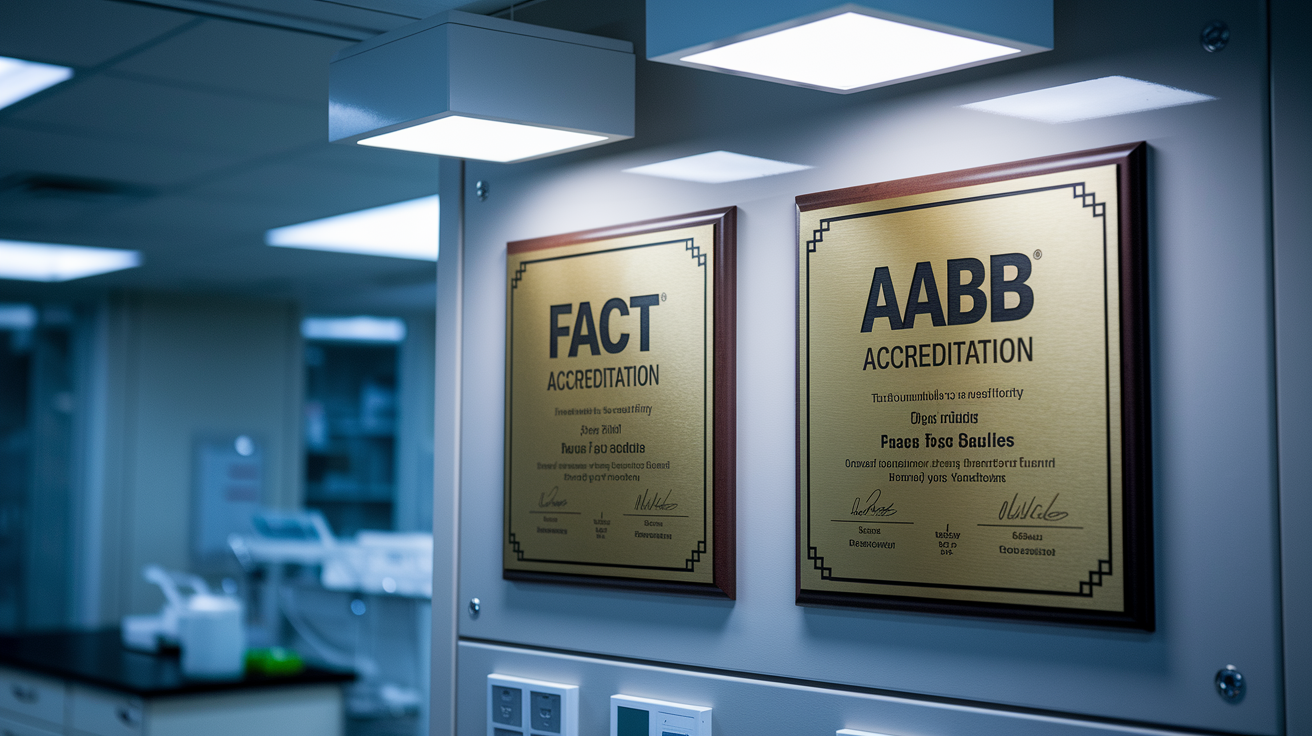
FACT and AABB are widely recognized as top tier accreditations for cellular therapy programs. They indicate that a clinic has implemented comprehensive quality management systems, undergone external audits, and met standards that go beyond basic regulatory compliance. These accreditations are voluntary, which makes them strong signals that a clinic is committed to patient safety and outcome tracking.
FACT Accreditation Requirements
FACT (Foundation for the Accreditation of Cellular Therapy) accreditation covers the entire lifecycle of cellular therapy: collection, processing, storage, distribution, and clinical application. FACT standards require written standard operating procedures (SOPs) for every step, staff competency assessments, equipment validation, environmental monitoring, and traceability systems that track products from donor to recipient. Programs must document adverse events, maintain outcome registries, and participate in continuous quality improvement. FACT accredited centers are inspected regularly and must demonstrate that their practices align with current best practices in cellular therapy.
AABB Cell Therapy Accreditation
AABB (formerly the American Association of Blood Banks) offers accreditation standards for cell therapy manufacturing and transfusion services. AABB accreditation focuses on donor screening and eligibility, cell collection and processing safety, quality control testing, storage and transport protocols, and quality management systems. Facilities must demonstrate proper handling of blood derived and cellular products, maintain donor confidentiality, and implement rigorous contamination prevention measures. AABB standards are particularly relevant for bone marrow, cord blood, and adipose derived cell therapies.
These accreditations reduce clinical risk by ensuring that every step, from how cells are collected to how adverse events are reported, is standardized, documented, and audited by independent experts. If a clinic holds FACT or AABB accreditation, it has passed rigorous third party review and can provide verifiable proof of its quality systems.
Licensing, Physician Credentials, And Staff Qualifications Clinics Must Demonstrate

Every stem cell clinic must hold a current state medical license and operate under the supervision of a licensed physician. State medical boards issue these licenses, oversee scope of practice rules, and maintain public records of disciplinary actions. Checking a clinic’s state license status takes about five minutes using the state medical board’s online lookup tool and is one of the fastest ways to confirm a clinic is legally authorized to operate.
Physicians who perform or oversee stem cell procedures should be board certified in a specialty relevant to the patient’s condition. Orthopedic surgery, physical medicine and rehabilitation (PM&R), sports medicine, or interventional pain management. Board certification through an American Board of Medical Specialties (ABMS) recognized board indicates the physician completed accredited residency training, passed rigorous exams, and maintains continuing education requirements. You should also verify that the physician has specific training in regenerative medicine or orthobiologics, has performed at least 100 procedures for the specific indication, and has been performing regenerative procedures for at least 2 to 3 years. Staff who handle cell processing, lab work, or patient care must have documented training records, competency assessments, and adherence to SOPs.
- State medical license confirms legal authority to practice and lack of disciplinary sanctions
- Board certification verifies specialty training, examination, and continuing education
- Training records document regenerative medicine or orthobiologics training
- Staff competency assessments ensure lab and clinical personnel meet qualification standards
- SOP adherence confirms all staff follow written procedures for safety and quality
- Continuing education documentation shows ongoing professional development and updated knowledge
Clinics should provide written documentation of physician credentials, staff qualifications, and training logs on request. If a clinic can’t or won’t disclose who will perform the procedure, what their qualifications are, or how they maintain staff competency, consider it a major red flag.
Verifying Clinic Safety Systems: SOPs, Clean Rooms, Traceability, And Emergency Preparedness

Legitimate stem cell clinics operate under written standard operating procedures (SOPs) for every step of the treatment process: patient evaluation, cell collection, processing, storage, administration, and follow up. SOPs standardize care, reduce variability, and provide a clear audit trail if complications occur. Clinics should maintain clean room or controlled environment processing areas that meet CDC guidelines for sterility and infection control, perform environmental monitoring to detect contamination, and use single use or appropriately sterilized equipment. Infection risk with proper technique is cited as less than 1 percent, but that low rate depends entirely on adherence to sterile protocols.
Emergency preparedness is non-negotiable. The clinic should have on site resuscitation equipment, written transfer protocols to a nearby hospital, monitoring of vital signs during and after the procedure, and a clear escalation path if adverse events occur. Follow up care should be scheduled before the procedure, with documented short term checks at 1 to 2 weeks and long term outcome assessments at 3, 6, and 12 months. Every patient should receive written aftercare instructions, emergency contact information, and a clear description of what symptoms require immediate medical attention.
| Safety Practice | What It Ensures |
|---|---|
| Written SOPs for every procedure step | Standardized, repeatable processes that reduce variability and support quality audits |
| Clean room processing or CDC compliant sterility controls | Minimizes contamination risk and maintains product sterility throughout handling |
| Chain of custody and traceability logs | Tracks products from collection to administration, enabling adverse event investigation |
| Emergency equipment and transfer protocols | Provides immediate response capacity if complications occur during or after the procedure |
Accreditation Versus Certification: What Patients Should Know Before Comparing Clinics

Accreditation and certification are related but distinct. Certification typically refers to individual credentials. A physician’s board certification or a lab’s CLIA certification confirm that a person or facility meets minimum standards for a specific function. Accreditation is a broader, program level recognition that an entire clinic or cellular therapy program has met comprehensive quality, safety, and operational standards through external audit. FACT and AABB are accreditations. CLIA and CAP certifications apply to laboratory operations.
Independent verification of a clinic’s credentials takes less than one hour. State medical board licensing checks take about 5 minutes using online lookup tools. CLIA certificates can be confirmed through CMS databases, and CAP accreditation can be verified directly with the College of American Pathologists. FACT and AABB accreditation statuses are publicly listed on the organizations’ websites, and FDA tissue establishment registration can be searched through the FDA’s establishment database.
- State medical board website to verify active, unrestricted licenses and check disciplinary history
- FACT and AABB accreditation directories to confirm program level accreditation status
- CMS CLIA database to verify clinical laboratory certification
- CAP website to confirm laboratory accreditation status
Clinics that claim to be “certified” or “accredited” without specifying which organizations granted those credentials are using vague language that makes verification impossible. Always request the specific accreditation or certification body, certificate numbers, and expiration dates.
Red Flags That Indicate A Stem Cell Clinic May Not Be Accredited Or Safe

Unaccredited or unsafe clinics often share common warning signs that you can spot during initial research or consultation. Cure claims, guarantees of 100 percent success, or marketing that promises to treat unrelated serious conditions like knee pain, Alzheimer’s, MS, and autism with the same procedure are immediate red flags. The FDA has issued numerous warning letters to clinics making these claims, and such language indicates the clinic is operating outside evidence based medicine and regulatory standards.
- Cure or miracle claims because no legitimate provider guarantees results for complex, variable conditions
- Lack of verifiable accreditation or inability to provide FACT, AABB, CLIA, CAP, or FDA compliance documentation
- No written informed consent since reputable clinics provide detailed consent forms with risks, alternatives, and costs
- High pressure sales tactics or limited time offers because medical decisions shouldn’t be rushed or incentivized like retail purchases
- No outcome data or adverse event tracking while legitimate clinics track complications and results over time
- Unclear personnel or who performs the procedure when you should know exactly who is evaluating, treating, and following up with you
If you encounter these red flags, pause and seek a second opinion before proceeding. For a comprehensive checklist of credibility and safety signals, you can review additional guidance at How To Choose A Stem Cell Therapy Doctor.
How Patients Can Independently Verify Stem Cell Clinic Accreditation

Independent verification protects you from relying solely on clinic marketing claims. Start by requesting copies of all accreditation certificates, lab certifications, and state medical licenses. Ask for the physician’s board certification details, including specialty, certifying board, and year certified. Request the clinic’s FDA tissue establishment registration number if they process human cells or tissues, and confirm the number through the FDA’s public database.
Next, verify lab certifications by requesting the CLIA certificate number and CAP accreditation certificate. Check the CLIA number through the CMS CLIA database and confirm CAP accreditation directly with the College of American Pathologists. For FACT or AABB accreditation, search the organization’s accredited facility directory using the clinic name or location. If the clinic claims to participate in clinical trials, request the trial identifier (NCT number) and verify it at ClinicalTrials.gov.
- Verify state medical license by using the state medical board’s online lookup tool to confirm active, unrestricted status and review disciplinary history
- Confirm lab certifications by requesting CLIA and CAP certificate numbers and verifying through CMS and CAP databases
- Confirm facility accreditation by searching FACT and AABB directories for the clinic or cellular therapy program
- Request SOPs and outcome data and ask for written standard operating procedures, adverse event logs, and documented outcome tracking for your condition
- Review complaints and published evidence by searching FDA warning letters, state medical board actions, and peer reviewed publications related to the clinic or physicians
Cross check your findings with accredited clinic directories and patient safety resources. You can also consult guidance from organizations like How to Choose the Best Stem Cell Clinic to compare your verification results against recommended standards.
Why Accreditation Protects Patients: Evidence Standards, Transparency, And Long Term Outcomes

Accredited clinics are required to track patient outcomes, maintain complication logs, and provide condition specific evidence for the treatments they offer. These practices create accountability and transparency that protect patients from unproven, high risk interventions. Accreditation bodies conduct regular audits, review adverse event reports, and require corrective action plans if quality or safety issues are identified.
| Requirement | Why It Matters | What Patients Should Expect |
|---|---|---|
| Outcome tracking at 1, 3, 6, and 12 months | Provides real world data on safety and effectiveness for specific conditions | Clinic should share aggregated outcome data or registry results for your diagnosis |
| Adverse event logging and reporting | Identifies complications early, supports corrective actions, and informs patient consent | Clinic should disclose complication rates and how they manage adverse events |
| Peer reviewed evidence or clinical trial participation | Ensures treatments are studied, not just marketed, and that claims are verifiable | Request published studies or trial identifiers specific to your condition and the clinic’s protocol |
Evidence based practices reduce risk by ensuring that treatments are grounded in documented safety profiles, that patient selection criteria are clear, and that informed consent includes realistic expectations. Accreditation doesn’t guarantee perfect outcomes, but it does guarantee that the clinic operates within recognized quality frameworks, submits to external oversight, and maintains the documentation needed to support safe, informed decisions.
Final Words
Check the clinic’s credentials first: FACT, AABB, CAP/CLIA, FDA compliance, and state medical board licensing. That tells you the place follows basic safety and lab standards.
Next, confirm lab testing, clean-room practices, physician board certification, SOPs, and watch for red flags like bold cure claims or no follow-up. Verification steps in the article show how to do this in under an hour.
If you’re asking what accreditation should stem cell clinics have, use those checklists, request documents, and you’ll be closer to a safer, more confident decision.
FAQ
Q: What are the three types of accreditation?
A: The three types of accreditation patients commonly check for stem cell clinics are FACT (cell therapy standards), AABB (blood-derived product safety), and CAP/CLIA (laboratory testing and pathology certification).
Q: Are any stem cell therapies FDA approved?
A: Some stem cell-based therapies are FDA approved for specific uses—like bone marrow transplants, certain cord-blood products, and some cell immunotherapies—but most clinic-offered injection treatments are not FDA approved.
Q: Where did Joe Rogan go for stem cell therapy?
A: Joe Rogan has said he traveled outside the U.S. to receive stem cell treatment; media reports commonly identify Mexico, where many clinics offer cell therapies not approved by the FDA.
Q: What organization is responsible for approving stem cell clinical trials?
A: The FDA—specifically its Center for Biologics Evaluation and Research (CBER)—reviews and clears investigational new drug (IND) applications for stem cell trials; local Institutional Review Boards also must approve study protocols.