
What if lifting weights could ease joint pain instead of making it worse?
Strength training done the right way shifts load from damaged cartilage onto muscles that actually protect your joints.
This short plan shows low-impact exercises for knees, hips, shoulders, and hands that build support without pounding the joint.
You’ll get simple warm-ups, step-by-step form cues, and easy progressions for mild to severe cases.
Read on to learn how controlled resistance can reduce pain, improve function, and help you move with more confidence.
Benefits of Strength Training for Arthritic Joint Support
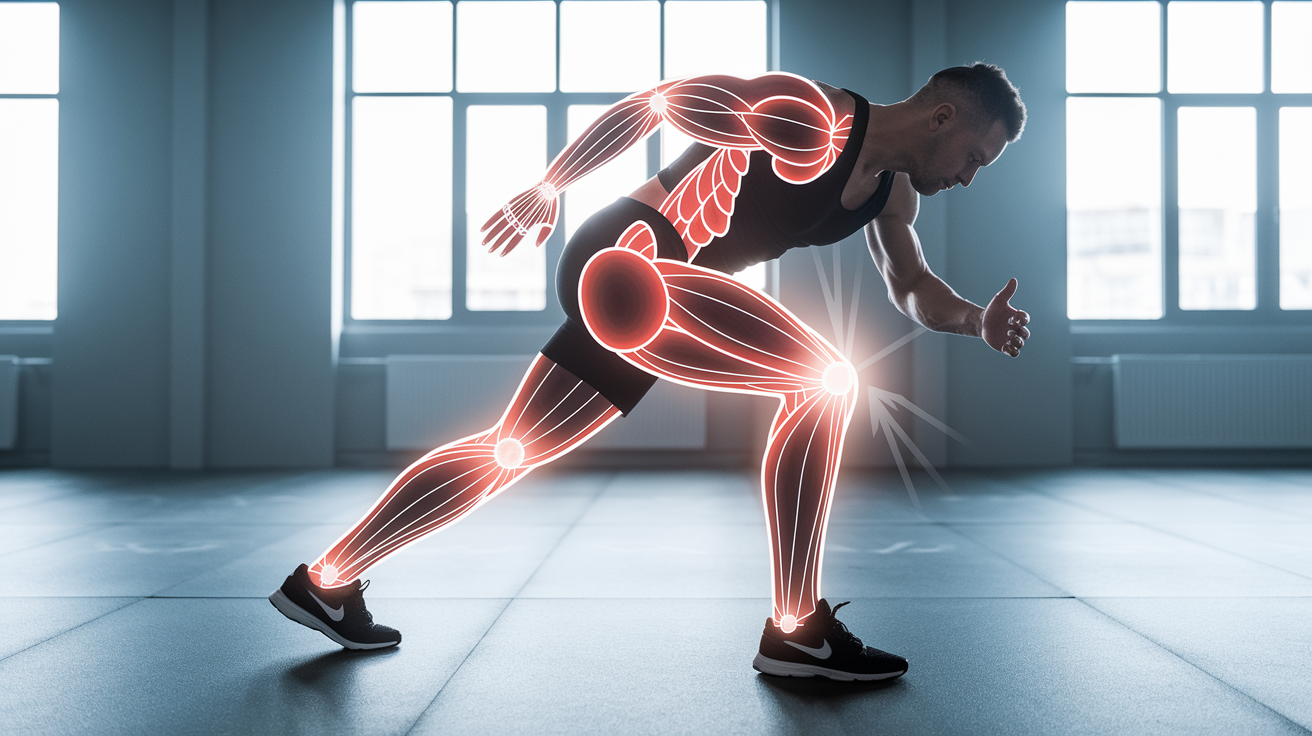
Strength training shifts stress away from damaged cartilage and onto the muscles around your joints. When you strengthen your quads, hamstrings, glutes, and rotator cuff muscles, those tissues absorb more of the load during everyday movements like walking, climbing stairs, or reaching overhead. That takes pressure off worn-down joint surfaces and gives you more control over how you move.
Regular resistance work also helps reduce how often inflammatory flare-ups happen. Stronger muscles stabilize joints better. Less wobbling, less compensatory movement, fewer irritating micro-traumas throughout the day. Over time, that adds up to real improvements in mobility, comfort, and quality of life.
The evidence is solid. A 2019 review of 103 clinical trials showed that strength training reduces arthritis pain and improves function. A 2016 international expert panel prioritized it as a first-line treatment for hip arthritis before medications, injections, or surgery. It’s not a cure, but it’s one of the most effective tools you have.
Strength training for arthritic joints reduces pain by decreasing mechanical stress on damaged cartilage. It improves joint stability and alignment during movement. It slows disease progression by supporting healthy loading patterns. It increases functional mobility for daily activities like walking and lifting. And it lowers the frequency of inflammatory flare-ups when done consistently.
Essential Warm-Up Protocols for Arthritic Joints
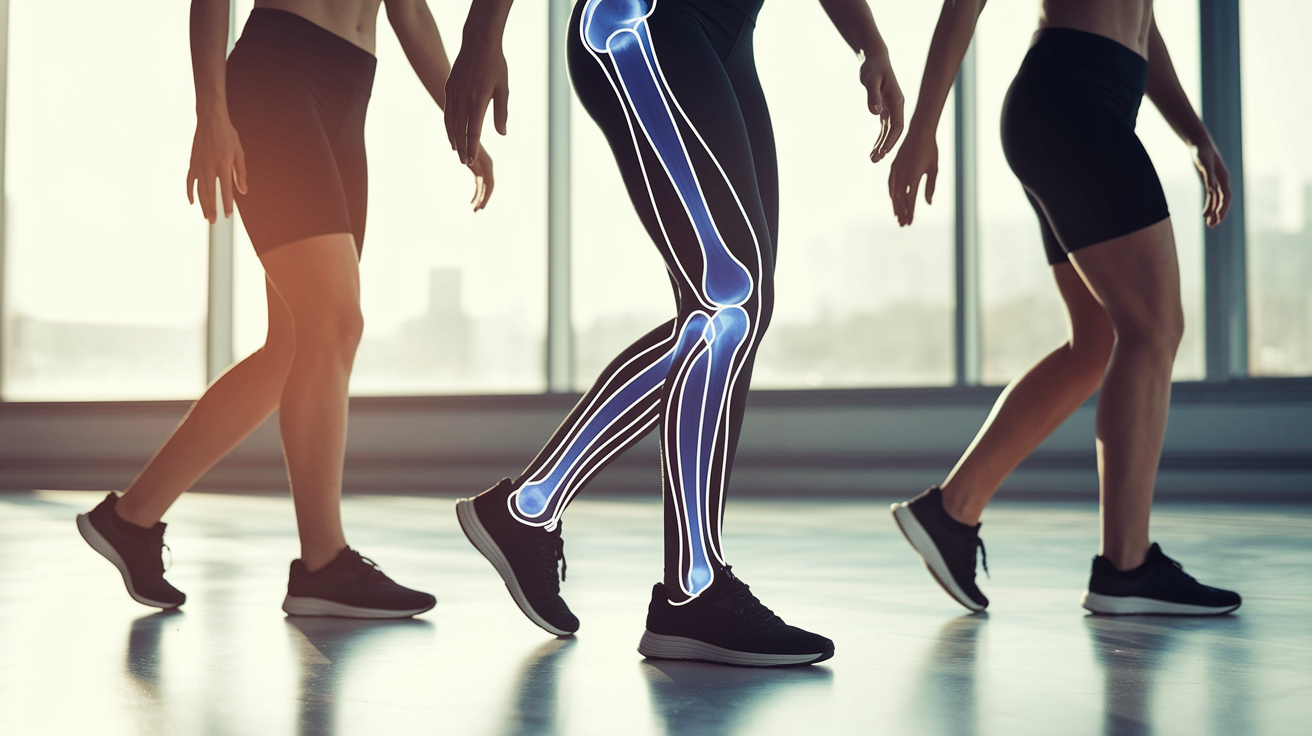
A proper warm-up increases synovial fluid production inside your joints. That fluid lubricates the cartilage, reduces friction, and makes movement feel less stiff and painful. Skipping the warm-up means you’re asking cold, under-lubricated joints to handle resistance, and that’s when irritation and flare-ups happen.
Start with 5 to 10 minutes of gentle, low-impact movement before you touch any weights or bands. The goal is to elevate your heart rate slightly, get blood flowing to your muscles, and move your joints through pain-free arcs without loading them yet.
Here’s a five-step warm-up routine for arthritic joints. Easy walking or marching in place for 2 to 3 minutes at a slow, controlled pace. Gentle arm circles for 20 to 30 seconds forward, then 20 to 30 seconds backward. Hip circles or pelvic tilts for 30 seconds, slow rotations to loosen the hips and lower back. Ankle pumps and circles for 20 seconds per foot, seated or standing with support. Shoulder shrugs and rolls for 30 seconds, gentle elevation and retraction to prepare upper body.
Low-Impact Strength Exercises by Affected Joint
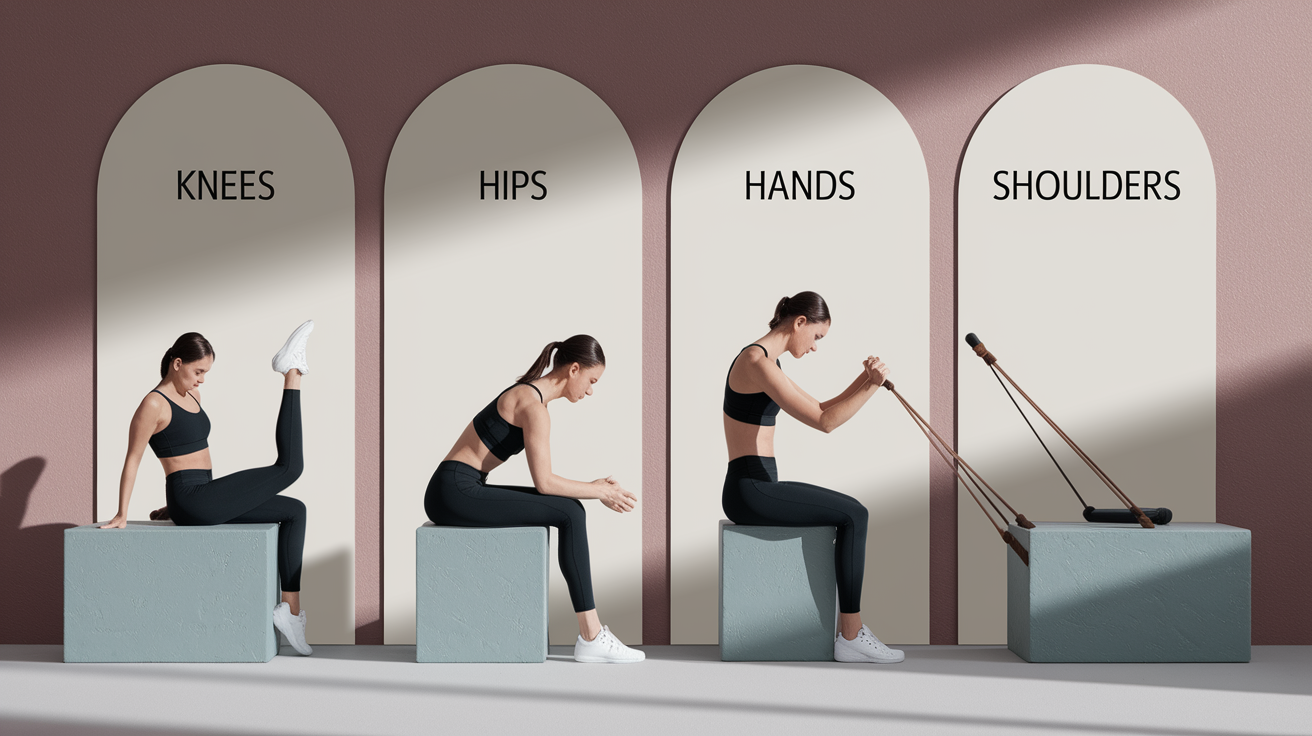
Different joints need different strategies. The exercises below strengthen the muscles around each commonly affected area without grinding or compressing already-irritated cartilage. Start with what feels manageable, and progress slowly over weeks, not days.
Knees
Knee arthritis responds well to exercises that strengthen the quadriceps and hamstrings without deep bending or high impact. These movements support the knee joint and reduce the load on damaged cartilage during walking and stair climbing.
Seated straight-leg raises work like this: sit in a chair, extend one leg straight, hold for 2 to 3 seconds, lower slowly over 5 seconds. Builds quad strength with zero knee compression.
Band knee flexion: stand, loop a band around one ankle, bend knee slowly, hold 2 to 3 seconds, lower over 5 seconds. Strengthens hamstrings in a controlled range.
Partial wall squats: stand with back against wall, feet 12 to 18 inches out, lower a few inches, hold 2 to 3 seconds, push up fast. Targets quads and glutes without deep flexion.
Hips
Hip arthritis benefits from strengthening the glutes and hip abductors, which stabilize the pelvis and reduce stress on the hip joint during standing, walking, and turning.
Bridge: lie on back, feet flat, lift hips fast, hold 2 to 3 seconds, lower slowly over 5 seconds. Targets glutes and posterior chain.
Clam shell with band: lie on side, band above knees, lift top knee while keeping feet together, hold 2 to 3 seconds, lower over 5 seconds. Strengthens hip abductors and external rotators.
Standing hip abduction with band: stand with band around ankles, lift one leg 30 degrees to the side, hold, lower slowly. Builds hip stability and reduces hip drift.
Hands and Wrists
Hand and wrist arthritis requires gentle resistance to maintain grip strength and dexterity without aggravating inflamed finger joints. Use soft equipment and avoid heavy gripping.
Soft ball squeezes: use a foam or therapy ball, squeeze gently, hold 3 to 5 seconds, release. Builds grip without joint compression.
Wrist flexion and extension with light band: loop band around hand, flex and extend wrist slowly against resistance. Strengthens forearm muscles that support wrist alignment.
Finger abduction with therapy putty: press fingers into putty and spread them apart. Targets intrinsic hand muscles with minimal joint stress.
Shoulders
Shoulder arthritis improves with exercises that strengthen the rotator cuff and scapular stabilizers, reducing the need for painful overhead compensation and improving arm function.
Wall push-ups: stand arm’s length from wall, hands on wall, lower chest slowly, push back up. Builds shoulder and chest strength with bodyweight control.
Seated band row: sit with band around a stable anchor, pull elbows back, squeeze shoulder blades, return slowly. Strengthens mid-back and rotator cuff.
External rotation with band: elbow at 90 degrees, band in hand, rotate forearm outward, hold, return slowly. Targets rotator cuff without overhead loading.
Step-by-Step Form Instructions for Safe Execution
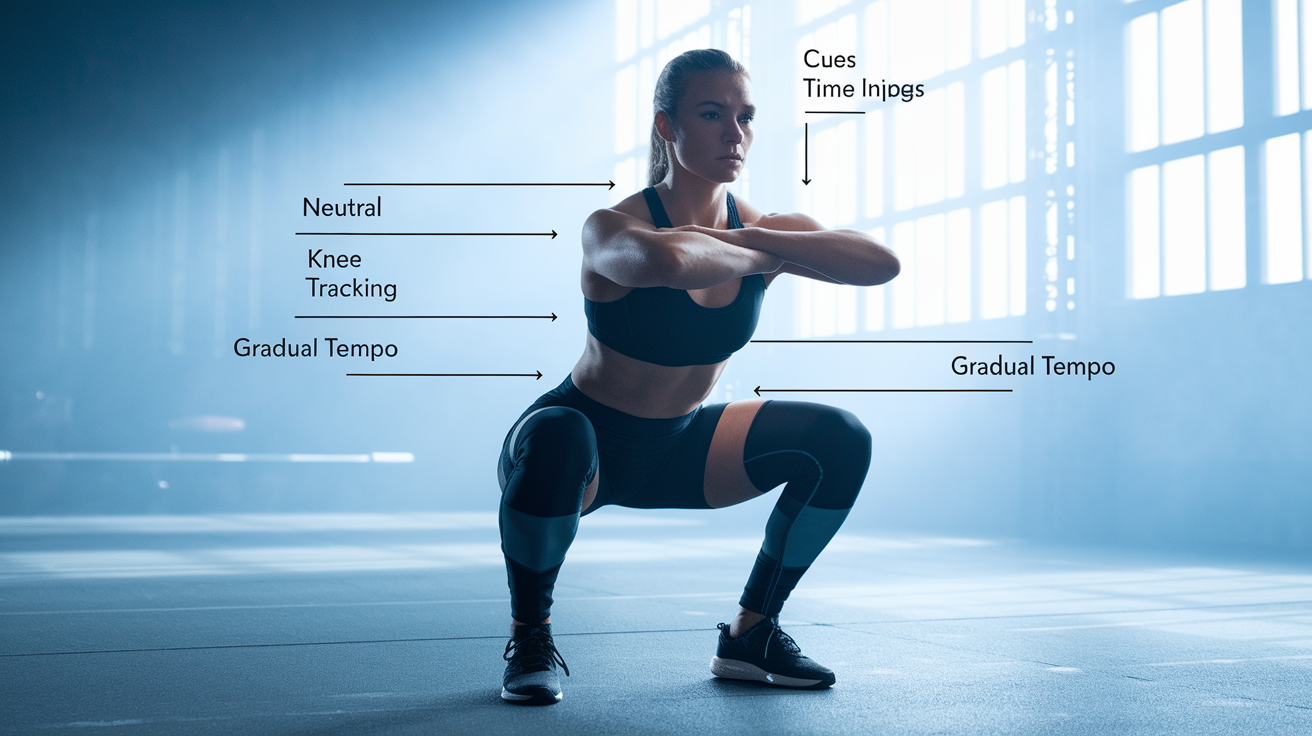
Proper form isn’t about perfection. It’s about protecting your joints from unnecessary shearing, twisting, or compression while the muscles do the work. Small adjustments in alignment and tempo can make the difference between a helpful session and a painful flare-up.
Maintain neutral joint alignment. Keep knees tracking over toes during squats, avoid letting them cave inward. Keep wrists straight during pressing. Avoid excessive lumbar arching during bridges or overhead work.
Use controlled tempo. Lift quickly through the hard part, hold for 2 to 3 seconds at the top, then lower slowly over 5 seconds. Slow lowering builds strength while protecting cartilage.
Work within a supported, pain-free range of motion. Don’t force deep squats or overhead reaches if they cause sharp pain. Partial range with good control beats full range with compensation.
These principles reduce the mechanical stress on inflamed or damaged cartilage, shift the load onto muscle tissue where it belongs, and give your nervous system time to coordinate movement safely. When you control the descent and avoid jerky, bouncing reps, you’re also reducing the risk of post-exercise swelling and soreness that can derail consistency.
Recommended Equipment for Gentle Joint Support
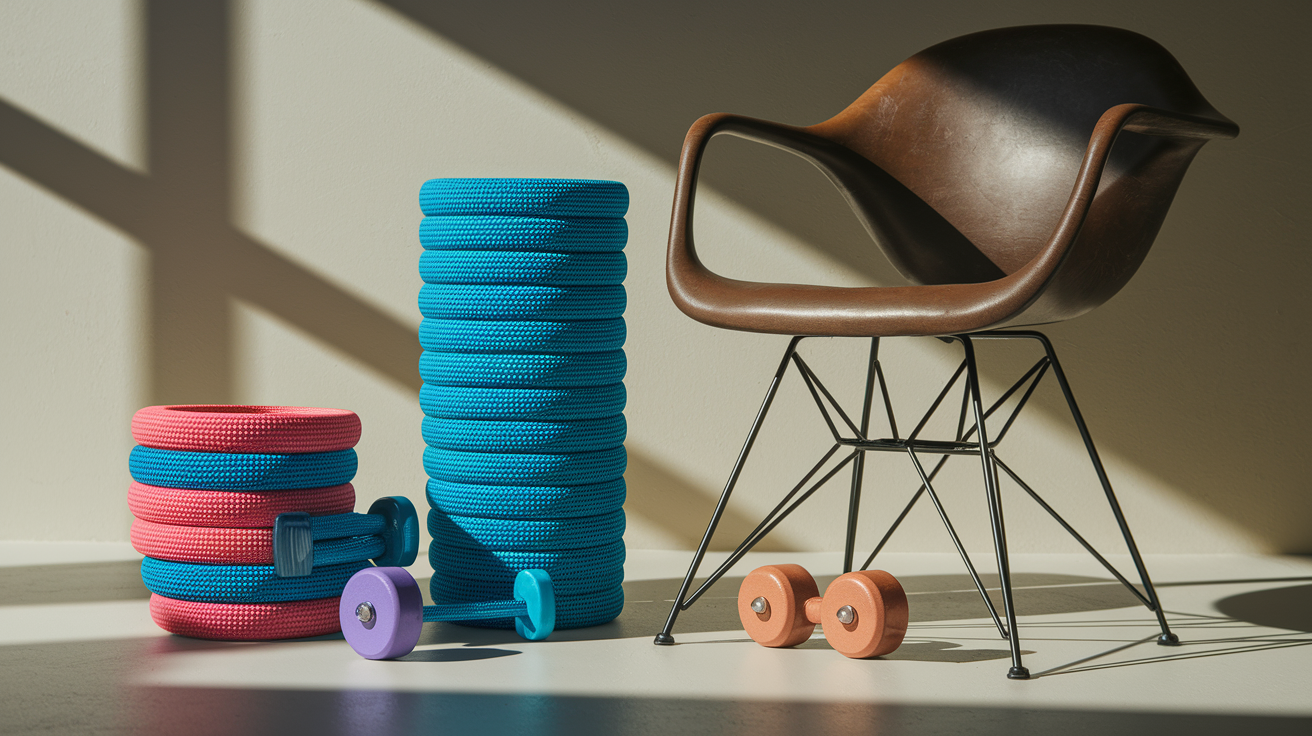
You don’t need a gym full of heavy iron to strengthen muscles around arthritic joints. The right equipment makes resistance training accessible, adjustable, and joint-friendly, especially when grip strength or balance is limited.
Light resistance bands and soft-grip dumbbells let you start with minimal load and progress in small increments. Bands come in color-coded resistance levels, so you can add just 5 to 10 percent more tension as you get stronger. Soft-grip handles reduce strain on arthritic fingers and wrists.
Resistance bands with light to medium tension give you adjustable resistance, easy on hands, no heavy gripping required. Soft-grip dumbbells or neoprene-coated weights in the 1 to 5 kg or 2 to 10 lb range have cushioned handles that reduce joint stress in fingers and wrists. Ankle weights of 1 to 2 kg add resistance to leg raises and hip exercises without needing to hold anything. A stable chair or sturdy surface for support provides balance assistance and allows seated modifications when standing is painful.
Modifications for Mild, Moderate, and Severe Arthritis
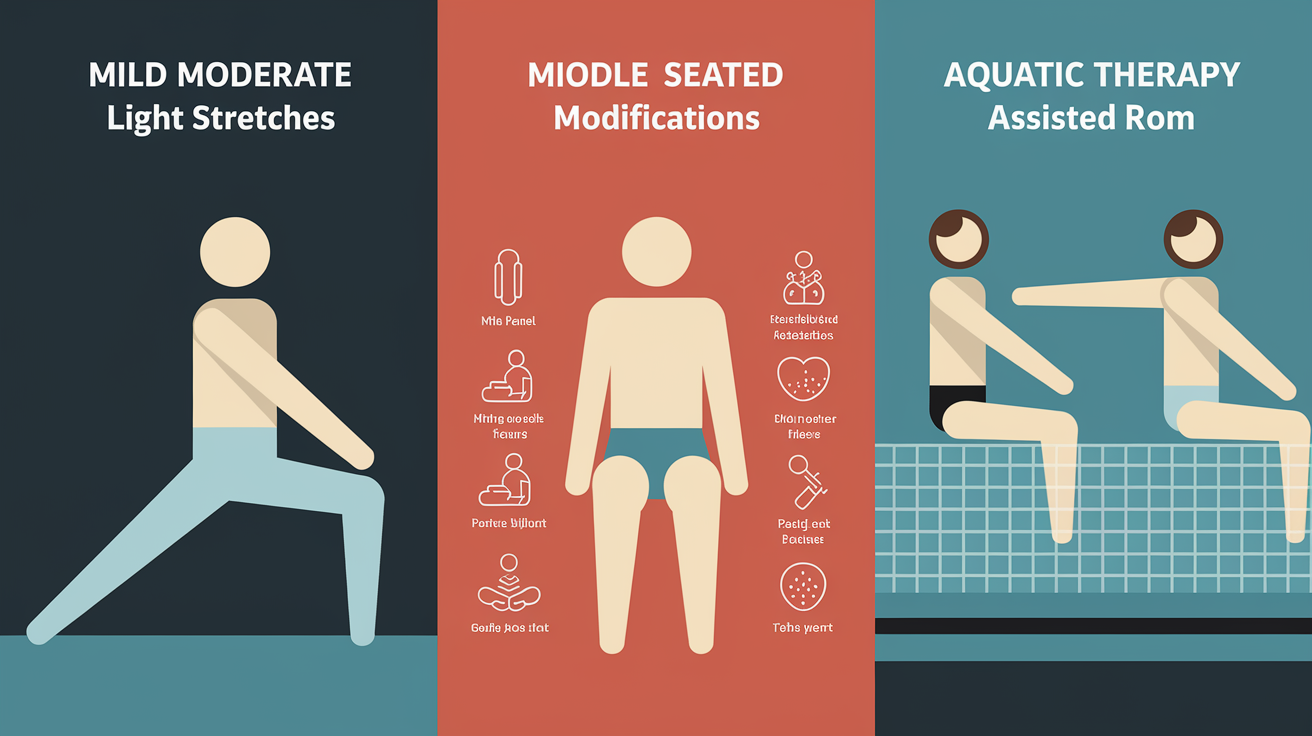
Exercise tolerance varies widely depending on how much inflammation and joint damage you’re dealing with. What works during a good week might be too much during a flare. What’s safe for mild arthritis might overwhelm someone with severe cartilage loss. Adjust your plan to match where you are right now, not where you wish you were.
If you have mild arthritis, you can usually aim for the CDC activity target of 150 minutes per week of moderate aerobic work plus two strength sessions weekly. Use light weights or bands, focus on full but controlled range of motion, and include balance exercises twice a week. Progress gradually by adding repetitions or resistance in 5 to 10 percent increments every few weeks.
With moderate arthritis, reduce impact and break aerobic work into shorter bouts. Three 10-minute walks instead of one 30-minute session. Favor water-based exercise, seated strength options, and lower resistance. You might drop to 1 to 2 sets per exercise instead of 3, and take extra rest days between sessions if swelling or stiffness lingers.
For severe arthritis or during active flare-ups, prioritize aquatic therapy, gentle isometrics, and assisted range-of-motion work. Avoid loading inflamed joints until the acute inflammation settles. Work with a physical therapist to identify safe movements, and use shorter sessions (10 to 15 minutes) with very light or zero resistance until function improves.
Exercises Arthritic Individuals Should Avoid

Some movements load or twist damaged joints in ways that increase cartilage wear, trigger inflammation, or create compensatory strain elsewhere. It’s not that these exercises are “bad,” but they carry higher risk when cartilage is already compromised.
High-impact activities like running or jumping. Repeated ground-reaction forces can overwhelm weakened knee, hip, or ankle cartilage and increase swelling.
Deep loaded squats or lunges past 90 degrees. Excessive knee flexion under load compresses damaged cartilage and may provoke sharp pain or effusion.
Repetitive heavy overhead pressing with an inflamed shoulder. Can aggravate rotator cuff irritation and impingement in arthritic shoulder joints.
Abrupt twisting movements under load. Quick rotational forces (certain sports drills or weighted Russian twists, for example) can shear already-fragile joint surfaces.
Exercises that cause sharp or worsening pain. If a movement consistently produces pain that lasts more than two hours after the session, stop and modify or replace it.
Weekly Training Frequency and Progression Guidelines
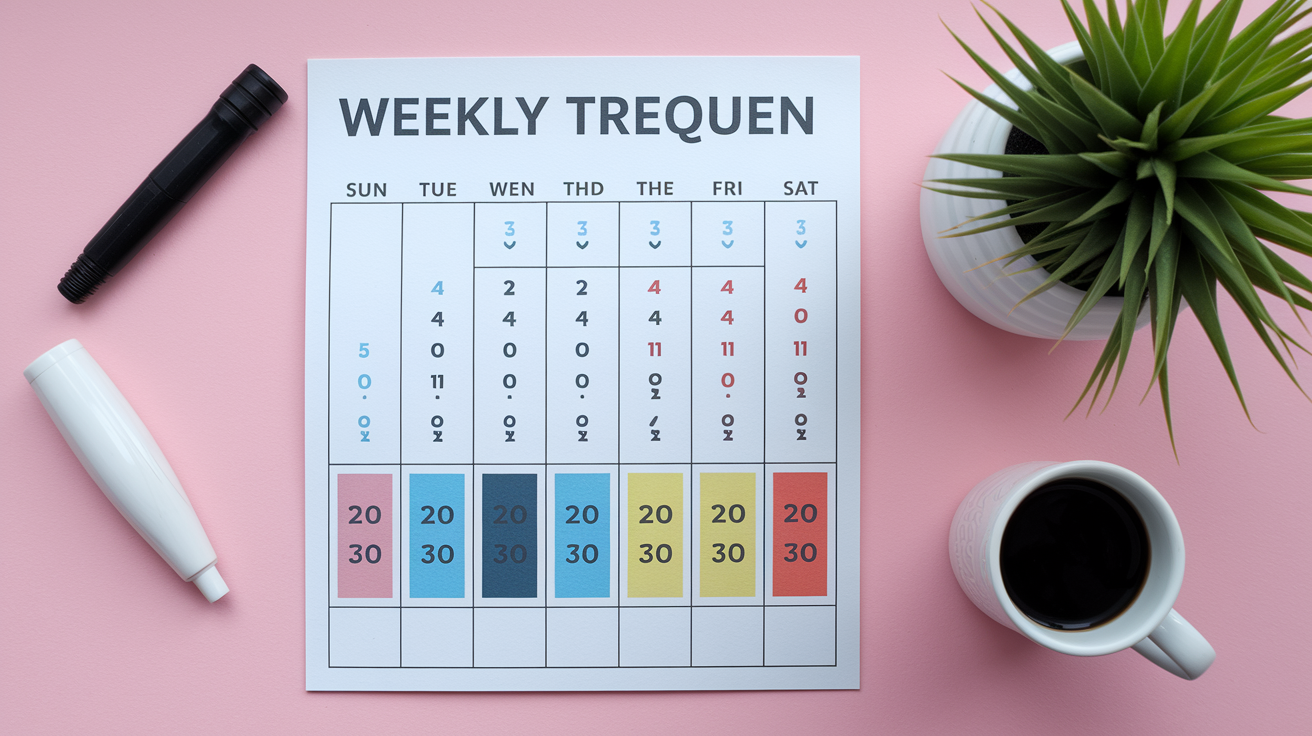
Consistency beats intensity when you’re working with arthritis. The goal is to strengthen muscles and support joints without triggering chronic inflammation or overuse flare-ups. That means scheduling rest as carefully as you schedule work.
Plan for 2 to 3 strength sessions per week, with at least 48 hours of rest between sessions that target the same muscle groups. Each session should last 20 to 30 minutes and include 6 to 8 exercises total, covering the major joints affected by your arthritis. Add 150 minutes of low-impact aerobic work spread across 3 to 5 days, and include brief balance or range-of-motion work daily.
| Frequency | Recommendation |
|---|---|
| Strength Training | 2–3 sessions per week, 20–30 minutes each, targeting affected joints |
| Aerobic Exercise | 3–5 sessions per week, total 150 minutes (e.g., 30 min × 5 days or 3 × 50 min) |
| Range of Motion | Daily, 5–10 minutes of gentle movement to preserve joint mobility |
Progress slowly. Expect small changes within a few weeks, but best results show up after 6 to 12 weeks of consistent work. When you can complete your target reps with good form and minimal discomfort, add one or two repetitions, or increase resistance by 5 to 10 percent. Don’t rush. Joint adaptation takes longer than muscle adaptation.
Pain-Management Strategies During Strength Training

Some discomfort is normal when you’re asking weakened muscles to work harder, but sharp pain, swelling, or pain that lasts more than two hours after your session is a sign you’ve overdone it. Managing pain proactively keeps you consistent and prevents setbacks.
Use heat before exercise if you’re dealing with stiffness. A warm shower, heating pad, or warm towel for 10 to 15 minutes increases blood flow and makes joints feel less rigid. After exercise, ice any joints that feel hot or swollen. A cold pack for 10 to 15 minutes can reduce acute inflammation and limit post-workout soreness.
Apply heat before exercise to reduce stiffness and improve range of motion during warm-up. Pace your session. Take short breaks between sets, don’t rush through exercises, stop if sharp pain appears. Ice after exercise to limit swelling and soothe inflamed joints if they feel hot or puffy. Use compression wraps or braces to provide joint support during and after exercise, especially for knees or wrists.
Follow the 2-hour pain rule. If pain or swelling is worse for more than two hours after your session, reduce intensity, range of motion, or resistance next time. Adjust before inflammation builds, not after.
When to Seek Medical or Physical Therapy Guidance

Strength training is safe and effective for most people with arthritis, but there are times when you need a professional to assess your joints, modify your program, or rule out complications. Don’t push through warning signs that suggest something more serious is happening.
Swelling that lasts longer than 48 hours. Persistent effusion or heat in a joint may indicate active inflammation or injury that needs medical attention.
Sudden weakness or instability. If a joint gives out, locks, or feels unstable during normal movement, get it checked before continuing exercise.
Sharp, worsening pain that doesn’t improve with rest or modification. Pain that intensifies over days or weeks despite reducing activity may signal cartilage damage, loose bodies, or other structural issues.
A physical therapist can assess your movement quality, identify compensatory patterns, and design a personalized strengthening plan that fits your specific joint limitations. If you’re unsure how to start safely, recovering from joint replacement, or dealing with uncontrolled inflammation, PT guidance gives you a clear, individualized roadmap and reduces the risk of setbacks. You don’t have to figure this out alone.
Final Words
We ran through why strengthening helps arthritic joints, safe warm-ups, joint-specific low-impact moves, form tips, helpful gear, and how to scale or avoid risky exercises.
Use those pieces to build a practical, step-by-step strength training plan to support arthritic joints. Start light, track how you feel, and follow the progression and pain-management items.
Ask a physical therapist (PT) if swelling, weakness, or locking shows up, and get an itemized program when possible. Small, steady gains add up. You can keep moving and stay active.
FAQ
Q: How does strength training help arthritic joints?
A: Strength training helps arthritic joints by improving stability, reducing pain, strengthening muscles around the joint, increasing mobility, and lowering the frequency of inflammatory flare-ups when done consistently and safely.
Q: What warm-up should people with arthritis do before strength training?
A: The warm-up people with arthritis should do before strength training includes gentle range-of-motion moves, light aerobic activity, and dynamic mobility to boost joint fluid, reduce stiffness, and prepare tissues for loading.
Q: Which low-impact strength exercises are best for knees, hips, hands, and shoulders?
A: Low-impact strength exercises for knees, hips, hands, and shoulders include sit-to-stand and straight-leg raises for knees; bridges and mini-squats for hips; grip squeezes and finger extensions for hands; wall push-ups and band rotations for shoulders.
Q: What form cues should I follow to protect arthritic joints?
A: The form cues you should follow to protect arthritic joints are neutral alignment, controlled tempo, and a supported range of motion; move smoothly, avoid locking joints, and keep breathing steady.
Q: What equipment helps reduce joint stress during strength work?
A: The equipment that helps reduce joint stress during strength work includes resistance bands, soft-grip dumbbells, cushioned handles, and supportive braces, each lowering load and improving comfort during exercises.
Q: How should I modify strength training for mild, moderate, or severe arthritis?
A: To modify strength training for mild, moderate, or severe arthritis, use full range and light load for mild; reduce range and add seated support for moderate; use isometrics, aquatic work, or PT-guided sessions for severe cases.
Q: Which exercises should people with arthritis avoid?
A: Exercises people with arthritis should avoid include high-impact or twisting moves like running, jumping, deep loaded squats, heavy Olympic lifts, and repetitive spinal twists because they increase joint stress and swelling.
Q: How often should I strength train with arthritis and how should I progress?
A: You should strength train with arthritis about 2 to 3 times per week, allow 48 hours rest per muscle group, increase load by about 5 to 10 percent every 2 to 4 weeks, and track symptoms.
Q: What pain-management strategies work during and after workouts?
A: Pain-management strategies during and after workouts include using heat before exercise, pacing with short sets, icing after if swelling occurs, and using compression or clinician-advised topical relief as needed.
Q: When should I see a doctor or physical therapist about arthritis and exercise?
A: You should see a doctor or physical therapist if you have swelling lasting more than 48 hours, sudden weakness, or locking joints; a PT can tailor safe strengthening and progression plans.
Q: How soon can I expect to feel benefits from strength training for arthritis?
A: You can expect to feel benefits from strength training for arthritis in weeks, with many people noticing better stability and less stiffness in about 4 to 8 weeks, though results vary by condition and consistency.