
Think every ache after a PRP or stem cell injection is just part of healing?
Think again.
Most people recover fine, but some signs need same-day attention.
This short guide points out the clear red flags during recovery from regenerative injections: fever, spreading redness, worsening pain, new numbness, and other signs that need urgent care.
You’ll learn how to tell normal inflammation from a problem, what to say when you call your provider, and when to go straight to emergency care.
Don’t let a preventable complication slide.
Critical Warning Signs After Regenerative Injections
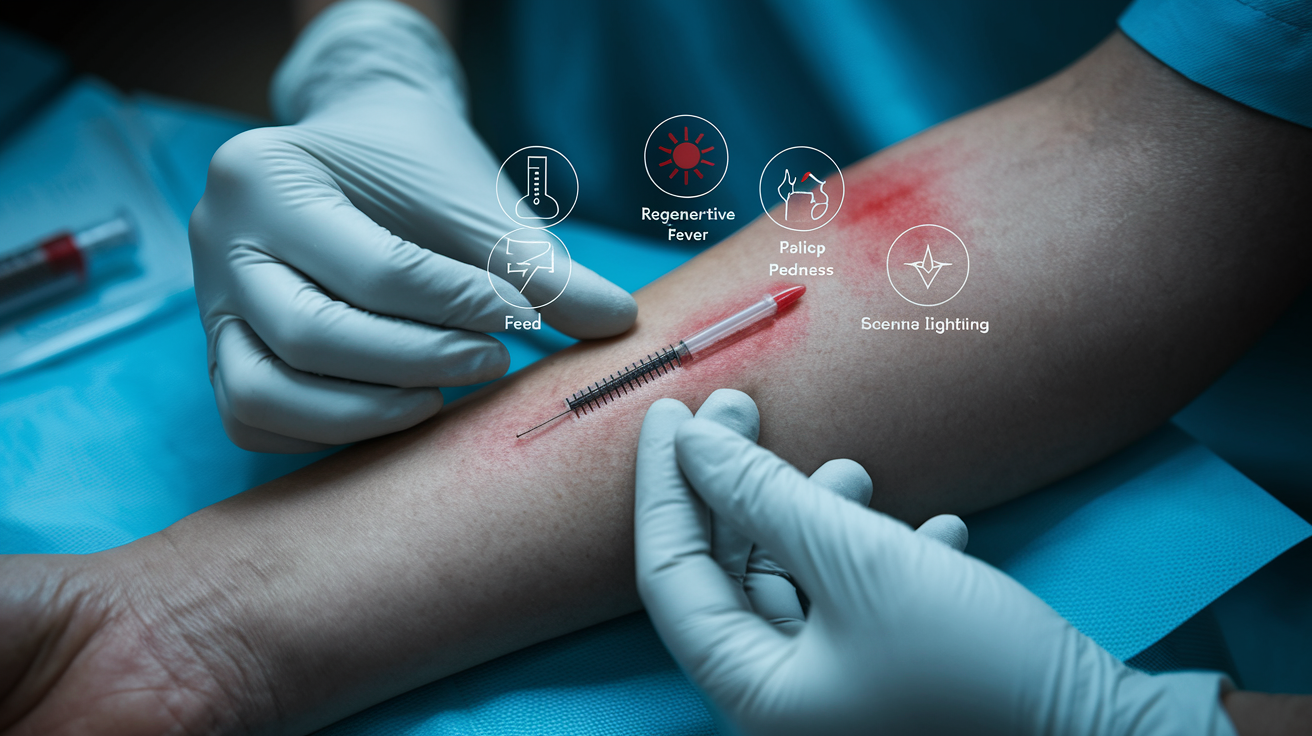
Most people who get PRP, stem cell, or prolotherapy injections recover without serious problems. But knowing what’s actually a red flag can save you from letting something important slide too long.
The symptoms below need immediate medical attention. Not a wait-and-see approach. If you notice any of these, contact your treating physician the same day or head to emergency care if things are going downhill fast.
Fever at or above 100.4°F (38.0°C): Any fever after an injection is concerning for infection, especially if it shows up within the first 72 hours or comes back after you thought you were in the clear.
Spreading redness or red streaking: Redness that extends beyond about 2 inches from the injection site, or red streaks tracking up your limb, may mean cellulitis or lymphangitis.
Severe or escalating pain: Pain that gets worse after the first 48 to 72 hours, especially pain that doesn’t respond to your prescribed medication or feels completely different from initial soreness.
Foul-smelling drainage or pus: Any discharge from the injection site that smells bad, looks cloudy, or appears infected.
Rapidly worsening swelling after day 3 or 4: Mild swelling is normal for the first few days. Swelling that suddenly increases or messes with your function later in recovery is not.
New numbness, tingling, or weakness: Progressive neurological symptoms, especially if they stick around beyond 48 to 72 hours or get worse over time, may point to nerve irritation or injury.
Signs of systemic infection or allergic reaction: Chills, rigors, lightheadedness, fainting, difficulty breathing, throat tightness, hives, or facial swelling all need emergency evaluation.
The difference between normal healing and a complication often comes down to progression. Normal symptoms improve day by day. Red flags worsen, spread, or show up unexpectedly after things seemed stable. When in doubt, make the call.
Normal vs. Abnormal Recovery Patterns

Understanding what counts as ordinary post-injection discomfort keeps you from freaking out unnecessarily and helps you spot real problems when they show up. Most regenerative injections produce a localized inflammatory response by design. That’s part of the healing process. Mild soreness, temporary stiffness, and low-grade warmth in the first 48 to 72 hours are all expected.
Abnormal symptoms don’t follow the typical downward trend. They either appear out of nowhere after a stable period, worsen instead of improve, or involve systemic signs like fever or spreading infection markers. The key distinction is trajectory. Normal symptoms peak early and fade. Concerning symptoms escalate or stick around.
The following table gives you a side-by-side comparison of what’s expected versus what should prompt a call to your provider.
| Symptom | Normal Response | Concerning Response |
|---|---|---|
| Swelling | Mild to moderate for 48–72 hours, then gradually decreasing | Rapidly increasing after day 3–4, or swelling that impairs function or circulation |
| Pain | Moderate soreness peaking within 48 hours, improving day by day | Severe pain that worsens after initial improvement or is uncontrolled by medication |
| Warmth | Low-grade warmth at the site for 48–72 hours, localized and stable | Spreading warmth, heat that increases over time, or warmth accompanied by redness and fever |
| Redness | Mild redness within 1–2 inches of the injection site, fading by day 3–5 | Redness spreading beyond 2 inches (5 cm), red streaks, or redness that intensifies rather than fades |
| Stiffness | Temporary stiffness or tightness for 24–72 hours, improving with gentle movement | Severe stiffness that prevents normal range of motion or worsens over several days |
| Mobility | Mild limitation for 48–72 hours, with gradual return to baseline or improved function | Sudden loss of function, inability to bear weight, or new loss of motor control |
Most people describe normal post-injection discomfort as similar to a deep bruise or post-workout soreness. If your symptoms feel sharper, more intense, or out of sync with the timeline above, document what you’re noticing and reach out to your provider.
Timelines for Expected Improvement
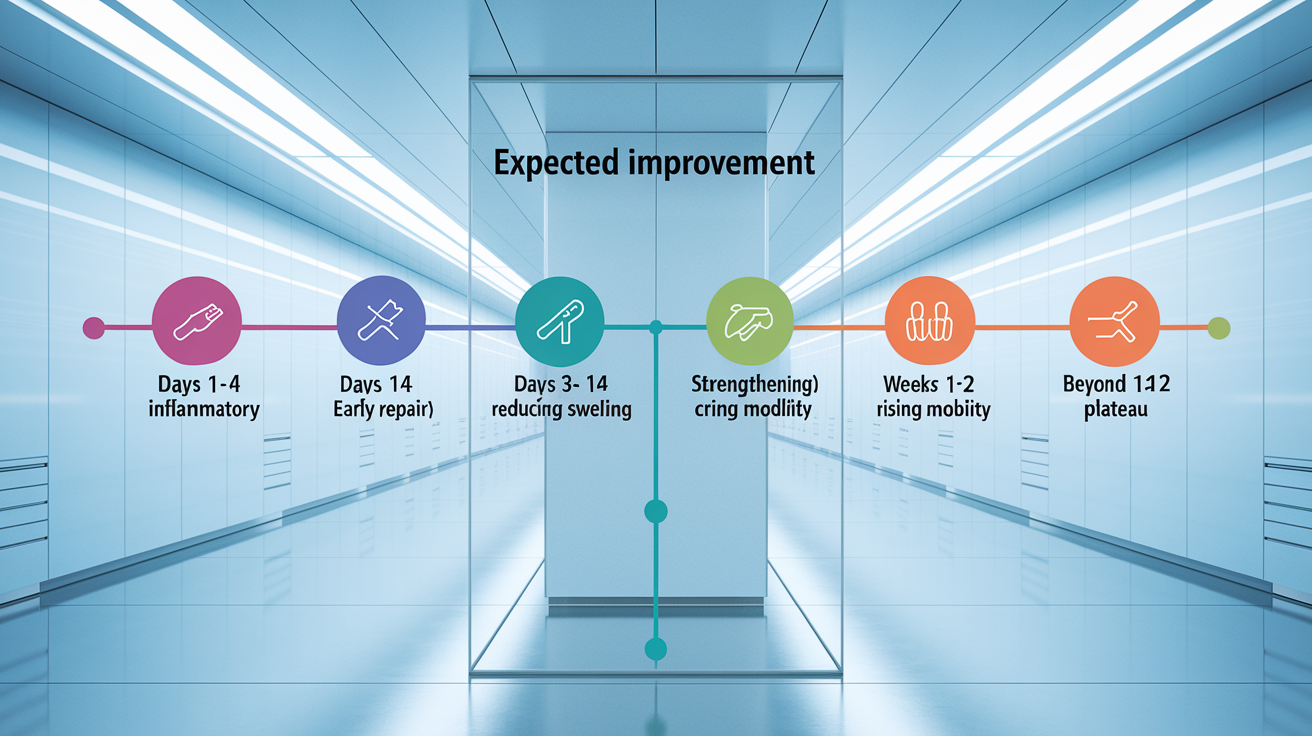
Regenerative injections don’t produce instant results. The treatment triggers a controlled healing cascade that unfolds over weeks to months. Knowing what to expect during each phase helps you tell the difference between patience and a problem.
The inflammatory phase typically lasts from day 1 through day 4. During this window, you may experience the most soreness, swelling, and stiffness. The injected material is recruiting your body’s repair cells and growth factors to the site. Pain often peaks within the first 48 hours, then starts to decline. If symptoms are still climbing after 72 hours, that’s outside the normal pattern.
The early repair phase runs from day 5 through approximately day 14. Soreness and swelling should be noticeably improving by this point. You might still feel some tightness or mild achiness, especially with activity, but the trajectory is toward baseline or better. Bruising typically fades during this window. If you’re seeing new swelling, progressive redness, or worsening pain in week two, contact your provider.
The strengthening and remodeling phase begins around week 3 and can extend through week 12 or longer, depending on the tissue type and your diagnosis. During this time, the injected site is producing new collagen, repairing damaged structures, and gradually building functional strength. Many people report gradual functional gains. Less pain with movement, improved range of motion, or the ability to return to activities that were previously limited. The timeline for maximal improvement varies. Tendons and ligaments often require 8 to 12 weeks, while joint-surface repairs may take even longer. If you’re not seeing any staged improvement by 8 to 12 weeks, or if symptoms worsen during this phase, a reassessment is warranted.
Here’s a quick summary of the four key recovery stages:
Days 1 to 4 (Inflammatory Phase): Peak soreness, swelling, and stiffness. Symptoms should begin improving by day 3 or 4.
Days 5 to 14 (Early Repair): Noticeable reduction in pain and swelling. Bruising fades. Mobility gradually returns.
Weeks 3 to 12 (Strengthening Phase): Progressive functional gains. Intermittent flares are possible but shouldn’t be severe or prolonged.
Beyond 12 Weeks (Maturation Phase): Continued improvement or stable plateau. Persistent severe pain or lack of any benefit warrants re-evaluation.
When to Contact Your Provider

Deciding when to call versus when to wait is one of the most common sources of confusion after a regenerative injection. The general rule is simple. Contact your provider the same day if a symptom is worsening instead of improving, or if something new and unexpected appears.
Urgent evaluation is needed for fever, rapidly spreading redness, severe uncontrolled pain, purulent drainage, or any new neurological symptom such as numbness, tingling, or weakness that persists or progresses. These signs may indicate infection, nerve involvement, or another complication that needs prompt intervention.
Here are five clear decision thresholds that should trigger a same-day call or visit:
Fever at or above 100.4°F (38.0°C): Any documented fever after an injection needs medical review, even if you feel otherwise okay.
Pain that worsens after initial improvement: If soreness was getting better but then intensifies or becomes unmanageable, that’s a reversal worth investigating.
Inability to bear weight or sudden loss of joint function: This may indicate structural injury, excessive swelling, or compartment syndrome.
Rapidly progressing bruising or swelling: A small bruise is normal. A bruise that expands quickly, especially with systemic symptoms, is not.
Any symptom that spreads or involves systemic signs: Redness tracking up the limb, chills, rigors, fainting, or breathing difficulty all need urgent evaluation or emergency care.
If you’re unsure whether a symptom crosses the threshold, err on the side of making the call. Most providers would rather hear from you early than manage a delayed complication.
Potential Complications of Regenerative Injections

Complications from PRP, stem cell, and prolotherapy injections are uncommon when procedures are performed by qualified providers using proper technique and sterile protocols. But no medical procedure is entirely without risk. Being aware of what can go wrong helps you stay vigilant during recovery.
Infection is the most frequently discussed complication. With appropriate sterile technique, the risk is cited as less than 1%. But when protocols are absent or incomplete, such as inadequate skin prep, non-sterile processing, or contaminated equipment, the risk rises substantially. Local infection at the injection site can progress to abscess formation or systemic infection if not recognized and treated early.
Allergic reactions can occur in response to components of the injected product or additives used during processing. Mild reactions may present as localized itching or hives. Severe anaphylactic reactions, though rare, can cause respiratory distress, throat swelling, or cardiovascular collapse and need immediate emergency intervention.
Tissue irritation and prolonged inflammation are also possible, especially if the injected material is highly concentrated or placed in a sensitive area. Nerve irritation may result from direct needle contact or from swelling and inflammation compressing adjacent neural structures, leading to numbness, tingling, or temporary weakness. In extremely rare cases, compartment syndrome, a surgical emergency, can develop if swelling within a confined anatomical space compromises blood flow and nerve function.
Here are five complications to be aware of:
Infection (local or systemic): Caused by contamination during processing or injection. Presents with fever, redness, drainage, and escalating pain.
Allergic or anaphylactic reaction: Ranges from mild hives to severe respiratory distress. Immediate medical attention required for systemic signs.
Tissue irritation or prolonged inflammation: Excessive soreness, swelling, or stiffness that doesn’t resolve within the expected timeline.
Nerve irritation or injury: Numbness, tingling, or weakness from direct needle trauma or compression from swelling.
Compartment syndrome (rare): Severe, unrelenting pain with progressive loss of function. Requires emergency surgical intervention.
Most of these complications are preventable with proper candidate selection, image-guided injection technique, sterile processing, and structured follow-up. Clinics that skip these steps increase your risk.
Monitoring Symptoms at Home

Tracking your recovery doesn’t require medical training. Just consistency and attention to detail. Simple home-monitoring strategies give you objective data to share with your provider if questions arise and help you spot trends that might otherwise go unnoticed.
Keeping a daily symptom log is one of the most effective tools. Rate your pain on a 0 to 10 scale at the same time each day, note any changes in swelling or redness, and document your ability to perform specific activities like walking, climbing stairs, or reaching overhead. Temperature monitoring is equally important. Take your temperature twice daily for the first week, especially if you notice any new warmth, redness, or general malaise.
Here are six practical methods you can use at home:
Daily pain scale (0 to 10): Record your pain level at rest and with activity, ideally at the same time each day for consistency.
Swelling measurement: Use a soft measuring tape to track circumference at the injection site and compare to the unaffected side.
Temperature log: Check your temperature twice daily for the first 7 to 10 days. Document any reading at or above 100.4°F (38.0°C).
Mobility testing: Perform simple range-of-motion tests daily and note any sudden loss of function or new restrictions.
Redness mapping: Take a photo of the injection site every 24 to 48 hours to track whether redness is spreading or fading.
Symptom journal: Write brief daily notes about new symptoms, changes in baseline discomfort, or anything that feels off.
If your data shows symptoms worsening instead of improving, or if new red-flag signs appear, you have clear documentation to share with your provider. That context often speeds up evaluation and decision-making.
Final Words
Seeing a fever, spreading redness, severe unrelenting pain, or new numbness? That’s exactly the kind of urgent sign this post put front and center.
We walked through what’s normal vs. worrying, the week-by-week healing phases, when to call your provider, common complications, and simple home monitoring tricks you can use right away.
Keep a log, trust changes that get worse, and call early. Spotting red flags during recovery from regenerative injections helps you get timely care—and most people bounce back with the right steps.
FAQ
Q: What are red flags in recovery?
A: The red flags in recovery are warning signs your progress is slipping—like returning cravings, skipping supports, worsening mood, risky behavior, or new physical problems that need medical attention. Act early and get help.
Q: What are the five most important relapse warning signs? What behaviors are red flags for relapse that others can observe and warn you about?
A: The five most important relapse warning signs are strong cravings, social withdrawal, skipping meetings or care, big mood swings, and returning risky routines. Others can notice secretive behavior, lying, or new paraphernalia.
Q: Is AA the only option for recovery?
A: AA is not the only option for recovery. Alternatives include SMART Recovery, outpatient therapy, medication-assisted treatment, faith-based or peer groups, individual counseling, or a tailored medical plan—choose what works for you.