
How can the same knee injection be $500 in one clinic and $8,000 in another?
Here’s the short answer: what you pay depends on the treatment type, who performs it, how many sessions you need, where it’s done, and what’s actually included.
This post breaks down those cost drivers, PRP, stem cells, prolotherapy, imaging, facility fees, and follow-up, so you can compare apples to apples.
You’ll get clear questions to ask, common price ranges, and ways to spot hidden fees, not sales pitches.
Yeah, pricing gets weird fast. Let’s make it simple.
Why Regenerative Knee Treatment Costs Vary

Treatment type creates your first big pricing split. PRP means drawing blood, spinning it down, and injecting concentrated platelets back into your knee. Simpler equipment, shorter appointment. Stem cell therapy involves harvesting bone marrow or fat, processing those cells through lab-grade systems, then placing them exactly where the damage is. More complexity equals more staff time, specialized gear, and higher prep costs. Prolotherapy uses basic injectants like dextrose, so materials run cheaper. The biologic you pick sets your baseline number.
Provider skill and clinic setup push that number around. A board-certified orthopedic doc with ultrasound gear, a sterile suite, and a decade of regen cases will charge more than a general practitioner eyeballing landmarks in a standard exam room. Higher-tier spots invest in double-spin centrifuges, imaging systems, staff training. All of that raises overhead. They price to match. You’re covering precision, experience, and tech that cuts risk.
Session count multiplies everything. PRP protocols usually need two or three rounds spaced weeks apart. Prolotherapy can stretch to eight visits. Stem cell might be one major procedure, but some docs add boosters down the line. Each visit gets billed separately, so your final tab equals per-session price times total appointments. A $1,200 PRP shot once is doable. Three times is $3,600. Session count turns a reasonable quote into serious money fast.
Typical Price Ranges for Major Regenerative Knee Treatments
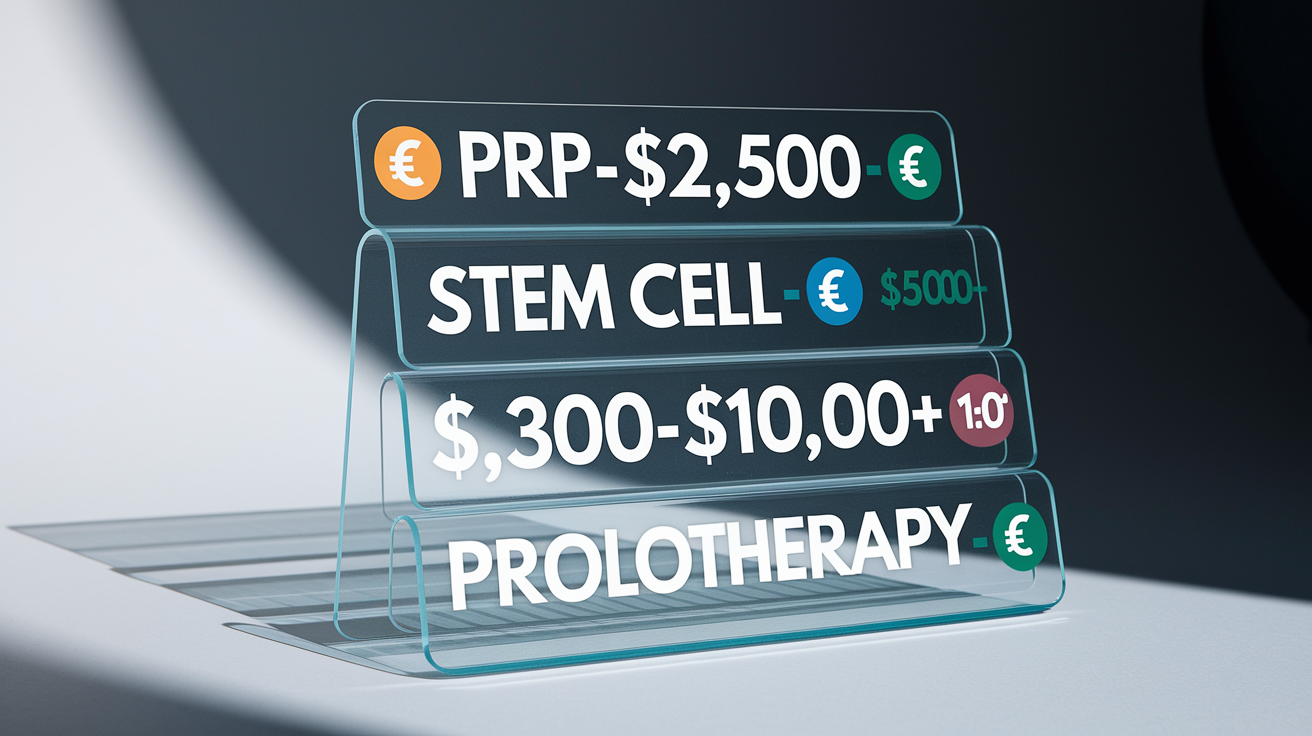
Here’s what you’ll see quoted for single-knee work:
PRP (Platelet-Rich Plasma): $500 to $2,500 per session, usually landing between $700 and $1,500.
Stem Cell Therapy: $3,000 to $10,000+ for one procedure. Autologous bone marrow or fat protocols typically run $5,000 to $8,000.
Prolotherapy: $150 to $500 per session, most often $300 to $400.
Inside each range, price reflects what you’re actually getting. A $500 PRP injection might use a basic single-spin kit with lower platelet counts and no imaging. A $2,000 session could include double-spin processing for better concentration, ultrasound placement, and follow-up review. Stem cell prices jump when providers add culture-expansion labs, donor products, or hospital operating rooms instead of office suites. Prolotherapy costs climb when clinics mix platelet lysate or growth factors into the dextrose base.
Expect charges beyond the injection. Some clinics bundle consult, shot, and basic follow-up into one number. Others bill separately for the initial visit ($100 to $300), imaging review ($50 to $200), and post-procedure check-ins ($75 to $150). Always ask if the quoted price covers each session or the full package, both knees or just one, and which diagnostics or follow-ups cost extra. A $4,500 stem cell “package” might include the whole thing. A $4,500 “procedure fee” might skip the $1,000 MRI, $500 lab work, or $300 follow-up.
How Treatment Protocol and Number of Sessions Affect Cost
PRP and prolotherapy aren’t usually one-and-done. PRP protocols call for two to three injections spaced three to six weeks apart, so budget two to three times the per-session number. Prolotherapy often needs four to eight sessions over months because the repair mechanism builds cumulatively. One shot won’t stick. Stem cell therapy might involve just one big procedure, but some clinics suggest a booster at six or twelve months if things plateau.
Each extra session adds travel, missed work, another fee. Calculate total cost by multiplying per-session price times likely visit count, not just the first appointment.
Here’s a quick session reference:
PRP: Usually 2 to 3 sessions. Total cost often $1,400 to $4,500.
Prolotherapy: Typically 4 to 8 sessions. Total commonly $1,200 to $4,000.
Stem Cell (autologous): Often 1 procedure, maybe 1 booster. Total $5,000 to $16,000.
Combination protocols (PRP plus stem cell): 1 stem procedure and 1 to 2 PRP follow-ups. Total often $7,000 to $12,000.
Geographic and Clinic‑Level Pricing Differences
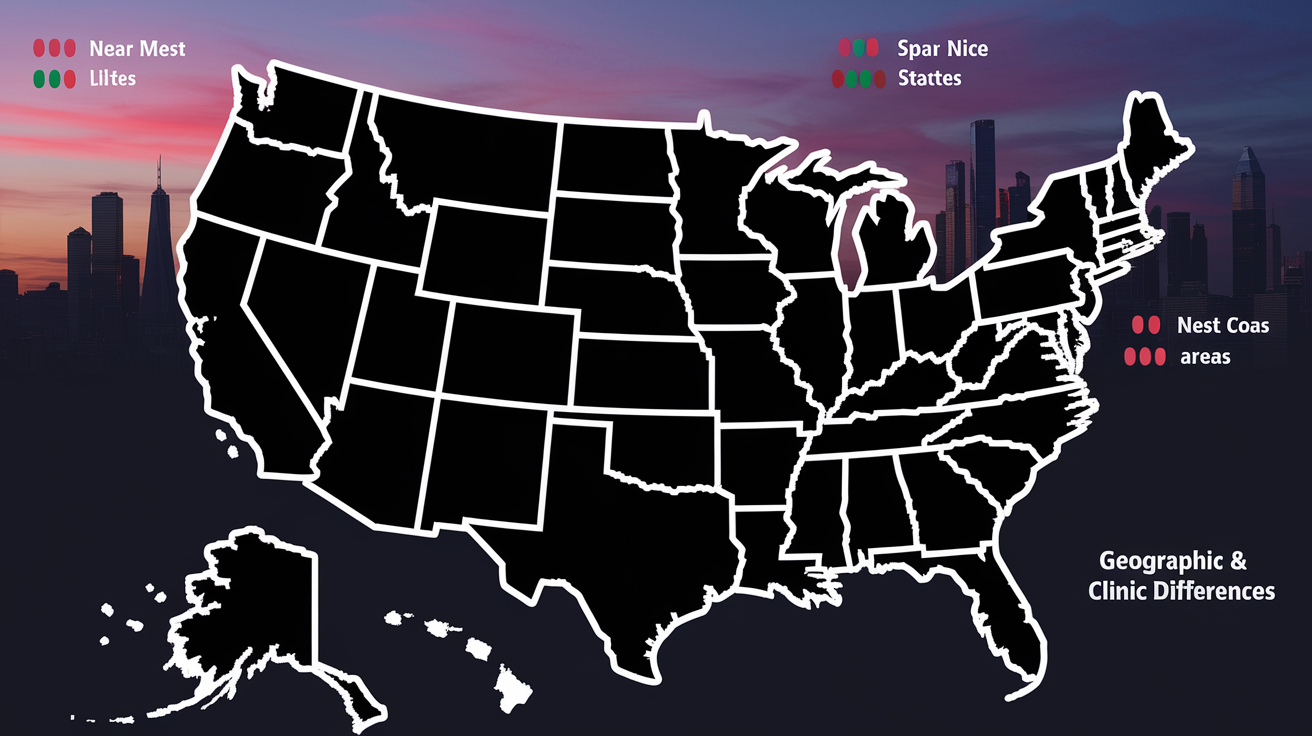
Urban clinics in high-cost cities charge 20 to 50 percent more than providers in smaller markets. Rent, labor, insurance, regulations cost more in metro areas, and those expenses land on you. A PRP session running $800 in a mid-sized Midwest town might hit $1,500 in Manhattan or San Francisco for identical protocol and gear. Regional demand matters too. Areas with more orthopedic specialists and elective patients see price competition, but also premium options that push averages up.
Clinic tier shifts pricing inside the same city. Hospital-affiliated outpatient centers and academic programs carry facility fees independent regen clinics don’t. A stem cell procedure in a hospital surgical suite might tack on a $2,000 facility charge on top of physician fee, anesthesia, biologic processing. Same procedure in an office suite might have zero facility fee. University-affiliated programs often charge research-grade prices for cutting-edge protocols, even when insurance won’t touch them. Compare itemized quotes across clinic types, not just headline totals.
Provider Credentials, Equipment, and Biologic Quality
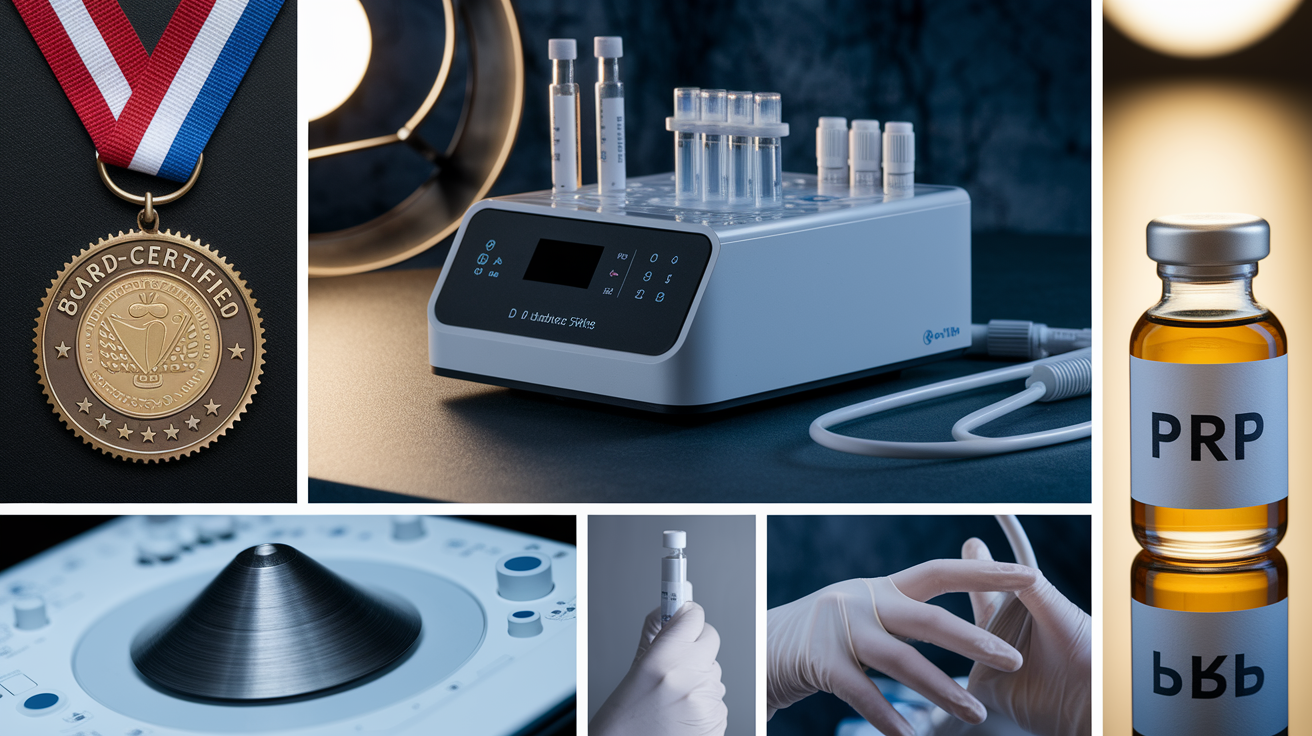
Board-certified orthopedic surgeons or sports medicine docs with fellowship training in regen techniques charge more than general practitioners offering the same shot. That premium buys case volume, specialized training, lower complication rates. Clinics using ultrasound or fluoroscopy guidance add $200 to $500 per procedure but improve accuracy, especially in tricky joint spaces where landmark needling can miss.
Equipment and biologic prep standards also drive cost gaps:
Centrifuge type: Single-spin systems run cheaper and faster but yield lower platelet counts. Double-spin or buffy-coat systems cost clinics more and take longer, producing better PRP. Expect $200 to $500 more for double-spin.
Cell processing: Basic bone marrow draw with minimal handling costs less than lab sorting, concentration, or culture expansion. Culture-expanded products can add $5,000 to $15,000 to base fees.
Allogeneic vs autologous: Off-the-shelf amniotic or cord products simplify the procedure (no harvest step) but cost the clinic hundreds to thousands per vial, raising your bill.
Higher upfront cost often lines up with better precision, predictable cell counts, cleaner preparations. Cheaper isn’t always worse, but ask what equipment and prep method the clinic uses before comparing numbers.
Insurance Coverage Limitations and Out‑of‑Pocket Expectations

Most commercial insurers and Medicare tag PRP, stem cell, and prolotherapy as experimental for knee osteoarthritis and tendon injuries. That label means no coverage. You pay full freight. A few insurers started covering PRP for specific tendon cases when done by in-network ortho specialists, but knee arthritis stays excluded in nearly all plans. Check your plan’s medical policy bulletins for regenerative medicine and biologics before counting on reimbursement.
Even when the procedure isn’t covered, some extras might be. Initial consult, diagnostic imaging (X-ray, MRI, ultrasound), follow-up visits might fall under standard billing codes your insurer will pay. Ask the clinic to separate those items and bill insurance for covered pieces. Won’t cut the injection cost, but it can shave a few hundred off your total. Flexible spending accounts and health savings accounts typically let you pay tax-free for these procedures since they’re medically indicated, even when insurance says no.
Evaluating Value vs. Price When Choosing a Regenerative Knee Treatment

The cheapest quote rarely delivers the best result. Skilled providers using quality biologics and image guidance produce measurable improvements more reliably than budget options that skip those steps. A $1,000 PRP session with weak platelet counts and no ultrasound might do nothing, wasting the money completely. A $2,000 session with double-spin processing and guided placement has better odds of cutting pain and improving function for twelve to eighteen months. Cost per month of benefit matters more than sticker price.
Look for these indicators when comparing providers:
Published outcomes or tracking data: Ask how many knee patients they’ve treated, what percentage report improvement, whether they measure results with standardized pain or function scores.
Credentials and case volume: Board certification in orthopedics or sports medicine, fellowship training in regen techniques, high monthly case counts signal experience.
Image guidance: Ultrasound or fluoroscopy proof that the injection hit target tissue, not surrounding fat or capsule.
Transparent itemized pricing: Detailed quote listing procedure fee, biologic processing, imaging, anesthesia (if any), follow-up visits, facility charges. No surprise add-ons at checkout.
Balance price against the provider’s track record and how complete their protocol is. Paying more for a clinic that documents outcomes, uses advanced processing, includes follow-up care in the package often delivers better long-term value than chasing the lowest number with minimal support.
Final Words
You saw why prices change: treatment type, biologic prep, provider skill, session count, and clinic location. That’s the everyday stuff that moves the needle on cost.
We laid out typical ranges for PRP, stem cell, and prolotherapy, explained how protocol and session counts affect totals, and flagged what to ask about credentials, equipment, and what’s included.
Use this to compare quotes and ask the right questions. With cost factors for regenerative knee treatments explained, you can build a safe, budget-aware plan and get back to the workouts that matter.
FAQ
Q: How much does regenerative stem cell therapy cost for knees?
A: The cost of regenerative stem cell therapy for knees typically ranges from about $3,000 to $10,000 or more, depending on cell source, provider skill, clinic technology, and whether follow‑up sessions are needed.
Q: What are the cons of regenerative medicine and hyaluronic acid knee injections?
A: The cons of regenerative medicine, including hyaluronic acid (HA) injections, are inconsistent results, limited long‑term evidence, out‑of‑pocket cost, possible injection pain or infection, and for HA specifically the need for repeat treatments.
Q: What knee injection lasts 3 years?
A: No knee injection reliably lasts three years; some people report multi‑year relief after stem cell or PRP (platelet‑rich plasma) treatments, but evidence varies and boosters or different therapies are often needed.