
What if that $600 PRP ad and the $1,200 clinic are actually selling different things?
Price alone doesn’t tell the story.
Location, who’s doing the injection, and the technology behind the PRP all change both cost and likely results.
In plain terms, rent, provider experience, kit quality, and session count matter.
This post breaks down the main factors, including location, expertise, and technology costs, so you can compare quotes, ask smarter questions, and plan for what PRP might really cost you.
Key Cost Drivers Behind PRP Prices (Comprehensive Breakdown)
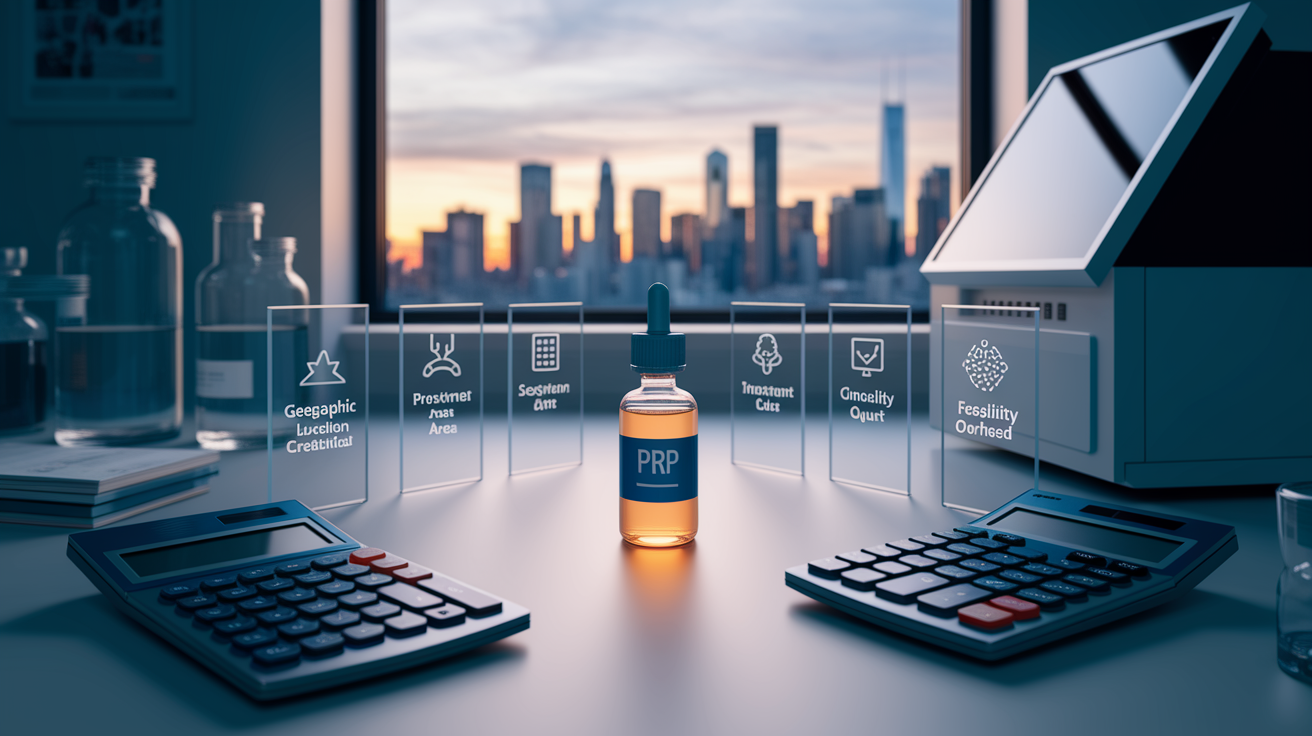
PRP pricing doesn’t follow a neat formula. You’ll find sessions anywhere from $500 at no-frills clinics to $2,500 or more at high-end specialty centers. The range exists for a reason. It’s tied to who’s doing the injection, what equipment they’re using, how many sessions your body needs, and where the clinic happens to be located. Most providers fall somewhere between $500 and $1,500 per session, but that number alone won’t tell you what you’re actually getting.
Your total bill depends heavily on session count. Hair loss protocols usually need 3 to 6 visits spaced about 4 to 6 weeks apart. That puts a full treatment plan anywhere from $1,500 to $9,000 at a standard clinic, or up to $15,000 if you’re working with a top-tier center. Consultation fees add another $50 to $250 upfront, though plenty of clinics waive that if you commit to treatment. How many sessions you need often matters more than the per-session price when it comes to total out-of-pocket spend.
Market conditions and clinic type create huge pricing differences. Big cities and specialty regenerative medicine centers charge more because their overhead, rent, and staffing costs run higher. Provider reputation, training level, and clinical experience push prices up too. A physician who’s performed over 300,000 injections or holds fellowship training in interventional medicine will cost more per session than a general practitioner offering PRP as a side service.
Six core factors that almost always influence PRP pricing:
- Geographic location and regional cost of living. Urban centers and high-demand areas charge more.
- Provider credentials, experience, and case volume. Specialists with advanced training or thousands of procedures under their belt typically cost more.
- Treatment area and number of injection sites. Larger areas or multiple zones require more time, materials, and PRP volume.
- Total number of sessions required. Severity and type of condition determine whether you need three treatments or six.
- Equipment quality and PRP preparation technology. Single-spin versus double-spin centrifuges, branded kits versus generic, and platelet concentration levels.
- Facility type and overhead. Hospital-based outpatient centers usually charge more than independent clinics.
How Location and Market Conditions Influence PRP Pricing

Geography doesn’t just shift the price. Sometimes it completely rewrites it. Clinics in major cities like New York, Los Angeles, or Miami often charge 30% to 50% more than providers in smaller towns or rural areas. That gap isn’t about greed. Urban centers pay higher rent, higher staff wages, and higher liability insurance. Those costs get baked into the per-session price. Regional factors like supply chain logistics, local taxes, import fees on medical kits, and currency exchange rates also push prices up or down depending on where you are.
Single-supplier regions create another pricing problem. If only one or two distributors control PRP kit supply in your area, competition drops and prices can climb. Patients in those markets sometimes pay a premium simply because there’s no alternative nearby. Areas with multiple clinics competing for the same patient base often offer lower per-session rates or package discounts to stay competitive. Travel adds another hidden layer to the real cost. If you’re driving two hours each way or flying to a specialty center, gas, tolls, parking, airfare, and lost work time all count.
Five external market factors that shape PRP pricing:
- Regional cost of living and clinic operating expenses. Rent, wages, and utilities vary widely by location.
- Local demand and competition density. High demand with few providers raises prices. Saturated markets lower them.
- Supply chain access and distributor network. Limited local suppliers or import dependencies increase kit costs.
- State or local taxes, licensing fees, and regulatory compliance costs. Some jurisdictions impose higher operational burdens.
- Medical tourism price differentials. Traveling to lower-cost regions or countries can cut session prices by 40% to 60%, but adds logistical complexity and risk.
Provider Expertise and Clinic Credentials as PRP Price Factors
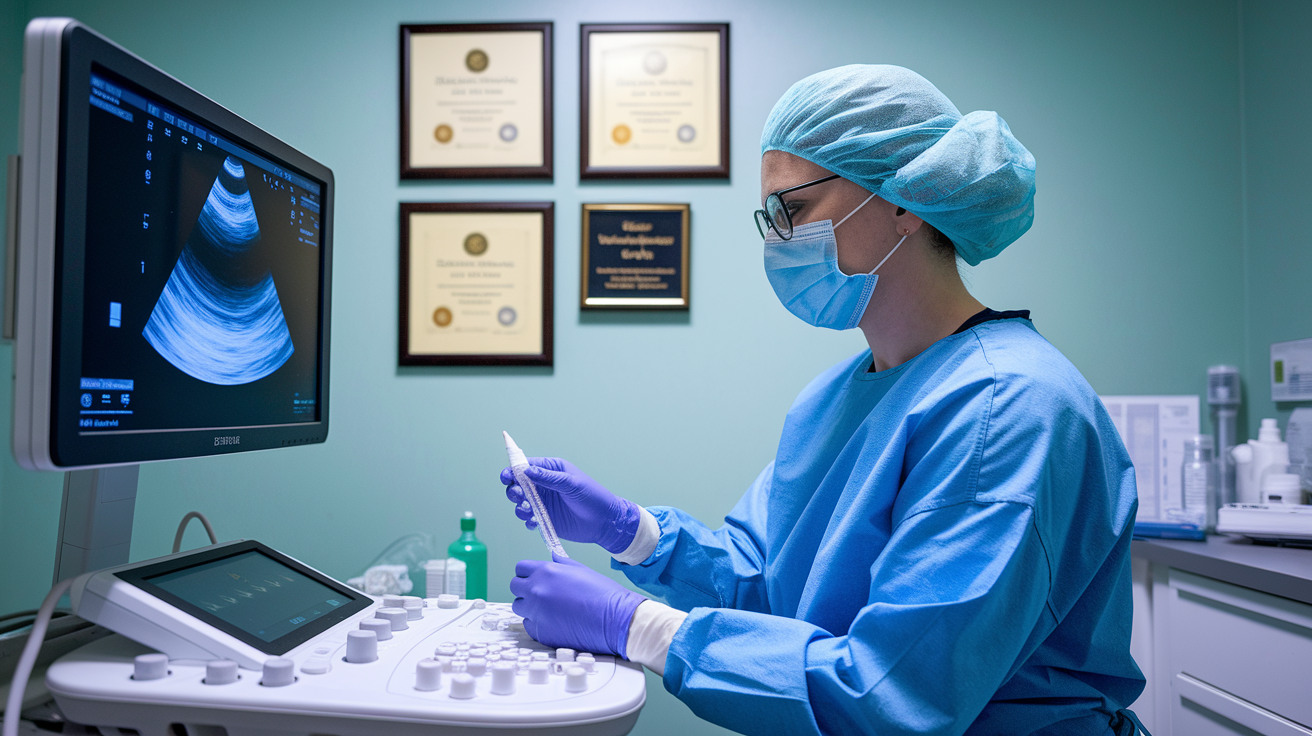
Experience costs more, and for good reason. A physician who’s delivered over 300,000 musculoskeletal injections across more than a decade brings pattern recognition, procedural precision, and troubleshooting skills that a provider who’s done 50 treatments simply can’t match. Fellowship-trained interventional physicians, sports medicine specialists, or dermatologists with advanced certifications typically charge higher per-session fees because their training reduces complication risk and improves placement accuracy. You’re not just paying for the PRP. You’re paying for the hands holding the syringe.
Clinics that offer imaging-guided injections using ultrasound or fluoroscopy often add $200 to $500 per session, but that guidance gets the PRP exactly where it needs to go. Without imaging, even experienced providers are making educated guesses based on anatomy and palpation. Diagnostic support, pre-procedure assessment, and post-injection follow-ups also raise clinic overhead. Providers who include those services in the base price may look more expensive upfront but often deliver better value than low-cost clinics that nickel-and-dime every add-on.
Reputation and institutional overhead matter too. High-volume clinics with strong patient reviews, published outcomes, and low complication rates can charge premium prices because demand is high and trust is already there. Malpractice insurance for regenerative procedures isn’t cheap, and clinics that invest in quality control, staff training, and rigorous safety protocols pass those costs along. A clinic charging $600 per session with minimal oversight is a different risk profile than one charging $1,200 with board-certified physicians, sterile procedure rooms, and comprehensive consent protocols.
PRP Preparation Method, Kit Type, and Equipment Quality
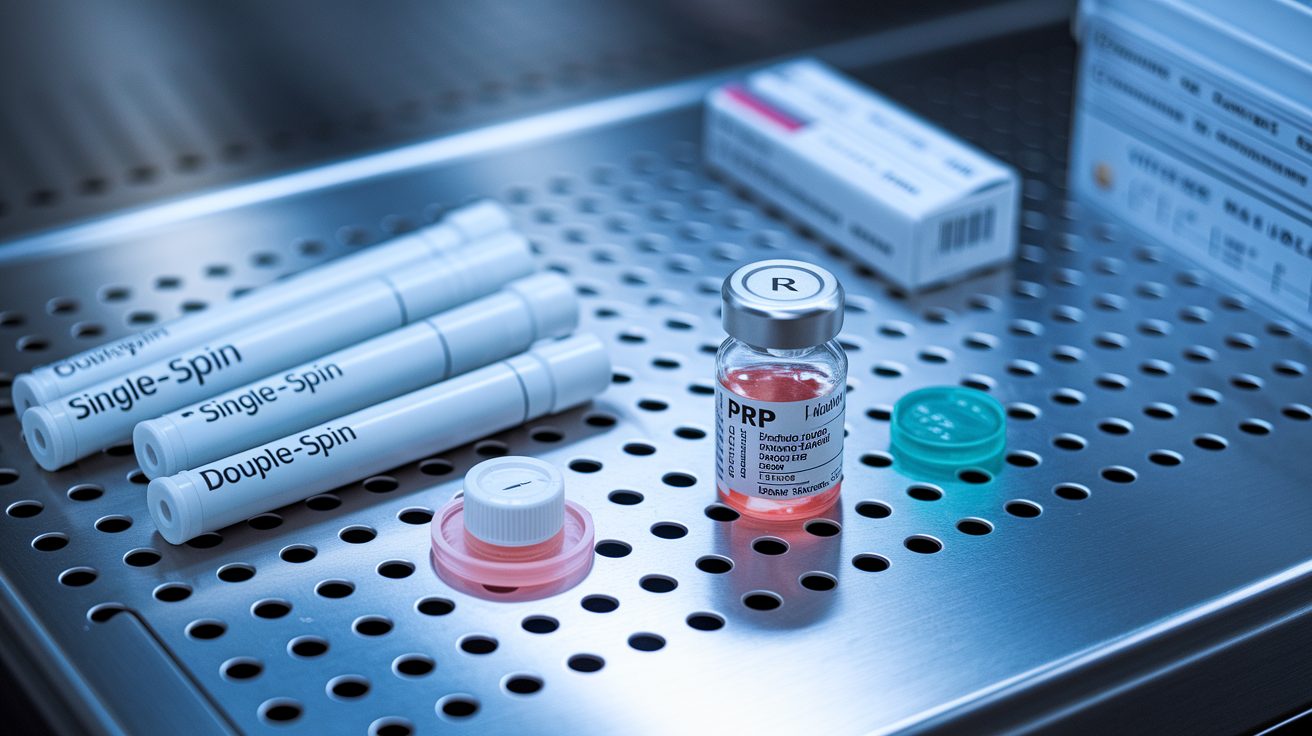
The kit you never see and the centrifuge you never hear are two of the biggest cost drivers in PRP pricing. Not all PRP is created equal. A single-spin preparation might concentrate platelets at 2x to 3x baseline, while a double-spin system can reach 7x concentration. That difference matters because higher platelet counts often mean better tissue response and fewer sessions needed to see results. Double-spin systems cost more to run. They take longer, require more expensive equipment, and use premium single-use kits. Providers who use them typically charge $200 to $800 more per session.
Basic kits are designed to concentrate platelets and nothing else. They’re simpler, cheaper to manufacture, and fine for straightforward cases. Advanced kits include features like growth factor isolation, leukocyte filtering, or the ability to process larger blood volumes in one draw. Some proprietary systems add stem cell components or deliver higher platelet purity by removing unwanted cells that can trigger inflammation. Those bells and whistles raise the kit price from $50 to $100 per unit up to $300 to $500 per unit, and that cost gets passed directly to the patient.
Six major equipment-related cost factors:
- Single-spin versus double-spin centrifuge protocols. Double-spin takes longer and uses more advanced equipment but yields higher platelet concentration.
- Branded proprietary systems versus generic kits. Brand-name kits with FDA clearance or CE marking often cost 2x to 4x more than off-brand alternatives.
- Platelet concentration fold and volume of final solution. Higher concentration and larger injectable volumes require better kits and more blood draw.
- Leukocyte-rich versus leukocyte-poor preparation. Filtering out white blood cells adds cost but may reduce inflammation in certain conditions.
- Manufacturing quality, sterilization steps, and quality control procedures. Premium kits undergo stricter testing and use medical-grade materials that resist contamination.
- Kit content and included components. Some kits bundle needles, syringes, anticoagulant, and injection supplies. Others sell each piece separately.
Equipment quality connects directly to session count and total value. A clinic using a high-quality double-spin system with 7x concentration might deliver results in three sessions, while a single-spin clinic using lower-grade kits might need five or six sessions to get similar outcomes. The per-session price might be lower at the budget clinic, but the total cost and time investment can end up higher. Learn more about how kit manufacturing affects pricing. Materials, sterilization standards, and production technology all influence what clinics pay for their supplies.
Treatment Area, Condition Complexity, and Session Requirements

What you’re treating changes everything. Hair loss PRP typically follows a structured protocol: 3 to 6 initial sessions spaced 4 to 6 weeks apart, followed by maintenance every 6 to 12 months. The treatment area is relatively uniform. Full scalp or targeted zones, and the injection technique is standardized. Orthopedic PRP is messier. A mild case of tennis elbow might respond to one or two injections, while a chronic rotator cuff tear or severe knee osteoarthritis could need four to six sessions plus follow-up boosters. Severity drives session count, and session count drives total cost.
Larger treatment areas require more PRP volume, more injection sites, and more time in the procedure room. Treating a single knee joint might use 3 to 5 mL of PRP and take 15 minutes. Treating both hips, a lower back, and a shoulder in one visit could require 15 to 20 mL of PRP and 45 minutes of procedure time. More volume means a larger blood draw, more processing, and potentially multiple kits per session. All of that adds cost. Some providers charge per injection site rather than per session, so a patient getting PRP into three different joints might pay $1,200 to $1,800 instead of a flat $800 fee.
Patient health factors also complicate pricing. Age, baseline platelet count, comorbidities like diabetes or autoimmune conditions, and smoking status all affect how much PRP you can produce from a single blood draw and how well your body responds to treatment. Patients with low platelet counts may need a larger blood draw or an additional processing step, raising per-session costs. Providers who assess these variables upfront and tailor the protocol accordingly often charge more, but that customization can prevent wasted sessions and poor outcomes.
Five session-related price drivers:
- Type of treatment indication. Hair restoration, facial rejuvenation, and orthopedic joint injections each follow different protocols with different session counts.
- Severity and chronicity of the condition. Acute injuries may respond quickly. Chronic degenerative conditions often need more sessions.
- Number of anatomical sites treated per session. Single-site versus multi-site injections can double or triple procedure time and material use.
- Required PRP volume and concentration per session. Higher-severity cases may need more concentrated PRP or larger injectable volumes.
- Patient-specific factors like age, health status, and platelet response. Older patients or those with clotting disorders may require customized prep methods that add time and cost.
Additional Services and Hidden PRP Costs
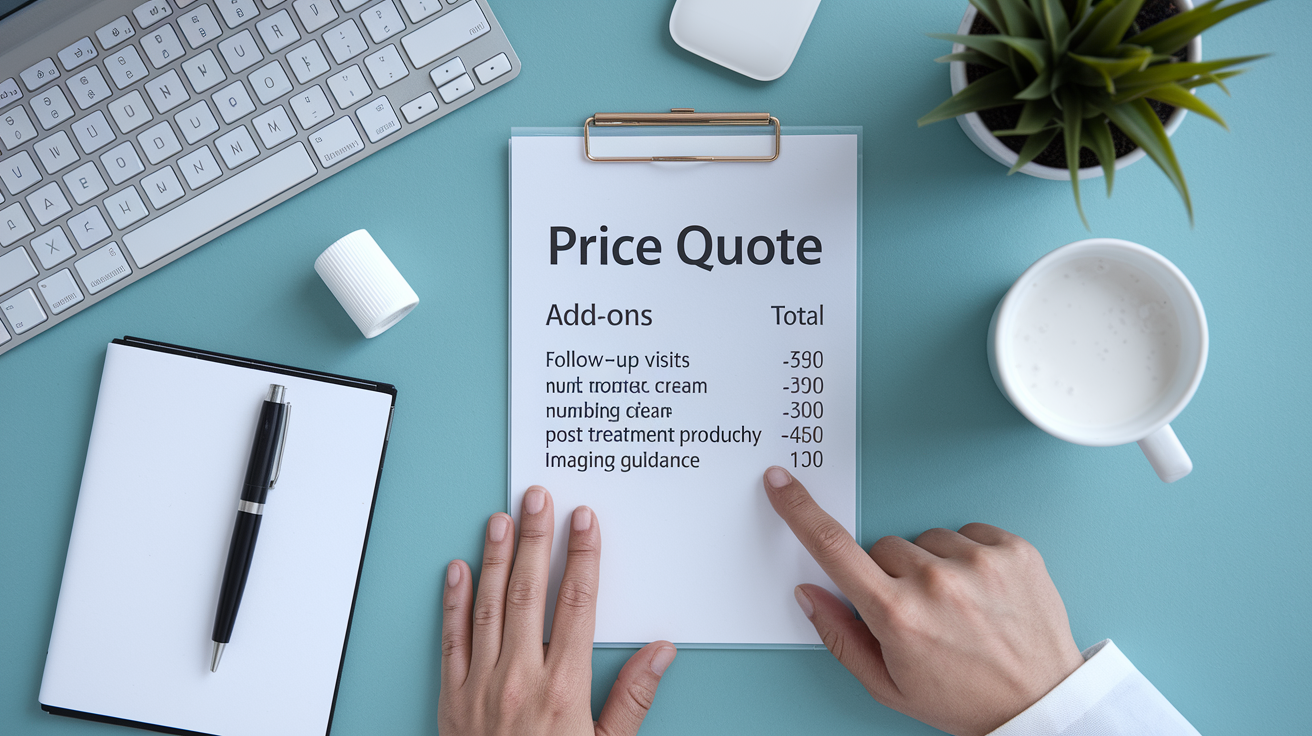
The per-session price you see advertised almost never includes everything. Follow-up visits may or may not be bundled. Some clinics include one or two post-procedure check-ins in the base price. Others charge $75 to $150 per follow-up visit. If your provider wants to assess progress with imaging or adjust the treatment plan, that’s often billed separately. Ask upfront whether follow-ups are included or if they’ll show up as line items later.
Numbing is another add-on. PRP injections into joints, tendons, or the scalp can hurt, especially without anesthesia. Topical numbing cream costs around $50 per session. Injectable local anesthetic adds another $50 to $100. Hair-loss patients often face ongoing product expenses too. Post-treatment shampoos, supplements, and topical treatments recommended by the clinic can run $50 to $200 per month. Those aren’t optional if you want to get the most out of your results, but they’re rarely mentioned in the initial price quote. Combination therapies like microneedling, laser therapy, or adjunct biologics (exosomes, stem cell additives) can tack on $300 to $1,000 per session.
| Cost Component | Typical Add-On Price | Notes |
|---|---|---|
| Follow-up visits | $75 – $150 per visit | Sometimes included; often billed separately after initial sessions |
| Numbing cream or local anesthesia | $50 – $100 per session | Topical numbing is cheaper; injectable anesthetic costs more |
| Post-treatment hair products or supplements | $50 – $200 per month | Common for hair-loss protocols; often recommended for 6–12 months |
| Combination therapies (microneedling, laser, exosomes) | $300 – $1,000 per session | Marketed as enhancers; significantly raise total cost |
| Imaging guidance (ultrasound or fluoroscopy) | $200 – $500 per session | Improves accuracy; sometimes bundled, often billed separately |
Comparing Low-Cost, Standard, and Premium PRP Providers
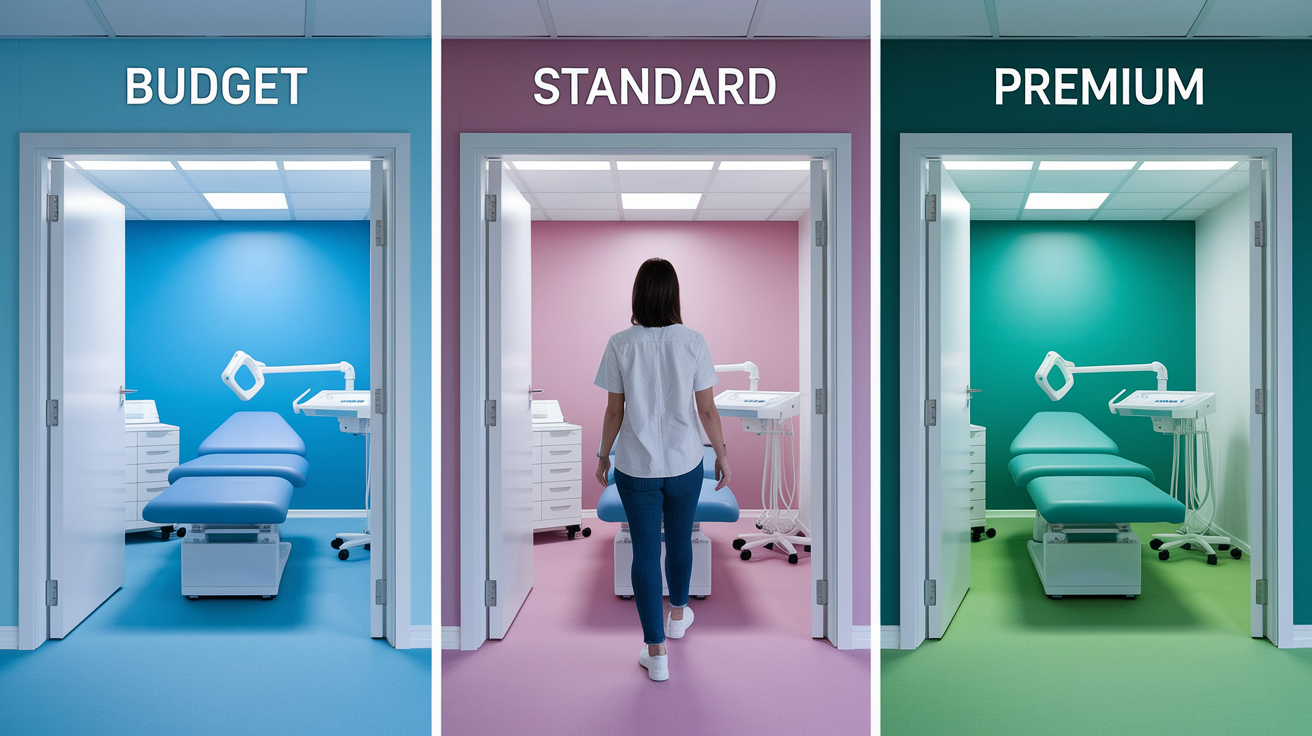
Budget clinics charging around $500 per session are real, and they can deliver decent results if you’re lucky. They’re usually running single-spin systems, using generic kits, and offering minimal diagnostic support. The physician might be a general practitioner or nurse injector working under supervision. Follow-ups are rare, imaging guidance is optional at extra cost, and the facility is often a basic outpatient suite. A 3-session hair-loss plan at a budget clinic runs about $1,500 total. That’s appealing if cash is tight, but you’re accepting higher variability in platelet concentration, less procedural precision, and limited recourse if results disappoint.
Standard clinics charge $800 to $1,200 per session and represent the middle ground. They typically use double-spin systems, offer FDA-cleared or branded kits, and employ experienced physicians or specialists. Imaging guidance is often included or available for a small upfront fee. Follow-up visits are part of the package, and the clinic maintains stricter quality control and patient safety protocols. A 3-session plan costs around $3,000. A 6-session plan runs about $6,000. You’re paying more, but you’re also getting more consistent platelet counts, better injection accuracy, and a lower chance of complications or wasted sessions.
High-end specialty centers can charge $2,000 to $2,500 per session, putting a 3-session plan around $7,500 and a full 6-session course near $15,000. These clinics are often led by fellowship-trained sports medicine physicians, dermatologists with regenerative specialties, or interventional radiologists. They use proprietary PRP systems, advanced imaging, and often combine PRP with other biologics like exosomes or growth factor concentrates. Same-day or next-day appointments, concierge-level service, and published outcome data justify the premium. You’re paying for expertise, infrastructure, and a higher probability of getting results in fewer sessions, but the upfront cost is steep, and insurance still won’t cover it.
Six key differentiators across pricing tiers:
- Equipment and PRP preparation quality. Budget uses single-spin generic kits. Premium uses proprietary double-spin systems with validated concentration.
- Provider credentials and procedural volume. Low-cost clinics may use mid-level providers. Premium clinics employ fellowship-trained specialists.
- Imaging and diagnostic support. Budget offers none or charges extra. Premium includes ultrasound or fluoroscopy in base price.
- Included services and follow-up care. Budget clinics rarely include post-procedure visits. Standard and premium often bundle 1–3 follow-ups.
- Facility type and safety protocols. Low-cost clinics operate in basic outpatient settings. Premium clinics may use hospital-grade procedure rooms with full sterile protocols.
- Transparency and itemized pricing. Standard and premium clinics are more likely to provide detailed breakdowns. Budget clinics often give vague package prices.
Evaluating Value Beyond PRP Cost Alone

Price is easy to compare. Value is harder. A clinic charging $600 per session with poor platelet concentration and no follow-up support might end up costing you more than a $1,200-per-session provider who nails the injection on the first try and includes maintenance planning. Results vary wildly based on age, condition severity, baseline health, and how well your body produces and responds to platelets. A 28-year-old with early hair thinning and no health issues will likely see faster, more dramatic results than a 55-year-old with advanced pattern baldness and metabolic syndrome, even if both pay the same price and get identical treatment.
Long-term value matters more than upfront cost when you’re looking at a treatment that might reduce your need for surgery, ongoing pain medications, or repeated corticosteroid injections. PRP isn’t a one-and-done cure, but if a well-done initial series buys you two or three years of symptom relief and delays a $15,000 knee replacement, the $4,000 you spent on PRP starts to look reasonable. Concentration levels make a difference too. A provider using a 7x platelet concentration and a validated double-spin protocol may deliver results in three sessions, while a low-concentration single-spin clinic might need six sessions to get similar outcomes. Suddenly the “cheap” option isn’t cheap anymore.
Realistic expectations and maintenance planning are the final pieces of the value equation. PRP can thicken hair, reduce joint pain, and speed tendon healing, but it won’t cure genetic baldness, reverse severe arthritis, or fix a completely torn ligament. Most patients need maintenance sessions every 6 to 12 months to sustain gains. A provider who’s upfront about that timeline, explains what “success” looks like for your specific case, and gives you a clear maintenance cost estimate is worth more than one who overpromises results and underdelivers transparency. Ask about platelet concentration metrics, preparation method, what’s included in the package, and what happens if you don’t see improvement. Those answers tell you whether you’re buying PRP or just buying hope.
Final Words
You’ve seen how PRP costs swing, with session price, number of sessions, clinic location, provider training, kit quality, and extra services all shaping the final bill.
That’s the short map: per-session cost, total sessions, clinic reputation, equipment, treatment area size, and hidden fees.
Don’t shop by the sticker alone. Ask for an itemized quote, confirm credentials and follow-up plans, and weigh long-term value.
Keeping factors that affect PRP pricing in mind helps you protect your wallet and get back to training with more confidence.
FAQ
Q: How much should a PRP injection cost, how much do 3 sessions of PRP cost, and why does PRP cost so much?
A: The cost of a PRP injection typically runs $500 to $2,500 per session. Three sessions commonly total $1,500 to $7,500. Prices rise with provider skill, kit quality, location, and extra services. Ask for an itemized quote so you know what’s included.
Q: What causes PRP to fail?
A: PRP can fail when the wrong condition is treated, platelet concentration or preparation is poor, injections miss the target, patient factors (smoking, meds, severe degeneration) limit healing, or follow-up and rehab are missing.