
Is PRP really just one shot for one price, or a bundle of steps and surprise fees?
Short answer: the number a clinic quotes can cover very different things.
This post breaks down what a fair PRP price should include, such as the initial consult, blood draw, centrifuge processing, sterile prep, ultrasound-guided injection, injection supplies, and post-injection instructions, so you know what you’re paying for.
You’ll also get the key questions to ask and the common add-ons to watch for before you book.
Clear Breakdown of What PRP Treatment Price Typically Includes
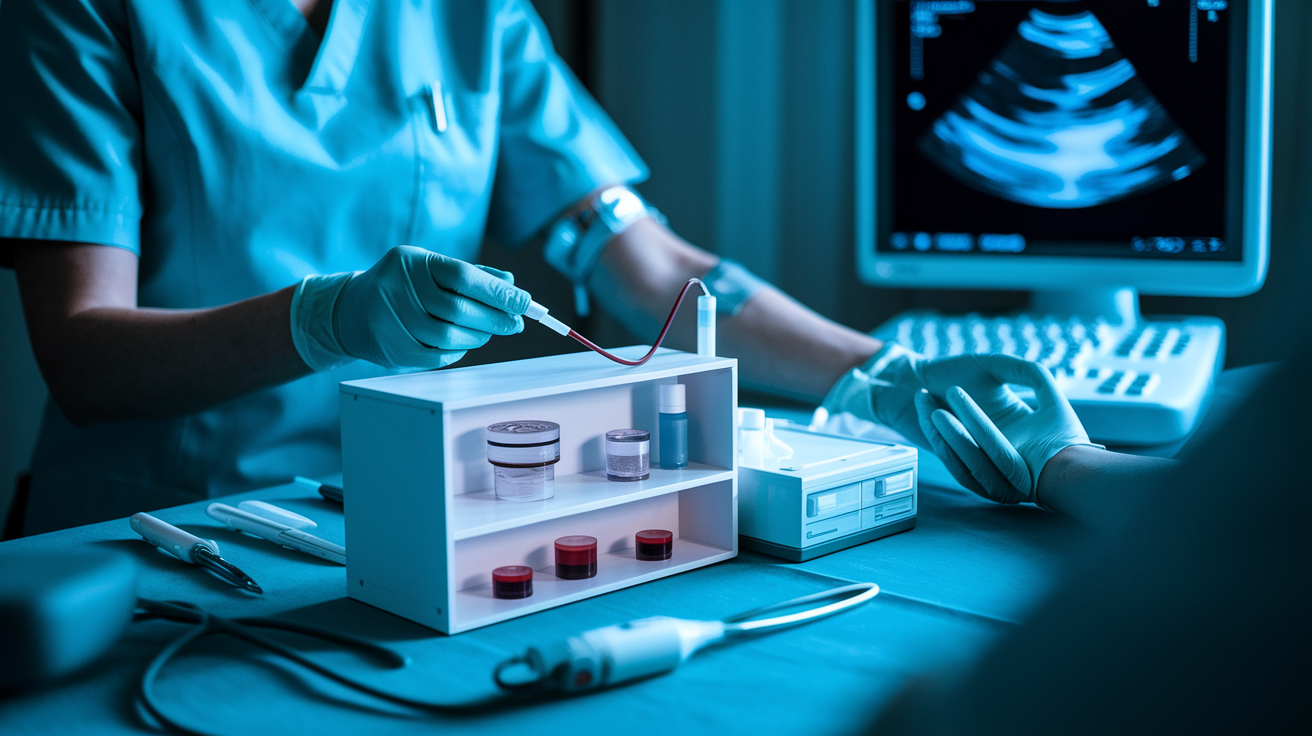
When you ask a clinic what PRP costs, you’re really asking what you’re paying for. Most providers should bundle the whole procedure into one price, but how much they include (and whether they’re upfront about it) varies a lot.
PRP isn’t just one step. Blood gets drawn from your arm, spun in a centrifuge to separate the platelet-rich plasma, prepped for injection, then injected into the damaged tissue. Usually under imaging so they don’t miss. Each piece needs equipment, time, and supplies. A clear quote should cover all of it.
Before you say yes, confirm what’s actually wrapped into the number they gave you. Some clinics do flat, all-in pricing. Others charge separately for things you thought were included. Here’s what a standard PRP price usually covers:
- Initial consultation and assessment to figure out if PRP makes sense for your injury
- Blood draw with sterile supplies and proper technique
- Centrifuge processing to concentrate platelets, often double-spin to get around 7x normal platelet levels
- Prep of the platelet product in a sterile setup for safety and consistency
- Ultrasound-guided injection so they’re placing it exactly where the damage is
- Injection supplies like sterile syringes, needles, gauze, and whatever else is needed for the procedure
- Post-injection instructions on activity limits, rehab, and what to watch for afterward
PRP Cost Breakdown: Understanding Each Line Item
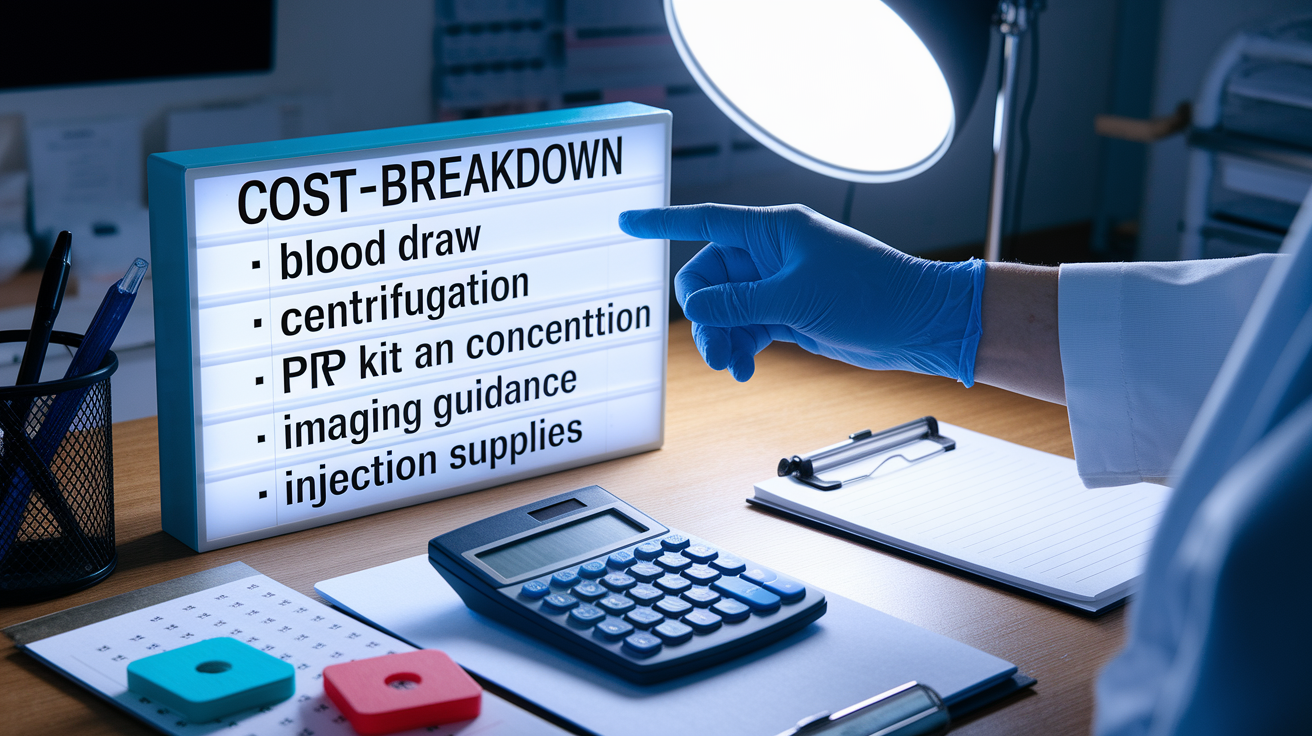
If you push for a full cost breakdown, you’ll see several individual charges that stack up to the final number. Some are obvious. Others might catch you off guard. The blood draw itself is usually cheap, but the processing gear, branded kits, and ultrasound time cost more.
Quality shows up in every step. A cheap PRP kit might give you weaker platelet concentration or higher contamination risk. Single-spin processing is faster and cheaper, but double-spin tends to pull more growth factors. Skilled imaging guidance can mean hitting the injured tissue dead-on instead of wasting the shot. Higher price often means better tech, cleaner protocols, or more experienced hands.
| Item | Typical Role in Treatment | Variable Cost Factors |
|---|---|---|
| Blood draw and handling supplies | Collection of patient’s blood in sterile tubes for processing | Brand of tubes, anticoagulant quality, volume required |
| Centrifugation and lab time | Spinning blood to separate and concentrate platelets | Single-spin vs. double-spin method, centrifuge quality, on-site vs. send-out processing |
| PRP kit and concentration system | Sterile device used to isolate and prepare platelet-rich plasma | Branded vs. generic kits, concentration ratio (e.g., 7x vs. 3x), regulatory approval status |
| Imaging guidance (ultrasound or fluoroscopy) | Real-time visualization to ensure accurate needle placement | Type of imaging, machine quality, physician skill, whether bundled or billed separately |
| Injection supplies and facility fee | Sterile syringes, needles, drapes, use of procedure room | Clinic overhead, in-office vs. surgery center setting, additional sterile protocols |
Average PRP Treatment Price Ranges and What Affects Them
Across the U.S., one PRP injection usually runs somewhere between a few hundred bucks and $2,500 or more. Wide range. It reflects real differences in what you’re getting. One clinic quotes $600 for a basic knee injection. Another charges $1,800 for the same knee, but you’re getting a fellowship-trained sports doc, double-spin prep, ultrasound guidance, and same-day scheduling.
The cost drivers pile up. Kit quality matters because higher-end branded systems usually make a more concentrated, cleaner product. Prep method matters because double-spin gives you about 7x platelet concentration versus weaker yields from simpler kits. Provider expertise matters because someone with serious imaging experience is way less likely to miss the target and waste your injection. Clinics that bundle consultation, imaging, lab work, and follow-up into one visit often charge more upfront, but you avoid getting hit with surprise fees later.
Where you live plays a role too. Cities with higher overhead and more specialized providers charge more than rural or suburban spots. Regional price swings can be big, even when clinics are using identical kits and methods. Reputation counts. A practice known for regenerative medicine and thousands of successful PRP shots may price higher, betting on results and track record to justify it.
What PRP Prices Usually Do NOT Include (Common Extras)
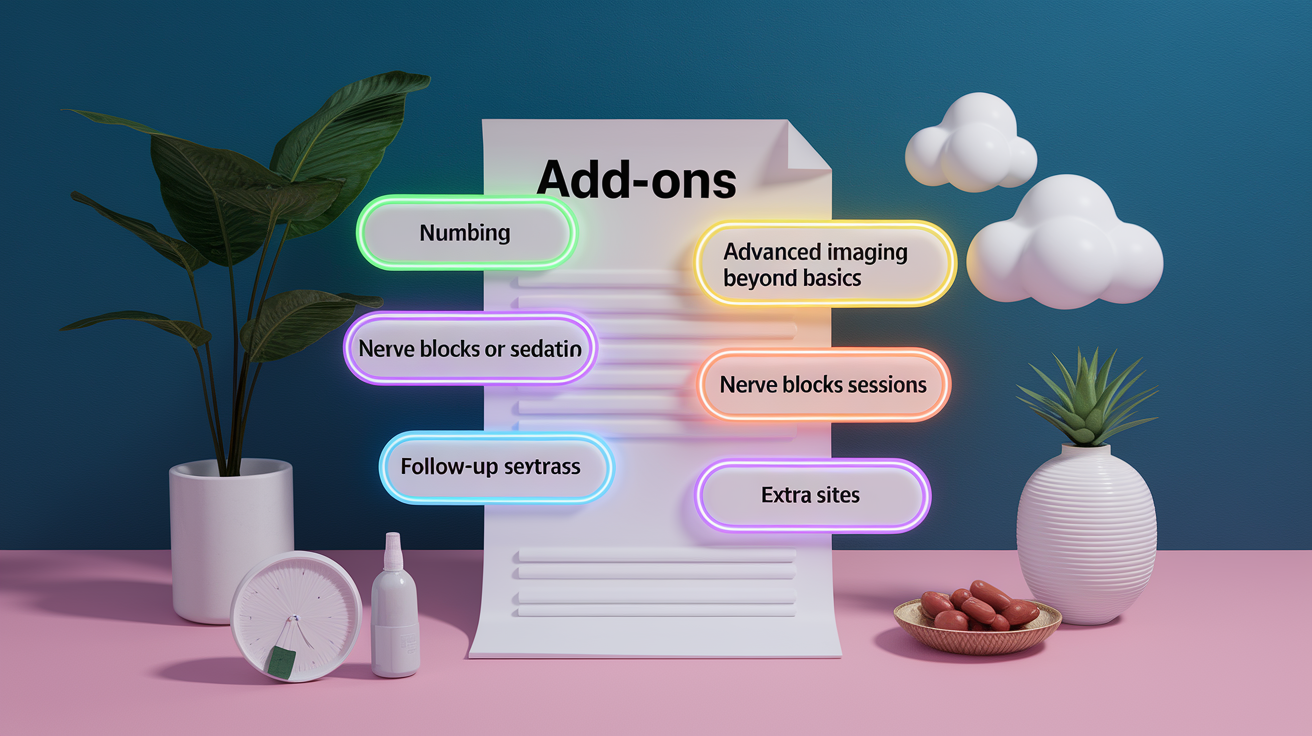
Just because you got a quote doesn’t mean everything’s covered. Some charges are add-ons, and they can quietly jack up your total if you don’t ask early.
The most common extras? Multiple sessions, extra treatment areas, and add-on therapies. If your provider wants to mix PRP with BMAC (bone marrow concentrate) or platelet lysate for a tougher injury, that combo costs more than PRP alone. If your quote is for one session but your condition needs two or three spaced weeks apart, multiply your cost. And if you’re treating both knees instead of one, expect to pay for each spot.
Here are five common charges that often sit outside the initial PRP quote:
- Topical or injectable numbing if the clinic uses it before the procedure
- Advanced imaging beyond basic ultrasound, like fluoroscopy or MRI-guided shots
- Nerve blocks or sedation if your procedure needs deeper pain control
- Follow-up or maintenance PRP sessions scheduled weeks or months later to keep results going
- Treatment of extra sites or areas during the same visit, each needing separate prep and injection
PRP Treatment Sessions, Packages, and How Many Are Included in the Price

When you hear a PRP price, ask whether it’s for a single shot or a bundled series. Many people do fine with one or two sessions, but some injuries (especially chronic tendon issues or moderate arthritis) respond better to a short series spaced several weeks apart. If the quote you got only covers session one, total cost can double or triple fast.
Some clinics offer multi-session bundles or package pricing to keep things predictable. You might pay a flat rate for three injections over three months, locking in the price and skipping the stress of renegotiating each time. Other clinics price each session separately. That gives you flexibility to stop if you improve early, but it also means each extra treatment reopens the cost conversation.
Maintenance sessions are another variable. After the initial series, some patients schedule a touch-up every six to twelve months to keep improvement going. Those visits rarely show up in the upfront quote, so if your goal is long-term management of a degenerative problem, ask what follow-up care costs and how often your provider thinks you’ll need it.
Insurance, Self-Pay Expectations, and Billing Transparency for PRP Pricing

Most commercial insurance, Medicare, and Medicaid don’t cover PRP. Insurers call it investigational or experimental because large-scale, long-term outcome data are still building, and there’s no dedicated, routinely reimbursed billing code in wide use. That means you’ll almost always pay out-of-pocket when you get the injection.
Payment setup varies by clinic. Some want payment the day of your shot. Others may point you to outside financing or let you use HSA or FSA funds, which can ease the upfront hit. A few practices push multi-session bundles or self-pay deals to simplify budgeting. Whatever the payment method, get an itemized invoice listing every piece: consultation, blood draw, processing, imaging, injection supplies, and follow-up. Clear billing protects you from surprise charges and makes it easier to compare quotes between clinics.
Before you book, ask these five questions to confirm billing transparency:
- Is the consultation fee included in the PRP price you quoted, or is it billed separately?
- Does the price cover blood draw, processing, imaging, and the injection itself, or are any of those extra?
- How many sessions are included in this quote, and what will extra sessions cost?
- Will any part of the cost get submitted to my insurance, or is everything self-pay?
- Can I get an itemized quote in writing before the appointment, including all possible add-ons?
Comparing PRP Pricing Between Clinics and Evaluating True Value

Shopping for PRP isn’t like comparing the same product at different stores. The cheapest quote might use a lower-quality kit, skip imaging, or come from a provider with limited regen experience. The highest quote might reflect cutting-edge prep, fellowship training, and an on-site biologics lab. Or it might just reflect overhead in an expensive zip code.
What matters more than the number is what you’re getting for it. Go with clinics that can explain their prep method, show you their platelet concentration results, confirm their imaging setup, and give you clear, itemized quotes. A provider who processes PRP in-house with double-spin, uses ultrasound guidance, and includes follow-up care in the price might charge more upfront but deliver better accuracy, consistency, and long-term value than a clinic that sends your blood to an outside lab and injects it without imaging.
When you’re comparing quotes, look past the headline number and check the quality markers that affect outcomes. Ask about provider credentials, the type of PRP kit they use, whether imaging is bundled, and how many sessions the clinic usually recommends for your condition. The table below breaks down the factors that should shape your call.
| Factor | Why It Matters | Impact on Price |
|---|---|---|
| Physician expertise and specialty training | Fellowship-trained or interventional specialists are more likely to place injections accurately and manage complications | Higher provider skill typically raises the quoted price but improves safety and effectiveness |
| Platelet concentration method (single-spin vs. double-spin) | Double-spin systems yield approximately 7x platelet concentration vs. lower yields from simpler kits | Higher-quality prep methods and branded kits cost more, but they deliver a more potent product |
| Use of imaging guidance (ultrasound or fluoroscopy) | Real-time imaging ensures the PRP reaches the injured tissue instead of missing the target | Bundling imaging into the price may raise the upfront quote but reduces the risk of wasted injections and repeat visits |
| In-house biologics lab and same-day processing | On-site preparation improves consistency, reduces contamination risk, and allows for immediate injection | Clinics with their own labs and advanced equipment typically charge more, but they control quality end-to-end |
Final Words
You now know the common PRP items clinics bundle: consultation, blood draw and processing, platelet concentration, guided injection, post-care instructions, and follow-up. We also covered itemized fees, typical price ranges, extras that may be billed separately, session packages, and insurance basics.
Before you pay, ask for an itemized quote, confirm imaging and kit details, clarify how many sessions are covered, and check follow-up and refund policies. Get it in writing.
Knowing what is included in prp treatment price helps you compare clinics, budget smart, and plan rehab so you get back to moving. That’s a practical win.
FAQ
Q: How much does each PRP session cost out of pocket?
A: Each PRP session typically costs $300 to $2,500 out of pocket, depending on clinic location, provider experience, PRP kit and preparation, and whether imaging or follow-up visits are bundled.
Q: How much do 3 sessions of PRP cost and are 3 PRP sessions enough?
A: Three PRP sessions usually total about $900–$7,500, and whether three are enough depends on the injury, platelet prep method, and individual response; many people need 1–3 sessions, some require maintenance.