
Some clinics pitch platelet rich plasma as a quick fix for joint pain—so does the science back that up?
PRP uses a small sample of your blood to concentrate platelets, and multiple trials show moderate relief for many patients—especially knee osteoarthritis, where roughly 50–70% report meaningful improvement at three to six months.
So yes, science leans positive, but results vary by joint, PRP preparation, and disease stage—it’s one tool, not a sure thing, so ask about prep methods, expected outcomes, and costs before deciding.
Evidence Summary on PRP for Joint Pain

Clinical evidence shows that platelet rich plasma injections deliver moderate relief for certain joint pain conditions, especially knee osteoarthritis. Large randomized trials and systematic reviews put meaningful symptom improvement somewhere between 50 and 70 percent of patients within three to six months. Those improvements usually mean lower pain scores, better mobility, and easier movement during normal daily tasks. The effect is real and measurable. Controlled studies back it up when comparing PRP to placebo, corticosteroids, and hyaluronic acid.
Evidence quality changes a lot depending on which joint you’re looking at. Knee osteoarthritis has the strongest research backing, with multiple high-quality trials showing consistent benefit. Hip and shoulder applications? More mixed. Some studies report meaningful gains, others find only modest or short-lived improvement. Outcomes depend heavily on how bad the damage is, how the PRP was prepared, platelet concentration, and patient factors like age, weight, and overall health. The more advanced the arthritis, the smaller the benefit you can expect. PRP tends to work best in early to moderate osteoarthritis. End-stage disease is a different story.
Several variables decide whether someone will respond well. Younger people with less cartilage loss typically see better results than older patients with advanced wear. Higher platelet counts and leukocyte-poor preparations seem more effective in some studies. Combining PRP with physical therapy and strength work often boosts outcomes. Insurance rarely covers the procedure. Costs typically run $500 to $2,000 per injection, and most people get one to three treatments per joint over several months.
Key evidence-based takeaways:
- Around 50 to 70 percent of knee osteoarthritis patients report significant pain relief after three to six months
- Early to moderate arthritis responds better than late-stage joint damage
- Evidence for hip and shoulder pain is weaker and less consistent than for the knee
- Response varies by preparation method, platelet count, and individual patient factors
How PRP Works in Joint Healing
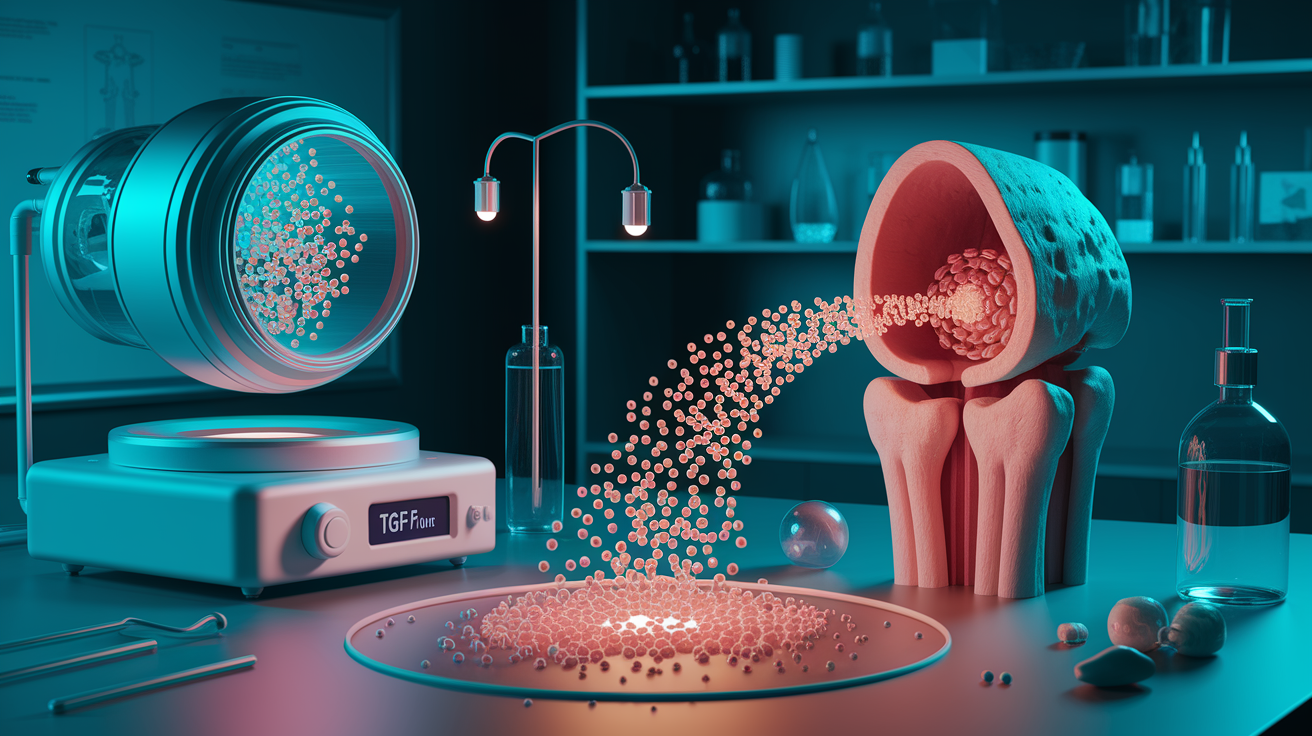
Platelet rich plasma works by concentrating platelets from a small blood sample, usually 30 to 60 milliliters, using a centrifuge. This process bumps the platelet count to three to seven times normal levels, creating a solution dense with growth factors stored inside platelets. When injected into a damaged joint, those platelets activate and release a cascade of bioactive proteins: platelet-derived growth factor (PDGF), transforming growth factor-beta (TGF-β), vascular endothelial growth factor (VEGF), and insulin-like growth factor (IGF). These growth factors bind to receptors on local cells, triggering inflammation modulation, new blood vessel formation, and collagen synthesis. All foundational steps in tissue repair.
The injected growth factors recruit repair cells to the injury site, slow down chronic inflammation, and push cartilage cells and tenocytes to produce healthier extracellular matrix. In tendons, PRP appears to improve collagen organization and reduce degenerative changes. In arthritic joints, it may support better cartilage maintenance and reduce inflammatory signaling that drives pain and swelling. The effect isn’t immediate. Most people begin noticing improvement two to six weeks after injection as the repair cascade unfolds. PRP doesn’t reverse severe arthritis or rebuild destroyed cartilage, but it can shift the local environment toward a more favorable healing balance.
Condition-Specific Evidence for PRP

Knee Osteoarthritis
Knee osteoarthritis carries the strongest research support for PRP injections. Multiple randomized controlled trials show that PRP provides better pain relief and function improvement compared to hyaluronic acid and corticosteroid injections over six to twelve months. Typical improvement ranges from 40 to 70 percent reduction in pain scores. Many patients also report better walking distance, less stiffness, and improved quality of life. The effect usually peaks around three to six months post-injection. Leukocyte-poor, moderately concentrated PRP formulations tend to perform best in these studies. PRP works most reliably in patients under 60 with Kellgren-Lawrence grade 2 or 3 arthritis, meaning moderate disease without complete joint space collapse.
Hip Osteoarthritis
Evidence for hip osteoarthritis is emerging but less solid. A few small trials report modest pain reduction and functional gains lasting six to twelve months, especially in patients with mild to moderate disease. Other studies find no significant benefit over placebo or conventional care. The hip joint’s deeper location and thicker capsule may reduce PRP’s ability to reach target tissues effectively. Image-guided injection under ultrasound or fluoroscopy improves accuracy and may boost outcomes. Current evidence suggests PRP can be considered for hip arthritis when less invasive options have failed, but expectations should be more modest than for the knee.
Shoulder Conditions
PRP shows promise for rotator cuff tendinopathy and partial-thickness tears. Studies report 30 to 60 percent improvement in pain and shoulder function scores after one to three injections, with benefits lasting six to twelve months. PRP may help improve tendon healing quality after surgical rotator cuff repair, though the evidence is mixed and more research is needed. For calcific tendonitis, evidence is weaker. PRP performs best when combined with structured physical therapy and progressive loading programs that restore shoulder strength and control. Ultrasound-guided injection improves targeting and consistency.
Other Joints & Tendons
Lateral epicondylitis (tennis elbow) has moderate evidence supporting PRP, with several trials showing better outcomes than corticosteroid injections at six to twelve months. Patellar tendinopathy (jumper’s knee) shows variable results. Some athletes report significant relief while others see minimal benefit. Evidence for Achilles tendinopathy and plantar fasciitis is inconsistent. Small studies suggest possible benefit, but larger controlled trials often show no clear advantage over placebo or eccentric exercise alone. For wrist, ankle, and elbow arthritis, data is too sparse to draw strong conclusions.
| Condition | Evidence Strength | Typical Outcome Range |
|---|---|---|
| Knee Osteoarthritis | Strong | 40–70% pain reduction at 3–6 months |
| Hip Osteoarthritis | Limited | 20–40% improvement in select patients |
| Shoulder Tendinopathy | Moderate | 30–60% pain and function improvement |
| Lateral Epicondylitis | Moderate | 40–50% improvement vs. 20% with steroids |
Risks, Side Effects & Limitations of PRP

PRP carries a low risk profile because it uses your own blood, which eliminates concerns about allergic reactions or immune rejection. The most common side effects are temporary soreness, swelling, and stiffness at the injection site, typically lasting two to five days. Most people describe the discomfort as similar to post-workout muscle soreness. Serious complications like infection are rare, less than one percent in published case series, especially when proper sterile technique and image guidance are used. Unlike corticosteroid injections, PRP doesn’t weaken tendons or speed up cartilage loss over time.
The bigger limitation is inconsistency. PRP preparation methods vary widely between clinics and even between batches within the same clinic. Platelet concentration, leukocyte content, activation method, and injection timing all differ. That makes it hard to predict exactly what formulation you’ll receive. Some preparations work better than others, and there’s no universal standard. This variability partly explains why study results are mixed and why some patients respond well while others experience no benefit at all.
Not everyone’s a good candidate. Patients with advanced arthritis, complete cartilage loss, or bone-on-bone joints should have realistic expectations. PRP can’t rebuild destroyed tissue. People with blood disorders, active infections, or those taking certain anticoagulant medications may not be suitable. Insurance almost never covers PRP for joint pain. Out-of-pocket costs can run $500 to $2,000 per injection. Multiple injections are often recommended, which adds to total expense. These financial and clinical realities mean PRP is one tool, not a universal solution.
PRP Compared to Other Joint Pain Treatments
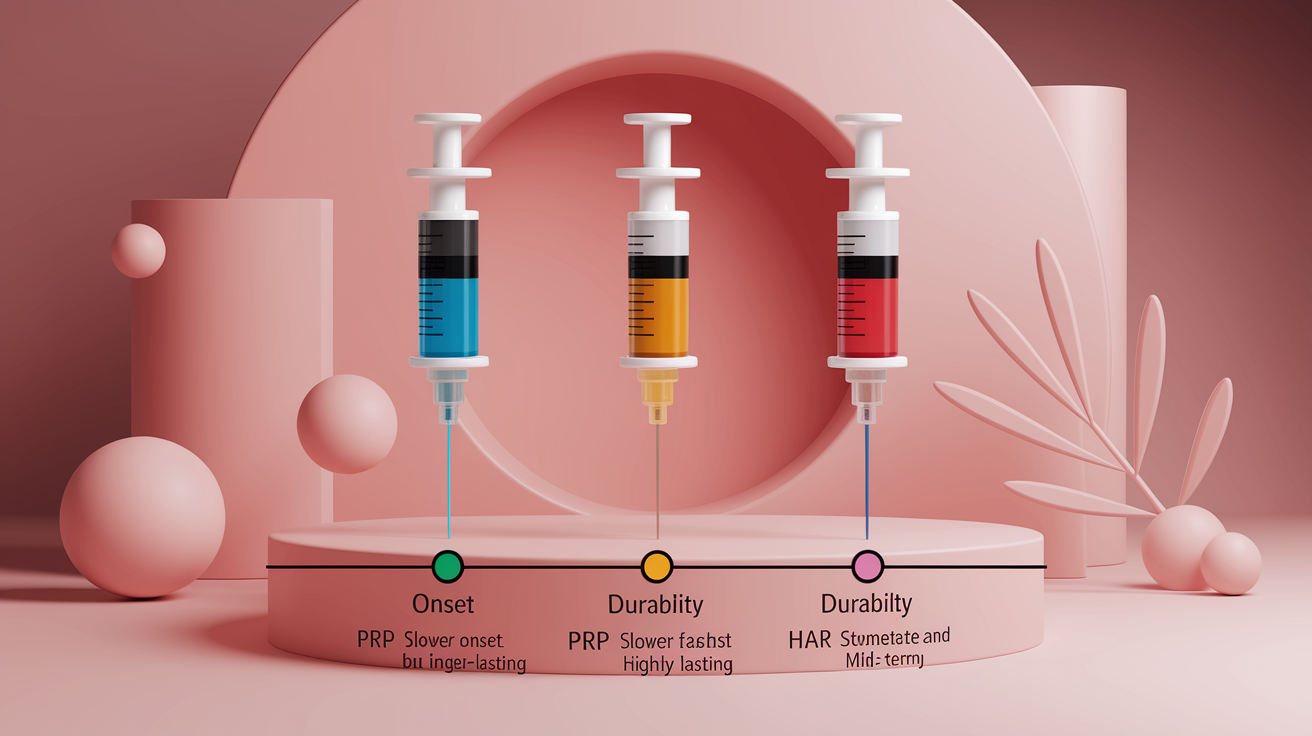
Corticosteroid injections offer fast, predictable pain relief, often within 24 to 48 hours. But that relief is short-lived and primarily suppresses inflammation without addressing underlying tissue damage. Most steroid benefits fade within four to twelve weeks, and repeated injections can weaken tendons and potentially speed up cartilage breakdown. Hyaluronic acid injections aim to improve joint lubrication and may provide modest, medium-term relief for knee osteoarthritis. But head-to-head trials show PRP typically outperforms hyaluronic acid in pain reduction and function scores at six and twelve months. Steroid injections make sense when you need quick relief for a specific event or flare, while hyaluronic acid is a reasonable option when PRP cost or availability is a barrier.
PRP’s advantage lies in its regenerative intent. It aims to support actual tissue repair rather than just masking symptoms. Clinical trials comparing PRP to steroid injections for knee arthritis consistently show that PRP patients report better outcomes at six months and beyond, even though initial relief may be slower. That trade-off, waiting two to six weeks for improvement in exchange for longer-lasting benefit, suits people willing to invest in a more durable solution. Physical therapy and strength training remain foundational regardless of injection choice. Combining PRP with structured rehab often produces the best functional outcomes.
Key differences at a glance:
- Corticosteroids provide rapid but short-lived symptom relief, typically fading within 4 to 12 weeks
- Hyaluronic acid offers modest benefit with slower onset and lower cost than PRP in some markets
- PRP takes longer to work but often delivers more durable improvement, especially when combined with rehabilitation and strength work
Final Words
We jumped into the data: PRP gives moderate benefit for knee osteoarthritis, with mixed results for hip and shoulder.
Then we explained how it works: concentrated platelets release growth factors that reduce inflammation and help tissue repair. Outcomes depend on disease severity and how PRP is prepared.
We covered risks, limitations, and how PRP compares to steroids and hyaluronic acid.
If you’re asking is platelet rich plasma effective for joint pain the short answer is: it may help some people, especially for knees, but results vary. Ask about credentials, itemized costs, and a rehab plan so you use it wisely.
FAQ
Q: Does PRP work for older people?
A: PRP works for older people by sometimes reducing pain and improving function, especially with mild-to-moderate joint damage; effectiveness depends on overall health, tissue quality, and arthritis severity.
Q: How much do 3 sessions of PRP cost?
A: Three sessions of PRP cost roughly $1,500 to $6,000 total, depending on clinic, joint treated, PRP processing, and whether imaging or follow-up care are included; get an itemized quote.
Q: How long does it take for PRP to work on joints?
A: PRP takes weeks to months: some people notice improvement by 6–12 weeks, with peak benefits often at 3–6 months; response depends on condition severity and treatment protocol.
Q: Is PRP worth it for arthritis?
A: PRP is worth it for arthritis when conservative care failed and the joint has mild-to-moderate degeneration; evidence is strongest for knee OA, costs vary, and results are not guaranteed.